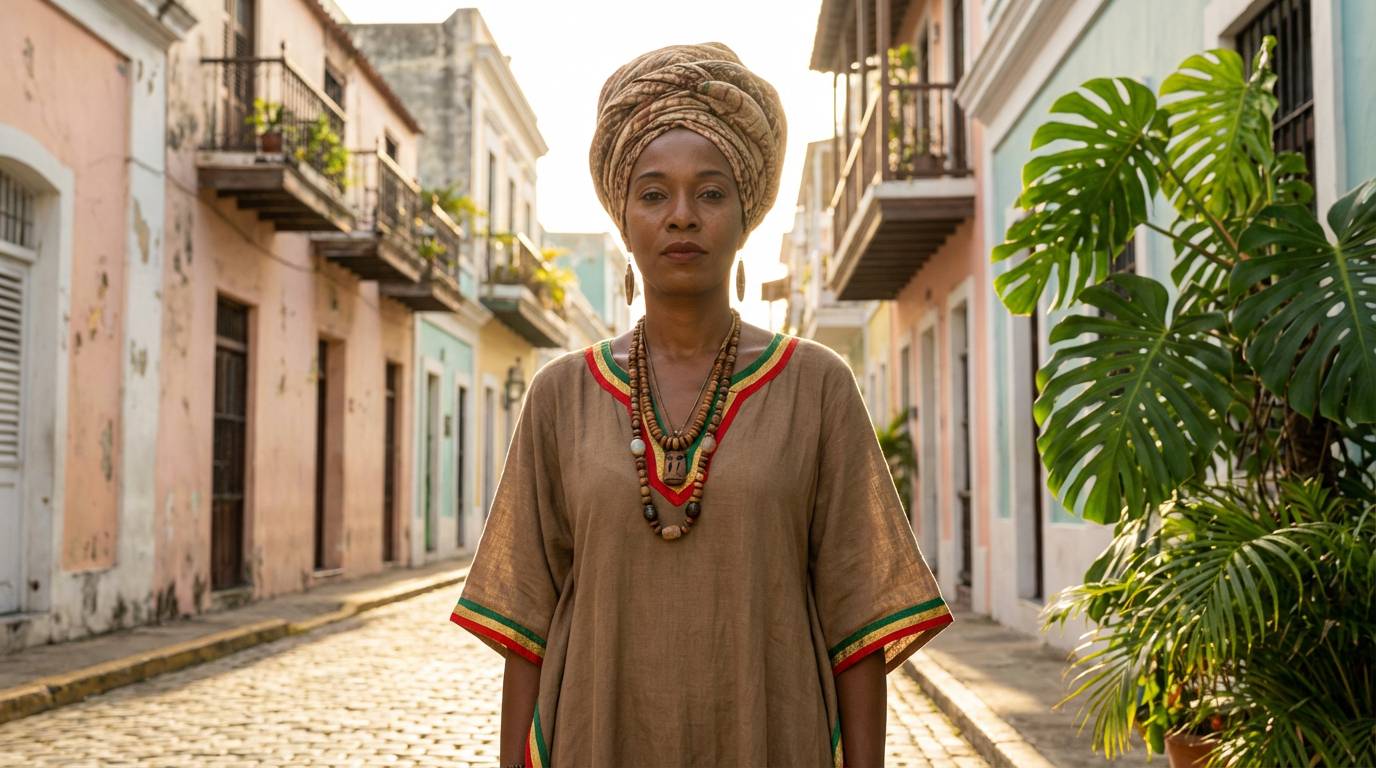
Few parts of the Rasta lifestyle are more immediately recognizable than its outward style. Dreadlocks, knitted tam hats, red-gold-and-green banners, handmade garments, modest clothing, and visible symbols of roots culture have traveled far beyond Jamaica and far beyond the communities that first carried them with sacred seriousness. Because of this global visibility, Rasta style dreadlocks colors and cultural expression is widely known. Yet precisely because it is so visible, it is also often misunderstood.
Many people encounter the outer image before they ever understand the inner meaning. They see the locks but do not know the discipline. They admire the colors but do not know the historical memory inside them. They borrow the look but leave behind the spiritual worldview, the ethic of dignity, and the struggle that gave these expressions their force. The result is a strange divide: one of the most visible parts of the culture often becomes one of the least deeply understood.
In the Rasta way of life, style is not meant to be empty decoration. It is meant to reflect livity. It expresses inward values through outward form. That does not mean every person dresses identically or uses symbols in the same way. It does mean that appearance, at its best, is tied to something beyond trend. It reflects spiritual awareness, historical consciousness, naturalness, modesty, resistance to imposed standards, and a commitment to carry identity with seriousness.
Dreadlocks in particular have become one of the most powerful and contested symbols associated with Rastafari. For some, they are a visible sign of covenant, discipline, resistance, and rootedness. For others, they are seen only as fashion. The same tension appears with color symbolism, garments, jewelry, and other visual expressions. The question underneath all of this is larger than clothing: what happens when cultural expression remains rooted, and what happens when it is separated from meaning?
This article turns toward that question. It looks at Rasta style not as costume, but as cultural language. It explores why dreadlocks matter, what the colors signify, how dress can reflect dignity and modesty, and why authenticity remains essential in a world eager to commercialize symbols while forgetting the truths they were meant to carry.
The Meaning of Dreadlocks
No symbol is more commonly associated with the Rasta lifestyle than dreadlocks. For many people, locks are the first thing they think of when the subject arises. Yet locks are not just an aesthetic choice in the deeper Rastafari context. They carry a range of meanings: spiritual, historical, symbolic, and personal. To speak of them honestly is to move beyond fashion and toward discipline.
Spiritual, Cultural, and Symbolic Dimensions
Dreadlocks can be understood as a sign of naturalness. They reject the idea that hair must always be forced into dominant standards of grooming and beauty. In that sense, locks stand against systems that have long pressured Black people to alter, hide, or apologize for their natural form. This alone gives them cultural power. They say, visibly, that the body does not need to be remade in the image of outside approval in order to carry dignity.
For many, locks also carry spiritual weight. They can represent commitment, covenant, patience, and the refusal to shape the self according to shallow norms. Growing locks takes time. It requires endurance through phases that may not always be socially praised or easily controlled. This process becomes symbolic in itself. It teaches that rooted identity cannot always be rushed into polished form.
Dreadlocks also carry an energy of resistance. In societies where official respectability has often been defined in ways that exclude or discipline Black bodies, wearing locks can become a refusal to submit to those narrow terms. It says that value is not dependent on fitting neatly inside imposed standards. In this way, locks are not only personal style. They are often social and historical statement.
Beyond Trend and Imitation
Because dreadlocks are globally recognizable, they are also frequently detached from their roots and turned into trend. This creates a tension. On the one hand, hair practices have never belonged to only one meaning in one place. Human cultures adapt and influence one another. On the other hand, when locks are used merely as an exotic symbol or fashion statement without any attempt to understand the histories and spiritual meanings attached to them in Rasta life, something important is lost.
The loss is not only academic. It affects how culture is treated. When a symbol of resistance, covenant, and natural dignity becomes just another marketable look, the deeper message is weakened. A person may copy the form while never touching the discipline underneath it. This is why the conversation around locks must remain careful. Respect requires more than visual adoption. It requires historical and cultural attention.
That does not mean every person with locks is making exactly the same statement. Human motives vary. But in the Rasta context, the symbol remains weighty. To engage it meaningfully is to understand that locks can carry memory, patience, identity, and seriousness far beyond surface appearance.
The Symbolism of Red, Gold, and Green
Just as dreadlocks carry visible meaning, so do the colors most strongly associated with Rasta culture: red, gold, and green. These colors are not random decoration. They hold historical memory, emotional force, and collective symbolism. When used with understanding, they function almost like a visual summary of deeper themes: struggle, abundance, land, hope, sacrifice, and continuity.
Colors as Living Symbols
Red is often understood as representing sacrifice, struggle, bloodshed, and the cost of survival and resistance. It carries memory. It reminds the viewer that roots culture did not emerge from comfort or mere celebration. It was shaped by pain as well as faith. Red gives visual place to that seriousness.
Gold often points toward wealth in a sense deeper than money. It can signify light, value, fertility, prosperity, wisdom, and spiritual radiance. It reminds people that life contains richness beyond the measurements of a market. Gold helps preserve the sense that beauty and worth are real, even in the aftermath of suffering.
Green is frequently associated with the land, with life, with growth, with Africa, and with the sustaining force of the natural world. It carries the feeling of renewal. It also points toward rootedness, toward the earth as source of nourishment, memory, and belonging. In a lifestyle that values nature, food from the earth, and connection to creation, green has special force.
Color as Cultural Memory
Together, these colors do more than create a recognizable palette. They preserve a collective memory and a visual mood. They tell a story. Red speaks of cost and endurance. Gold speaks of worth and illumination. Green speaks of life, land, and continuity. When seen together, they offer a layered symbolism that is emotional, political, and spiritual all at once.
This is why the colors continue to resonate so strongly in banners, clothing, art, stage design, and community spaces. They make history visible. Even when words are absent, the colors still speak. They remind the viewer that the culture is rooted in more than style. It comes carrying memory.
When the colors are reduced to trend alone, that memory begins to fade. Yet even then, their continuing appeal says something important: people are still drawn to symbols of life, rootedness, richness, and resistance. The responsibility is to preserve the meaning rather than letting it dissolve into fashion.
What the Colors Carry
- Red points toward sacrifice, struggle, and memory.
- Gold suggests value, light, wisdom, and spiritual richness.
- Green reflects land, life, renewal, and rootedness.
- Together, the colors function as a living visual language rather than mere decoration.
Clothing, Presentation, and Modesty
Rasta style is not only about locks and colors. Clothing itself can carry meaning. How one dresses, covers, adorns, and presents the body may reflect values such as modesty, self-respect, naturalness, simplicity, and community identity. This does not mean there is only one correct outward form. It does mean that presentation is often approached as part of conduct, not separate from it.
Dress as Conduct
In much of modern consumer culture, clothing is treated as self-branding. It becomes a way of performing status, desirability, rebellion, or novelty. The Rasta approach often moves differently. Dress is less about selling an image and more about reflecting values. Simplicity, modesty, and dignity often matter more than spectacle.
This gives clothing a moral dimension. The question becomes not simply what attracts attention, but what expresses self-respect and rootedness. Garments may be chosen for comfort, natural material, practicality, or symbolic resonance rather than trend pressure. Presentation becomes quieter but deeper.
This does not remove creativity. In fact, creativity often becomes richer when it is not controlled by endless fashion churn. Pattern, color, handmade craft, knitwear, wraps, and symbolic accessories can all become forms of expression. The difference is that expression is meant to remain linked to livity rather than vanity alone.
Modesty, Naturalness, and Self-Respect
Modesty within Rasta cultural expression is not only about covering the body in a rigid sense. It is about how the body is carried. It resists the idea that worth comes through display, exposure, or constant competition for visual approval. Modesty can therefore be understood as a form of self-possession. It says that the body does not need to be endlessly put on the market of public appetite in order to be valued.
Naturalness also matters here. Just as locks can symbolize refusal of imposed beauty norms, clothing can reflect a similar desire to move more simply and less artificially. Breathable garments, handmade items, less overproduced style, and clothing tied to climate and daily life all fit within this broader emphasis.
Self-respect ties these themes together. A person dressed with dignity is not necessarily dressed with extravagance. Often the opposite is true. There can be power in garments that reflect clarity, steadiness, and rootedness rather than the frantic demand to impress.
Style as Cultural Language
One of the deepest ways to understand Rasta style is to see it as a language. Not a language of words alone, but a language of symbols, colors, textures, hair, movement, and presence. Cultural language works because it communicates identity and memory before a person even begins to speak.
How Style Tells a Story
Every culture develops visible forms that say something about history, values, and belonging. In Rasta life, visible expression can speak of African consciousness, spiritual seriousness, natural living, resistance to assimilation, and pride in roots. When locks, colors, and modest dress are carried together, they often tell a fuller story than any one symbol could alone.
This storytelling power explains why outward expression matters so much. People do not only see a garment or hairstyle. They often see a claim: I belong to a history. I reject certain imposed standards. I carry another measure of dignity. I am trying to live from roots rather than drift. That claim may be subtle or strong, but it is rarely neutral.
This also means that visual expression can preserve continuity. Younger generations may first encounter meaning through what they see. A color, a wrap, a lock pattern, a stage banner, or a family photograph may spark questions. In that sense, style can become a doorway into education.
Presence, Bearing, and Atmosphere
Style is not only about objects placed on the body. It is also about bearing. How a person walks, greets others, holds themselves, and occupies space all form part of cultural expression. Presence can communicate groundedness or confusion, humility or vanity, peace or agitation. This is why outward expression cannot be reduced to clothing alone.
In a culture centered on livity, presence matters greatly. A person with deep rootedness may communicate more through atmosphere than through ornament. Their calm, dignity, and steadiness become part of their style. This reminds us again that the visible must be linked to the inner if it is to remain meaningful.
Cultural Appreciation Versus Appropriation
Because Rasta symbols have traveled so widely, the question of appreciation versus appropriation cannot be avoided. This is not a shallow debate about who is allowed to wear what. It is a deeper question about how culture is treated. Is it being engaged with respect, study, and humility, or only mined for aesthetic effect?
Where the Line Is Crossed
The line is often crossed when visible symbols are used without any interest in their meanings, histories, or communities of origin. A person may wear locks, colors, or sacred imagery because it looks striking, yet remain entirely detached from the struggle, faith, or social reality those symbols came from. At that point, culture becomes costume.
Another problem appears when commercial systems package Rasta signs as commodities stripped of message. Slogans, colors, and iconography may be mass-produced for sale while the deeper teachings about dignity, spiritual life, anti-materialism, and historical memory are ignored. That kind of commercialization does not merely simplify the culture. It hollows it out.
Appropriation also often involves power imbalance. When dominant culture profits from symbols that have been stigmatized or criminalized when worn by the communities that made them meaningful, the issue becomes more than fashion. It becomes a matter of justice and historical awareness.
How to Approach the Culture Respectfully
Respectful engagement begins with learning. It asks people not to rush past meaning in order to enjoy image. It invites historical study, listening, humility, and an honest awareness of what one understands and what one does not. Respect also means not performing belonging that has not been lived into with seriousness.
Appreciation can be real when it is joined to care. A person may admire Rasta aesthetics while also honoring the culture’s roots, teachings, and communities. They may learn why the symbols matter. They may refuse to market sacred imagery carelessly. They may approach with humility rather than entitlement.
In this sense, appreciation is not passive admiration. It is responsible relationship. It knows that beauty and symbolism are strongest when truth remains attached to them.
Respecting Rasta Cultural Expression
- Visible symbols should not be separated casually from their history and meaning.
- Commercialization often weakens or distorts cultural seriousness.
- Respect begins with study, humility, and responsible engagement.
- Appreciation honors roots; appropriation consumes image while ignoring context.
The Deeper Lesson of Rasta Style
At its strongest, Rasta style teaches that outward life should reflect inward truth. This is the lesson beneath dreadlocks, colors, clothing, and presentation. None of these things are strongest when treated as empty markers. They are strongest when they remain connected to dignity, naturalness, historical memory, spiritual seriousness, and rooted identity.
This also means that the visible life has responsibilities. A person cannot rely on appearance alone to carry meaning. If the inward life is chaotic, vain, or empty, the outer image eventually becomes fragile. But when the inward life is grounded, even simple outward forms can carry enormous force. A modest garment, patient locks, or a few colors worn with understanding may say more than elaborate fashion ever could.
In a world obsessed with image, this lesson remains radical. It says that the most powerful style may be the style that has something true behind it. It says that cultural expression is not shallow when rooted in memory and principle. It says that beauty deepens when it is joined to meaning.
The Rasta lifestyle therefore challenges both vanity and imitation. It does not reject visible expression. Instead, it asks that visible expression remain faithful to livity. That is a demanding standard, but it is also what keeps the culture alive rather than hollowed out.
Conclusion: When Style Carries Meaning
Dreadlocks, colors, garments, and symbolic presentation all play a visible role in the Rasta lifestyle, but none of them are meant to stand alone. They carry their strongest meaning when they reflect something deeper: spiritual consciousness, self-respect, naturalness, African-centered memory, resistance to imposed norms, and a disciplined sense of identity. This is what transforms style from costume into cultural language.
The enduring visibility of Rasta style shows how powerful these symbols are. People continue to be drawn to them because they contain more than decoration. They suggest roots, life, seriousness, and another measure of beauty. Yet that very power makes care necessary. Symbols this rich should not be handled lazily.
Still, the Rasta lifestyle is not only seen. It is also heard. Sound, chant, drumming, basslines, and reggae itself have carried the message of the culture across borders and generations. If style makes some parts of the culture visible, music makes other parts vibrate. That is where the next article turns: toward reggae, Nyabinghi, sacred rhythm, and the role of sound in carrying the Rasta message to the world.