The phrase Rasta lifestyle is often used casually, but it carries far more weight than many people realize. To some, it calls up an instant series of images: dreadlocks, red-gold-and-green, roots reggae, herb, or a laid-back refusal to move with the pace of the modern world. Those images may touch part of the culture, but they do not explain its heart. In fact, when the lifestyle is reduced to symbols alone, the meaning begins to slip away.
The real foundation of the Rasta lifestyle is not a costume, trend, or mood. It is a way of being shaped by consciousness, spiritual seriousness, self-knowledge, natural living, and a refusal to let oppressive values define human worth. It is about how a person understands life, how they carry themselves, how they treat others, how they relate to the earth, and how they move through a world that often rewards confusion, imitation, and excess. That is why the Rasta lifestyle cannot be measured only by what is seen on the outside. Its strongest roots live within.
For people encountering Rasta culture for the first time, this deeper side is easy to miss. Popular culture often takes the most visible pieces and leaves the structure underneath. Fashion borrows the colors. Music industries borrow the sound. Social media borrows the image. But the soul of the culture does not reveal itself so easily. It asks for patience. It asks for listening. It asks for respect.
This article begins that process by asking a simple but important question: What does the Rasta lifestyle really mean? The answer takes us beyond stereotype and into the language of livity, dignity, balance, truth, and conscious living. It also reminds us that when people speak of Rasta as only an aesthetic, they are speaking of a shadow rather than the substance.
Defining the Rasta Lifestyle
Any honest definition of the Rasta lifestyle has to begin by rejecting the shallow version. It is not merely a collection of visible traits. It is not a marketing concept. It is not a decorative identity that can be put on for effect. At its deepest level, it is a worldview expressed through daily life. That worldview includes spiritual awareness, historical memory, moral direction, natural living, and an active search for truth and freedom.
More Than Appearance
The most common mistake people make is to treat outer expression as the whole story. Dreadlocks, for example, may be powerful and meaningful, but locks by themselves do not explain character. Colors may be symbolic, but symbols without understanding can become empty. Music may open the door, but listening to roots reggae does not automatically make a person rooted. The same can be said of language, style, jewelry, slogans, or images.
This matters because surface symbols are the easiest parts of any culture to copy. They are portable, visible, and marketable. Meaning is harder. Meaning requires context. Meaning asks a person to examine how they live. A lifestyle only becomes real when the outward and inward begin to align. That is one reason the word livity is so important within Rasta thinking. It points beyond display toward a living energy, a lived vibration, a way of carrying the self in relation to spirit, people, and creation.
If someone sees only fashion, they miss the discipline. If they see only symbolism, they miss the philosophy. If they see only rebellion, they miss the sacred side. The Rasta lifestyle cannot be understood by isolated pieces. It has to be seen as a whole.
A Way of Life Rooted in Meaning
To say that the Rasta lifestyle is a way of life is not a vague statement. It means that belief, conduct, food, speech, style, reflection, and community are all connected. It means that spiritual awareness is not reserved for ceremonial moments alone, but is meant to shape ordinary habits. It means that identity is not something handed down by dominant systems, but something reclaimed through roots and consciousness. It means that dignity is lived, not only declared.
There is also a refusal built into this path. The Rasta lifestyle refuses the idea that modern society is always healthy, wise, or worthy of imitation. It questions systems built on greed, domination, and false standards. It asks whether progress without humanity is really progress at all. It calls people back to simplicity, truth, and a more grounded relationship with life.
This is why the lifestyle often carries both calm and resistance at the same time. From the outside, that may seem like a contradiction. In practice, it is not. A person can seek peace while refusing corruption. A person can live gently while standing against oppression. A person can pursue balance while rejecting what degrades the spirit. In that sense, the Rasta lifestyle is not passive. It is conscious.
The Core Values Behind Rasta Living
At the center of the Rasta lifestyle are values that shape both the inner life and the public life. These values are not decorative. They act more like anchors. Without them, outer symbols lose direction. With them, even very simple daily actions begin to carry deeper meaning.
Identity and Self-Knowledge
One of the strongest themes in Rasta thought is the question of identity. Who are you beneath the labels that society hands you? What history lives behind your present life? What forms of confusion have been taught so long that they begin to feel normal? Rasta living challenges people to ask these questions seriously. It does not accept a borrowed self as enough.
This pursuit of self-knowledge includes a turning toward roots, ancestry, memory, and truth. It is not simply an abstract exercise in self-expression. It is a correction. Many systems teach people to forget where they come from, to measure themselves by outside approval, and to become comfortable inside structures that diminish them. The Rasta lifestyle pushes in the opposite direction. It encourages remembrance, reclamation, and the rebuilding of dignity from the inside outward.
That search for identity also creates a different relationship to culture. Instead of treating culture as a loose style set, Rasta living asks people to recognize it as a source of grounding and continuity. Music, language, symbols, food, and spiritual practice are not random accessories. They carry memory. They hold lessons. They connect the individual to something larger than personal taste.
Dignity, Discipline, and Integrity
A lifestyle becomes visible through conduct. That is why dignity matters so much. Rasta living is not simply about what one opposes; it is also about how one carries oneself. Dignity means self-respect without arrogance. It means refusing to behave as though life is cheap. It means speaking, choosing, and moving in ways that reflect an awareness of one’s own worth and the worth of others.
Discipline belongs here too. Many people assume that a natural or spiritually centered life must be loose, spontaneous, or without structure. But the deeper reality is that any serious way of life depends on discipline. What you consume, what you repeat, how you spend your time, how you speak under pressure, how you guard your mind, how you resist destructive habits—these are all matters of discipline.
Integrity ties the pieces together. A person with integrity does not build one identity for public display and another for private convenience. The Rasta lifestyle calls for alignment. The point is not perfection. Human life is too real and too complex for that illusion. The point is honesty. A person must continually bring the inner and outer life closer together.
Resistance to Babylon
One of the most widely used and most misunderstood ideas in Rasta culture is Babylon. Outside observers sometimes hear the word and reduce it to a slogan or a dramatic symbol. But in the deeper sense, Babylon refers to oppressive systems, false values, spiritual confusion, and structures that profit from exploitation, inequality, and disconnection from truth. It names a condition as much as a power structure.
Within the Rasta lifestyle, resistance to Babylon does not only mean public protest. It also means refusing to become inwardly shaped by destructive values. It means questioning systems that reward greed, emptiness, and image over substance. It means seeing how domination can become normalized. It means refusing to let the logic of consumption define the soul.
This resistance is not only political, though it can certainly take political form. It is also spiritual, moral, cultural, and practical. It may appear in how a person eats, how they speak, how they refuse corruption, how they honor life, or how they reject false standards of success. In this way, the Rasta lifestyle challenges modern assumptions at a deep level. It asks not only whether society is functioning, but whether it is human.
Key Takeaways So Far
- The Rasta lifestyle is not just image; it is a full way of being.
- Livity points to the living energy and conduct behind the outward expression.
- Identity, dignity, discipline, and resistance to false systems all play central roles.
- Outer symbols become meaningful only when they are connected to deeper values.
Spiritual Consciousness in Daily Life
If identity and resistance help define the Rasta lifestyle, spirituality gives it depth. Without spiritual consciousness, the lifestyle risks becoming only cultural posture. With spiritual consciousness, the ordinary details of life begin to change. Food, speech, time, relationships, and even silence start to carry more weight.
Connection to Jah
In Rasta living, life is not treated as merely mechanical. There is an awareness of the sacred, an orientation toward Jah, and a sense that human beings are not complete when cut off from spiritual truth. This awareness does not always take the form outsiders expect. It is not only about ritual. It is about presence. It is about giving thanks. It is about humility. It is about living in a way that recognizes creation as meaningful.
That sense of divine relationship shapes the tone of the lifestyle. It pulls the person away from cold cynicism and toward reverence. It encourages gratitude rather than constant appetite. It grounds strength in something deeper than ego. Even when a person is moving through difficulty, that spiritual center becomes a source of steadiness.
This does not mean the path is simplistic or free of struggle. In fact, spiritual consciousness often sharpens a person’s awareness of struggle. But it changes the framework. Hardship is no longer interpreted only through fear or defeat. It is also met with faith, reflection, and moral responsibility. A person begins to ask not only “How do I survive this?” but also “How do I remain true through this?”
Living With Intention
Modern life encourages fragmentation. People rush from one task to another, consume information endlessly, and often lose the sense that their days have any spiritual shape. The Rasta lifestyle resists that fragmentation by calling people back to intention. To live intentionally is to stop treating life as automatic. It means making choices with awareness rather than drift.
Intention affects many things: what enters the body, what enters the mind, what speech is repeated, what company is kept, what habits are strengthened, what distractions are normalized. None of this is small. A lifestyle is built from repetition. Conscious repetition becomes practice. Unconscious repetition becomes bondage.
This is one reason why simplicity matters so much in Rasta thought. Simplicity is not emptiness. It is clarity. It is a way of creating room for what actually matters. A person who lives with intention does not need every form of noise. They begin to see that many things sold as necessities are only distractions in expensive clothing.
Common Misunderstandings About the Rasta Lifestyle
Because the Rasta lifestyle is so visible in music, media, fashion, and popular imagination, it has attracted many misunderstandings. Some are careless. Some are commercial. Some come from curiosity without context. All of them flatten something that is actually layered and alive.
Fashion Versus Faith
One of the most common misunderstandings is to confuse visible style with full commitment. This happens in many cultures, but the effect is particularly strong here because Rasta imagery is so widely recognized. Colors, knitted tams, locks, lion imagery, and language patterns are easy to imitate. But imitation without respect can turn culture into costume.
The problem is not simply that people borrow. Human cultures have always influenced one another. The deeper problem appears when the visible is borrowed while the history is ignored, the struggle is erased, and the values are left behind. That kind of borrowing drains seriousness from the symbols. It allows people to enjoy the flavor without honoring the fire that shaped it.
Faith, by contrast, asks for inward participation. It asks for humility. It asks for learning. It asks for honesty about what one understands and what one does not. The Rasta lifestyle cannot be entered responsibly through performance alone. It requires listening first.
Media Stereotypes
Popular media has often presented Rasta identity through a narrow set of clichés: the endlessly relaxed figure, the comic mystic, the smoker without seriousness, the musician without philosophy, or the rebel without discipline. These simplified images may be familiar, but familiarity is not accuracy.
Such stereotypes do damage because they train people to overlook the intellectual, historical, spiritual, and moral depth of the culture. They turn a serious way of life into entertainment shorthand. They also make it easier for businesses to package fragments of the culture while leaving its message behind.
In reality, the Rasta lifestyle contains rigor. It involves questioning systems, guarding one’s spirit, pursuing balance, honoring roots, and cultivating conduct that reflects inner principle. That is not caricature. It is discipline.
Reducing Rasta to Rebellion Alone
Another misunderstanding is the idea that Rasta living is only about resistance. Resistance is certainly part of the story, and it matters. But resistance without spiritual depth can become only reaction. The deeper path is not fueled by opposition alone. It is also guided by vision. There is a constructive side to the lifestyle: building a different way of living, eating, speaking, reasoning, and relating to the earth.
To say no to Babylon is only part of the journey. One must also say yes to truth, balance, dignity, and rooted life. That constructive side is what makes the lifestyle sustainable. It is not enough to reject corruption; one must cultivate another center to live from.
What Draws People to the Rasta Lifestyle
Even when misunderstood, the Rasta lifestyle continues to attract people across the world. This enduring draw says something important. It suggests that beneath the imagery, many people sense that the culture contains real answers to real human hunger. They may not know the full history yet. They may not understand the language fully. But they feel that something in the message speaks to conditions they already know: disconnection, speed, materialism, spiritual dryness, identity confusion, and the exhaustion of trying to live by empty standards.
The Search for Peace and Rootedness
Many people are drawn to the culture because it seems to offer another rhythm of life. In a world of constant noise, there is something powerful about a path that values stillness, reflection, gratitude, and natural balance. The draw is not only aesthetic. It is existential. People are tired of living unrooted.
The Rasta lifestyle offers an alternative imagination. It says that life does not have to be built around frantic consumption. It says the body matters, the spirit matters, the earth matters, community matters, and history matters. For people worn thin by surface living, even this basic reordering can feel like fresh air.
The Appeal of Authenticity
Another reason people are drawn to Rasta living is the sense of authenticity it carries. The culture speaks openly about roots, truth, oppression, moral confusion, and the need to live with greater consciousness. In a world where image management often replaces sincerity, that directness has force.
Of course, attraction alone is not enough. A person can be moved by the energy of the culture and still approach it superficially. The challenge is to let attraction become study, and study become respect. That is where curiosity turns into understanding.
Natural Living and Human Balance
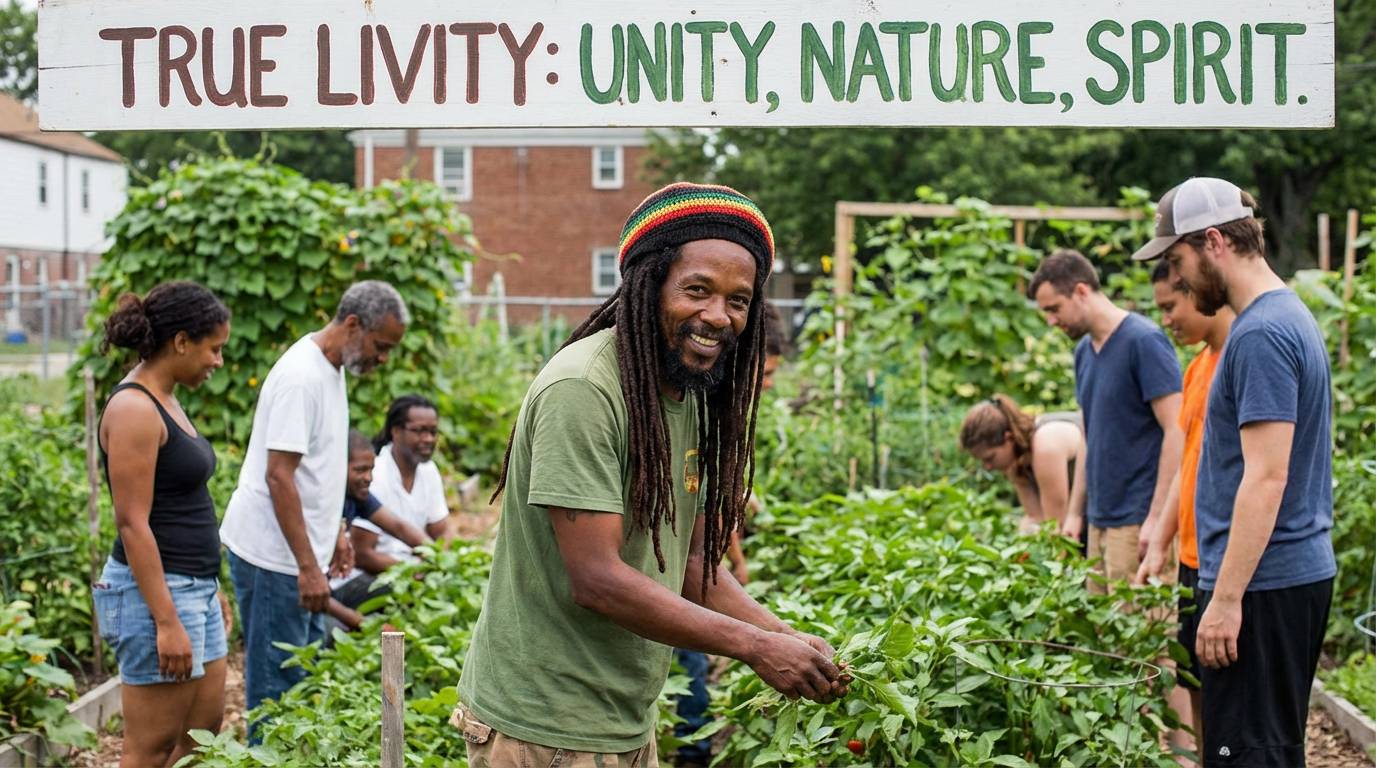
The Rasta lifestyle also speaks to a basic human desire for balance. Many people long for a way of life that does not separate body from spirit, food from meaning, community from growth, or culture from daily conduct. The Rasta path brings these things back together. It encourages a more integrated life.
This integration becomes especially meaningful in times when modern life feels fractured. People may have more devices, more information, more convenience, and yet feel less whole. A lifestyle centered on roots, clarity, and intention becomes attractive precisely because it addresses that fragmentation at the level of daily living.
What It Means to Begin the Journey Respectfully
Because the Rasta lifestyle carries depth, beginning the journey requires a certain posture. The first step is not claiming. It is listening. It is possible to admire a culture and still approach it carelessly. Respect begins when one recognizes that learning comes before performance.
Learn Before You Claim
In a fast culture, people often want immediate identity. They want to adopt a language, a style, or a symbol and let that visible change stand in for deeper understanding. But the Rasta lifestyle does not unfold well under that approach. It asks for study. It asks for historical grounding. It asks for spiritual humility.
This means reading, listening, reflecting, and paying attention to the voices and traditions that have carried the culture with seriousness. It also means recognizing the difference between appreciation and appropriation, between interest and imitation, between influence and understanding.
Approach With Humility
Humility protects both the learner and the culture. It allows a person to say, honestly, “I am learning,” rather than trying to display an identity they have not yet grown into. Humility makes room for correction. It makes room for reverence. It keeps curiosity from hardening into performance.
In many ways, humility is already part of the lesson. A path centered on truth cannot be approached truthfully through pretense. The tone of the journey matters. A respectful learner does not rush to wear every symbol. They try first to understand what the symbol is carrying.
Let Understanding Change Daily Life
Real learning eventually becomes practice. If the Rasta lifestyle teaches anything, it teaches that meaning must move into conduct. A person who is genuinely learning may begin to question what they consume, how they speak, what values guide their decisions, or how much of life has been handed over to noise and distraction.
These changes do not have to happen all at once to be real. The important thing is sincerity. Small shifts made with honesty are stronger than dramatic displays made for attention. Over time, what begins as curiosity can become a more grounded way of moving through the world.
- Study the roots before adopting the symbols.
- Listen to serious voices within the culture.
- Approach with humility rather than performance.
- Let what you learn shape daily choices and conduct.
The Deeper Lesson of True Livity
The word livity carries much of what this entire article has been reaching toward. It is not only a concept but a felt way of living. It points to the quality of one’s life-force, one’s conduct, one’s vibration, one’s way of inhabiting the world. A person may know the visible symbols of Rasta culture and still miss livity entirely. Another person may be quietly learning to live with greater truth, clarity, gratitude, and rootedness, and be much closer to its essence.
True livity asks for integration. It asks that spiritual awareness not remain abstract. It asks that dignity show up in conduct. It asks that identity be grounded rather than borrowed. It asks that resistance not become empty anger, but be joined to a constructive vision of life. It asks that one’s relationship to food, time, people, and the earth all reflect a greater consciousness.
This is why the Rasta lifestyle continues to matter even beyond the communities that gave it birth. Its lesson is not narrow. It speaks to universal problems through a rooted language. It reminds people that life without depth becomes easy to manipulate. It reminds them that culture without memory becomes easy to market. It reminds them that symbols without spirit become hollow. And it reminds them that another way of living is possible.
To understand the Rasta lifestyle, then, is not to collect images. It is to ask harder questions about how life is being lived, what values are being served, and whether the soul is becoming more aligned or more distracted. Those questions do not belong to curiosity alone. They belong to transformation.
Conclusion: Beyond the Image, Toward the Root
The Rasta lifestyle begins where stereotype ends. Once the surface image is stripped away, what remains is a deeper path shaped by consciousness, identity, spiritual direction, discipline, resistance to false systems, and a search for more natural and truthful living. It is not a quick identity, and it is not a shallow one. It asks more of a person than imitation ever could.
That is exactly what gives it power. In a world overflowing with image and starving for depth, the Rasta lifestyle continues to call people back to roots. It asks them to live more deliberately, more reverently, and more honestly. It invites them to remember that the strongest expressions are born from the deepest convictions.
Yet no lifestyle appears fully formed out of nowhere. The values explored here were shaped by history, struggle, vision, and a wider movement that emerged in a specific place and time. To understand how this way of life came into being, the next step is to go deeper into the historical roots of Rastafari itself—into Jamaica, Ethiopia, Marcus Garvey, and the rise of a movement that would reshape cultural and spiritual imagination far beyond the island where it began.