Few forces have carried the Rasta message farther than music. Many people first encounter Rastafari not through books, formal teachings, or direct contact with a community, but through sound. A bassline reaches them. A drum pattern steadies them. A voice chants of Babylon, Zion, liberation, Jah, suffering, hope, or return. Before the full meaning is understood, something in the vibration already begins to work. That is part of the power of reggae Nyabinghi sacred sound.
In the Rasta lifestyle, music is not merely background. It is not just leisure, atmosphere, or performance. It is one of the great carriers of memory and meaning. It teaches. It warns. It consoles. It gathers people. It preserves rhythm where history has tried to create rupture. It keeps alive the relationship between struggle and faith, between suffering and vision, between the present moment and deeper roots.
This is why reggae matters so deeply. Reggae is often discussed only as a genre, but in the Rasta context it also functions as a messenger. It takes ideas that might otherwise remain hidden in small gatherings and sends them into public life. Through song, concepts like Babylon, Jah, freedom, oppression, Africa, livity, righteousness, and endurance become audible. The music turns theology, history, and social critique into something felt as well as understood.
Yet reggae is not the whole story. Beneath and behind reggae stands Nyabinghi, the sacred drumming and chant tradition that carries a deeper ceremonial and communal energy. If reggae often becomes the outward ambassador of the culture, Nyabinghi remains one of its inward rhythmic hearts. Together, these forms reveal that in the Rasta lifestyle sound is never empty. Rhythm has memory. Chant has force. Repetition has spiritual effect. Bass is not only musical structure; it is grounding.
To understand the Rasta lifestyle fully, one must listen as seriously as one looks. The culture is visible in colors and locks, but it is also audible in drum, chant, and conscious lyric. Sound is one of the ways the path stays alive. It keeps the message moving.
Why Music Matters in the Rasta Lifestyle
Music matters in every culture, but in the Rasta way of life it carries a particularly strong spiritual and communal role. This is because sound can do something that ordinary speech often cannot. It can join thought to feeling, memory to movement, protest to prayer, and community to shared rhythm. It reaches the body as well as the mind. It makes truth resonant.
Sound as More Than Entertainment
In much of modern culture, music is treated as product first. It becomes something to stream, consume, rank, market, or attach to mood. The Rasta understanding pushes against that reduction. Music can still be enjoyed, celebrated, danced to, and cherished, but its role goes deeper. It can be a vessel of witness. It can carry warning against oppression, remembrance of ancestors, praise toward Jah, and teaching for those who are listening closely.
This helps explain why so many roots songs feel weightier than mere entertainment. Even when the arrangement is warm, rich, and inviting, the content often remains serious. The song may speak of injustice, exile, survival, discipline, faith, return, or the need to remain conscious. The pleasure of the sound does not cancel the message. Instead, it makes the message more memorable and more widely carried.
Music also creates emotional access. A teaching spoken plainly may be ignored. Sung through melody and rhythm, it may pass through the defenses of the listener. This is one reason sacred and resistant music has always been powerful. It can reach what argument alone cannot.
Rhythm and Identity
Rhythm is not decorative in the Rasta world. It is grounding. The pulse of drum and bass has a physical effect. It reminds the body of steadiness. It gives shape to collective movement. It helps restore a sense of order in a world that often feels fractured. This grounding quality is one reason bass is so important in reggae and why drumming remains so central in Nyabinghi.
Rhythm also carries identity. Repeated patterns become recognizable signatures of belonging. A certain drum feel, a one-drop groove, a chant response, a bassline that leans heavily into space and pulse—these are not merely technical features. They form part of a cultural language. They tell listeners that they are within a particular sound-world shaped by roots, memory, and message.
In this sense, rhythm preserves continuity. It transmits more than style. It transmits atmosphere and worldview. Even when lyrics are not fully understood, the rhythm can already signal seriousness, grounding, warmth, and rootedness.
The Power of Nyabinghi
To discuss sacred sound in Rasta life without discussing Nyabinghi would be to miss one of the deepest foundations. Nyabinghi refers to a ceremonial drumming and chant tradition that carries spiritual, communal, and historical significance. It is one of the places where rhythm is most clearly linked to devotion, meditation, and gathering.
Drumming and Sacred Assembly
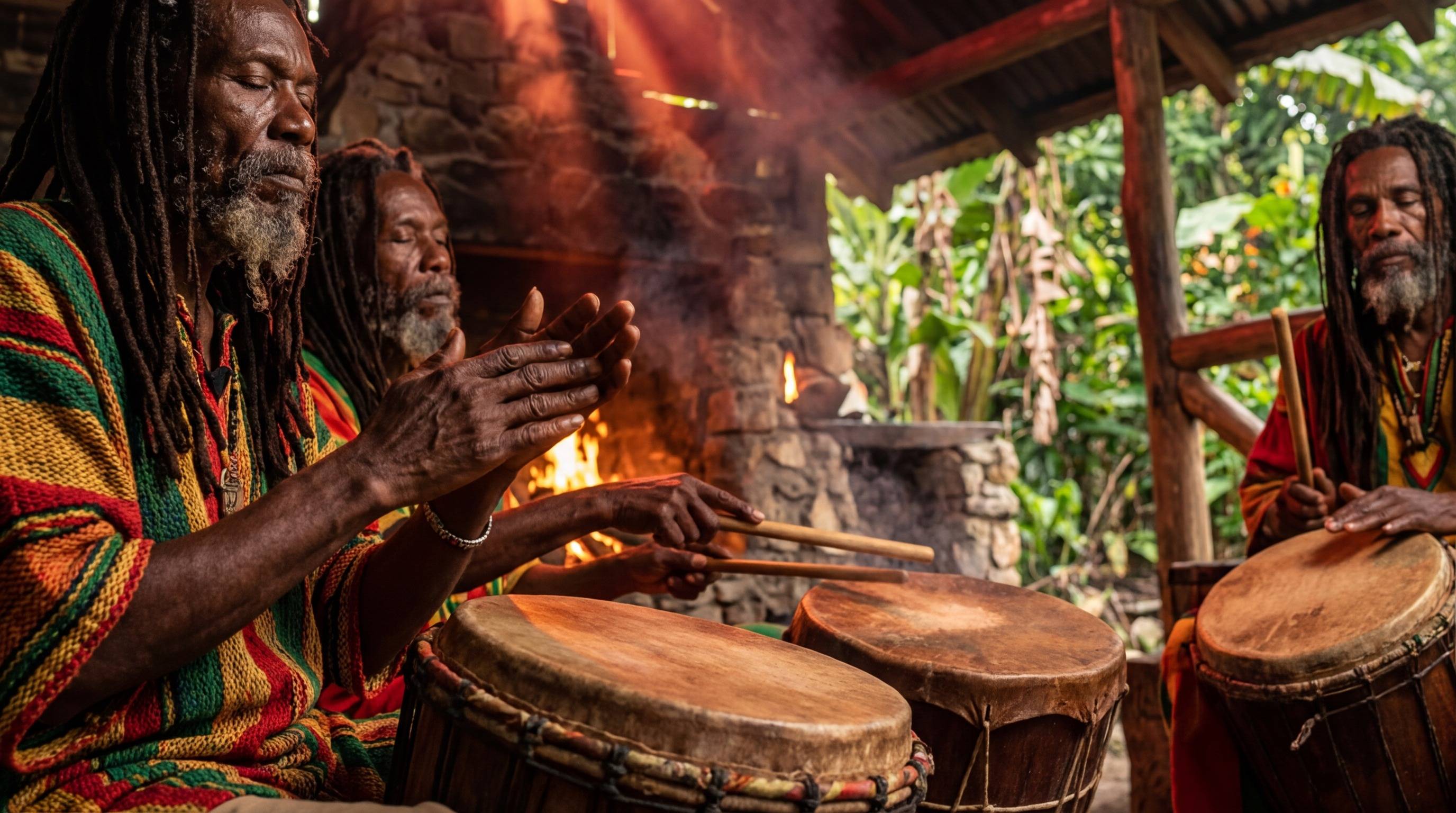
Nyabinghi drumming is not simply a musical technique. It is tied to assembly. People come together. Drums answer one another. Chant rises. The body enters a shared field of rhythm. Time seems to shift. The sound becomes more than individual performance. It becomes collective atmosphere. This is crucial because it shows that sacred sound in the Rasta tradition is not only recorded music. It is lived gathering.
The communal nature of Nyabinghi matters deeply. A single person can pray alone, but when a community drums, chants, and reasons together, the spiritual force becomes social as well as inward. The gathering itself becomes a form of affirmation: we are here, we remember, we praise, we resist, we endure.
The drum, in this context, is both musical and symbolic. It calls people back into presence. It creates continuity with African rhythmic inheritance. It anchors the gathering in something older than modern distraction. The sound says that memory is still alive.
Chant, Repetition, and Spiritual Elevation
Chant is central to Nyabinghi because repetition has power. When phrases are repeated in rhythm, they begin to move beyond ordinary speech. They settle into the body. They shape breathing. They shift attention. The mind, usually scattered by countless small concerns, begins to gather around a simpler and stronger center. This is one reason chant can function as meditation, praise, and resistance all at once.
Repetition is often misunderstood by those who value novelty above depth. Yet many spiritual traditions know that repetition can create focus and spiritual elevation. In Nyabinghi, repeated chant lines become a way of holding collective consciousness in one direction. They sustain attention. They carry prayer. They build force through return rather than through constant change.
This quality also reveals why Nyabinghi cannot be judged only by the standards of commercial music. Its goal is not merely innovation or spectacle. Its power lies partly in its steadiness, its insistence, and its ability to turn rhythm into communal spiritual practice.
Reggae as Messenger
If Nyabinghi is one of the inward sacred hearts of Rasta sound, reggae is one of its great outward messengers. Through reggae, the message of Rastafari traveled far beyond local gatherings and into global consciousness. Reggae made many spiritual, political, and cultural themes portable. It carried them into homes, dance halls, radios, cars, stages, and international imagination.
Conscious Lyrics and Social Truth
One of reggae’s most powerful features is the seriousness of its lyric tradition. At its strongest, reggae does not speak only of private feeling. It addresses systems, suffering, injustice, exile, corruption, hope, return, African memory, and the call to remain awake. This lyrical seriousness makes the genre especially important in the Rasta lifestyle, because it gives musical form to reasoning.
Songs can teach about Babylon without sounding like lectures. They can speak of oppression without losing poetic force. They can lift the name of Jah in ways that combine reverence with melody. They can call listeners toward righteousness while still moving the body. This joining of message and groove is one reason reggae became such a powerful vehicle for consciousness.
Reggae lyrics also preserve emotional truth. They do not only list grievances. They reveal how oppression feels, how longing for liberation feels, how faith persists under pressure, how exile aches, and how hope can survive amid hardship. In doing so, the music becomes not just information, but testimony.
Artists as Carriers of Message
In the context of roots culture, artists are often more than entertainers. They become carriers of message. Their responsibility is not small. Through voice, phrasing, rhythm, and lyrical content, they can spread ideas and attitudes to audiences who may never encounter the culture in any other way. This gives music a teaching role.
A conscious artist can remind listeners of dignity when the world trains them toward self-doubt. They can expose false systems when those systems present themselves as normal. They can keep memory alive when forgetting becomes profitable. They can call people back toward roots, discipline, and Jah when culture drifts toward surface and distraction.
That is why the artist’s role in roots reggae is often weightier than celebrity culture would suggest. The best of this music carries moral labor. It does not merely attract attention. It shapes consciousness.
Why Reggae Became So Powerful
- It carried spiritual and political ideas in memorable musical form.
- It joined lyrical seriousness to groove and emotional force.
- It turned private pain and collective struggle into shared testimony.
- It allowed artists to function as messengers, witnesses, and teachers.
The Emotional and Cultural Force of Reggae
Reggae does not carry message only through words. It also carries it through emotional texture. A deep bassline, a patient guitar skank, spacious drums, a grave or yearning voice, harmonies that sound worn but hopeful—these elements all contribute to the cultural force of the music. They shape how the message is felt.
How Songs Carry Memory and Pain
Many roots reggae songs hold sorrow without collapsing into defeat. They acknowledge suffering, social violence, displacement, poverty, and betrayal, but they do so from within a frame of endurance. This gives the music a particular emotional character. It can be mournful and strong at the same time. It can recognize pain without surrendering the possibility of dignity.
This balance is important because it mirrors a deeper cultural reality. Communities shaped by oppression often develop art forms that carry both wound and survival. Reggae is one of these forms. It becomes a container for remembering pain without being destroyed by silence. It keeps truth audible.
Memory in this sense is not nostalgia alone. It is cultural preservation. The song remembers what official histories often omit or sanitize. It keeps alive the voices of those who have had to struggle to remain visible.
Joy, Hope, and Prophetic Energy
Yet reggae is not only burdened with sorrow. It also carries joy, beauty, humor, tenderness, strength, and prophetic energy. The same music that warns against Babylon can also celebrate life, give thanks, praise Jah, and create a feeling of shared upliftment. This is one reason the music remains so alive. It does not flatten the human experience into one mood. It moves through grief and hope, warning and worship, resistance and celebration.
Prophetic energy is especially important. Many reggae songs sound as though they are speaking not just to a moment, but beyond it. They challenge listeners morally. They ask people to wake up, to remember, to return, to stop sleeping inside false systems. This gives the genre a timeless quality when done well. It speaks into recurring conditions of injustice and spiritual confusion.
The combination of joy and warning is one reason reggae can feel both grounding and awakening. It steadies the listener while also stirring them.
Music in Everyday Rasta Living
Though sacred sound reaches ceremonial heights in gatherings and full force in recorded roots music, it also lives in everyday practice. The Rasta lifestyle does not reserve meaningful sound only for special occasions. Music can shape the mood of the day, deepen meditation, accompany work, support reflection, and serve as a reminder of values that might otherwise fade beneath daily pressures.
Listening as Reflection
To listen seriously is itself a practice. In a culture full of disposable audio, background noise, and constant streaming, conscious listening becomes rare. Yet in roots tradition, listening can be reflective. A person hears the lyric, hears the drum, hears the bass, and allows the song to instruct rather than simply fill silence.
This style of listening changes the relationship to music. The song is no longer just a soundtrack for other activity. It becomes part of reasoning. A line may stay in the mind for hours. A chant may correct a restless mood. A steady groove may return the body to rhythm after a day of noise and fragmentation.
In this way, listening becomes one of the quiet disciplines of everyday livity. It protects the spirit from being fed only shallow sound.
Chanting, Gathering, and Shared Learning
Sound also becomes communal in ordinary settings. Families, bredren, sistren, and community circles may gather around music not just for amusement but for shared learning, memory, and atmosphere. Songs become references. Lyrics become points of discussion. Rhythms become common ground. The music helps hold collective identity.
This communal aspect matters because it means sound is not only consumed individually through headphones and private playlists. It can still create space where people reason, remember, and align together. In this way, music supports the social body of the culture as well as the private life of the listener.
Sound as Meditation and Movement
Everyday movement can also be shaped by sacred sound. Certain rhythms calm the nervous system. Certain chants create focus. Certain songs make work feel less fragmented. Certain basslines help a person feel grounded in the body again after excessive mental strain. This does not make all music sacred, but it does show how sound can be used consciously.
In the Rasta lifestyle, this conscious use of sound reinforces a larger principle: vibration matters. What surrounds the ear and enters the body influences the spirit. The person therefore becomes more attentive to the kind of sonic environment they live inside.
Global Reach and Cultural Responsibility
One of the great ironies of reggae’s success is that the wider the music travels, the greater the risk that its roots are forgotten. Global recognition has brought beauty, exchange, and influence. It has also created pressure to simplify, commercialize, or separate the music from the deeper culture that gave it meaning.
When the Message Is Separated From the Music
Music becomes vulnerable whenever sound is detached from message. A groove may remain appealing even if the listener ignores the lyric. A style may be copied while the consciousness behind it is discarded. This can leave reggae sounding familiar while no longer functioning as a messenger. It becomes form without burden.
That loss matters because much of reggae’s distinctiveness lies precisely in the union of rhythm and message. Strip away the moral, spiritual, and historical content, and something vital fades. The music may still be enjoyable, but it no longer carries the same charge.
This is why rooted listeners often remain protective of the genre’s seriousness. They understand that what is at stake is not just taste, but cultural memory. Music that once helped name oppression and lift consciousness can be turned into harmless background if its message is consistently ignored.
Protecting Roots Within Popularity
Popularity is not always the enemy of depth, but it requires responsibility. Artists, listeners, writers, and communities all play a role in preserving roots. This can mean discussing lyrics seriously, teaching younger listeners the histories behind the songs, honoring Nyabinghi and other sacred foundations, and refusing to let commercial trends define the entire meaning of the sound.
Protecting roots also means honoring the communities and spiritual traditions that sustained the music before it became global commodity. Without those living sources, reggae risks becoming aesthetic heritage without present conscience. The goal is not to freeze the music in one era, but to keep its deeper center alive even as it grows.
Keeping Sacred Sound Rooted
- Global influence brings both opportunity and dilution.
- Reggae is strongest when rhythm and message remain joined.
- Nyabinghi helps preserve sacred and communal foundations.
- Listeners and communities share responsibility for protecting the roots of the sound.
When Sound Becomes Witness
The deepest lesson of sacred sound in the Rasta lifestyle is that music can become witness. It can testify to suffering without surrendering hope. It can challenge corruption without losing beauty. It can praise Jah while naming the harshness of Babylon. It can steady the body, awaken the mind, and strengthen collective memory all at once.
This is why sound matters so much here. It does not remain decorative. It becomes part of how truth survives. A people who drum, chant, sing, and reason through music do not rely only on official institutions to preserve meaning. They carry meaning in vibration. They teach it through rhythm. They hand it on through repeated sound.
Even in times when words are censored, ignored, or reduced, music can remain. The drum can still speak. The bass can still gather. The chant can still rise. The song can still keep memory alive. That continuity makes sound one of the strongest forms of cultural and spiritual endurance.
This endurance explains why the Rasta message has traveled so far. It was not carried only in text or doctrine. It was carried in form people could feel in the body. Once truth begins to move through rhythm, it becomes harder to contain.
Conclusion: The Message in the Rhythm
Reggae, Nyabinghi, chant, and sacred sound reveal that the Rasta lifestyle is not only thought and symbol. It is vibration. Through drum, bass, lyric, repetition, and communal rhythm, the culture keeps its message alive in ways that are intellectual, emotional, bodily, and spiritual at once. Music does not merely decorate the lifestyle. It helps sustain it.
This is why listening matters. To hear reggae seriously is to hear more than melody. It is to hear memory, resistance, reverence, warning, endurance, and hope braided together. To hear Nyabinghi seriously is to hear more than percussion. It is to hear gathering, prayer, continuity, and the sacred weight of repetition. Sound becomes one of the great teachers of the path.
Yet no lifestyle is lived through music alone. The message carried in sound must eventually be embodied in community, conduct, family life, respect for elders, daily habits, and the practical rhythms of shared living. So the next part of this series turns from sacred sound to daily life itself: community, reasoning, discipline, and how the Rasta lifestyle is lived in ordinary practice from one day to the next.