
Reggae Dread · Reggae Beyond the Record · 04
Ital Food Growing Everyday Livity
Follow the choices connecting a meal with land, work, spiritual practice and the people gathered around the table.
1. A meal begins before the pot reaches the fire
Before a pot reaches the fire, someone has made decisions. A grower has tended a crop. A shopper has weighed what is available against what the household can afford. Someone has planned the cooking, found the time and considered who will be eating.
A meal carries those decisions to the table. Its meaning extends through the hands that prepared it and the relationships it helps sustain.
For Rastafari, food can be part of livity: the daily expression of spiritual understanding through conduct and relationships. Food belongs in that conversation. It connects beliefs about life with the practical work of buying, growing, preparing and sharing what people eat.
The word ital, also written I-tal, is often associated with food understood as natural and life-sustaining within Rastafari practice. Its meaning comes from a living spiritual tradition. Joseph Powell's study of dietary practice, based on interviews in Jamaica and Britain, places those choices within Rastafari interpretation of scripture and everyday life. 1
That perspective changes the questions we bring to a meal. Alongside asking for a recipe, we can ask why particular ingredients matter, how someone understands their relationship with the land and what responsibilities accompany feeding other people.
A recipe can tell us how to bring ingredients together. A conversation with the cook may reveal the experience behind those instructions: a family habit, a commitment, an adjustment to a new place or a response to limited resources.
Start with an ordinary kitchen
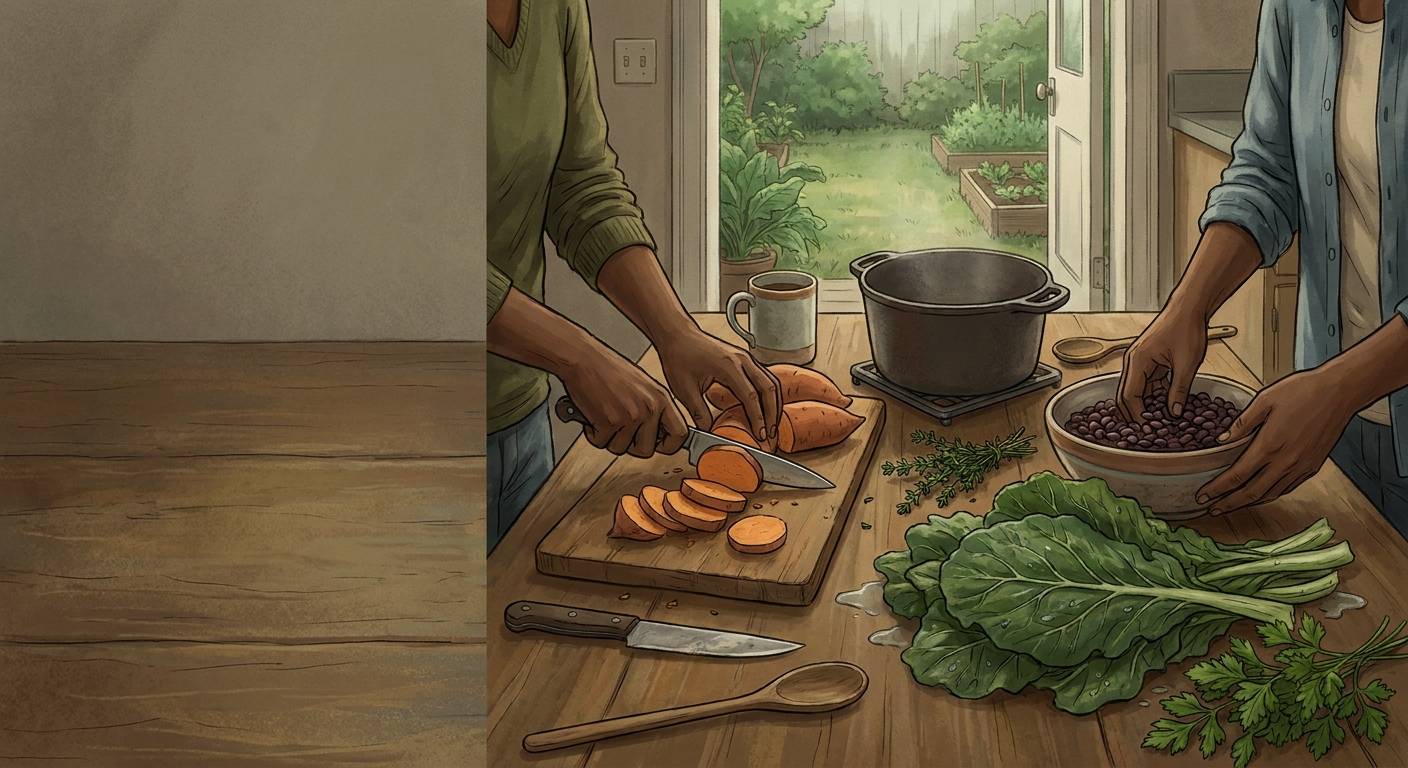
Consider a meal of beans, cooked greens, a starchy vegetable and a sauce seasoned with herbs. That description gives us a starting point without declaring one arrangement the definitive ital plate.
The meal could begin in a household garden, a produce market or a neighborhood shop. The beans might require soaking and a long cooking time. The greens may need sorting and washing. Someone has to judge when the different parts will be ready together.
These actions are easy to overlook when food appears only as a finished photograph. Yet much of the care in a meal happens before anyone sees the plate.
A useful introduction to ital should make that work visible. It should also leave room for the people practicing it to explain their own choices.
2. Listen to the people who practice ital
A living tradition with different expressions
Rastafari practitioners do not all make identical food choices. People may differ in their treatment of animal foods, salt, packaged ingredients, preparation methods and the meaning of naturalness. Understanding those differences requires listening to particular people and communities.
Powell's research draws attention to the spiritual reasoning through which people understand dietary practice. That approach helps us avoid turning ital into a shopping label whose meaning can be settled by looking at one ingredient list. 1
Ask a practitioner what ital means in their life, and give the answer room to develop. A person may speak about honoring life, keeping the body in a certain condition, maintaining a spiritual commitment or choosing how to engage with a wider food system. The emphasis can vary.
A visitor can participate respectfully by asking practical questions before preparing food for someone else. Which ingredients do you use? Are there foods you avoid? How would you like them prepared? These questions support hospitality without making the guest defend an identity.
The same care applies when writing about a meal. Describe whose practice is being discussed. A cook's explanation is meaningful evidence of that person's understanding; it should not automatically become a rule for every Rastafari household.

A community's account of garden and kitchen
The Rastafari Indigenous Village near Montego Bay offers one concrete example. On its own website, the community describes a garden where callaloo or cacao can be harvested and taken to its ital kitchen. It also presents cooking alongside craft, reasoning with elders and other activities within a functioning community. 2
The connection between growing and preparing food is explicit in that account. A plant has a place in a garden before it becomes an ingredient. A kitchen sits within a community whose members have other responsibilities and skills.
That example invites us to notice the whole sequence. Who knows when a crop is ready? Who decides what will be cooked? How is knowledge passed to someone helping for the first time? What happens when the garden produces more or less than expected?
Those questions belong to food culture as much as the seasoning in a pot. They also keep people present in a story that might otherwise become a collection of attractive tropical images.
Food and the work of independence
Food can also be connected with livelihood. Fernando Vieira de Freitas's research on Bobo Shanti food traders examines relationships among ital practice, conduct and the desire for autonomy in work. The study concerns a particular community and setting, rather than every expression of Rastafari. 3
Selling food involves a range of skills: obtaining ingredients, preparing them, deciding quantities, serving customers and managing the day's costs. A food seller may be both a cultural worker and someone trying to earn a living.
That helps us think more carefully about what a price means. A bowl of soup includes ingredients and cooking, but it also rests on planning, fuel, transport, equipment and someone's time. Appreciation becomes more substantial when it recognizes that labor.
3. Grow something you can use, within the conditions you have
Begin with a place and a meal
A food garden becomes more useful when it connects with how a household actually cooks. Before ordering seeds, identify one ingredient you would enjoy harvesting regularly. Then look at the conditions you can provide.
A person with a sunny yard has different options from someone with a shaded balcony. A renter may need a movable container. A household with limited water may choose a smaller growing area that can be maintained consistently. The climate, season and time available all matter.
For readers in the Northern California foothills, conditions can change considerably with elevation and exposure. A planting plan should respond to the actual site. The Jamaican setting that shaped a culinary tradition cannot simply be reproduced through a photograph or a list of crops.
The purpose of beginning small is practical. A well-tended container of a useful herb or a modest planting of seasonal greens can become part of everyday cooking. It also gives a gardener an opportunity to learn from the plant's response to sun, weather and care.
Match the plant to the container
University of California Master Gardener guidance identifies several essentials for container vegetables: suitable light, adequate container size, drainage, an appropriate growing medium and regular attention to water and nutrients. Those needs vary with the crop and the setting. 4
Start by looking at the mature plant, not just the seedling. Its roots will need room, and a large plant will ask more of a small container as it grows. A container must allow excess water to drain.
Use a potting mix suited to containers. UC Marin's guidance notes that ordinary garden soil can create problems in pots and that container plants require more frequent attention to watering and feeding than plants growing in the ground. 5
A simple observation routine will help. Check the growing medium, look at the leaves and notice how quickly the container dries under different conditions. Adjust care to what is happening. A schedule written during mild weather may need revision during a hot spell.
Growing food also teaches proportion. A handful of herbs may transform several meals. A small harvest of greens can supplement what a household buys. The garden's value can be measured in use and learning as well as the total weight brought indoors.
Water is part of the relationship
A gardener's responsibility continues after planting. Water has to reach the roots when the plant needs it, and the growing area must be small enough for the household to maintain.
Before expanding a food garden, ask how watering will fit into the week. Who checks it when the usual gardener is away? Can a person reach the containers comfortably? Is the water source convenient enough that care will actually happen?
Those questions may seem ordinary, but they connect an ideal with a workable daily practice. A garden that depends on more time or water than a household can provide may become another pressure on already busy people.
Ital can encourage attention to relationships with life and land. In a home garden, attention takes a practical form: noticing conditions, choosing an appropriate scale and following through on care.
Buying food is also a relationship
Many people obtain most of their food through shops, markets or other growers. Their circumstances deserve a place in the discussion.
A person may lack land, stable housing, time, physical capacity or permission to garden. A household may grow a little and buy the rest. Another may rely entirely on purchased food while still giving serious thought to how it is prepared and shared.
Ask what is possible within the actual budget. Seasonal produce, dried staples and ingredients already used at home can provide a starting point. A thoughtful meal does not have to demonstrate purchasing power.
The broader relationship between place and practice is explored in Rasta Lifestyle in the Foothills vs City. Here, the practical question is how food routines can become more attentive under the conditions a person has.

4. Cooking and sharing make the work visible
Build a meal around the people eating it
A shared meal begins with knowing who will be at the table. Ask about preferences and requirements, then plan something that can be prepared with the time, equipment and ingredients available.
One adaptable arrangement is a pot of beans or peas, a cooked staple, vegetables and a seasoning component. The exact ingredients can change with place and household practice. This is a planning example, rather than a claim to represent every ital tradition.
Think about the order of work. Which ingredient takes longest? What can be prepared while it cooks? What needs to be finished close to serving? A small amount of planning can make the difference between a cook participating in the gathering and spending the entire occasion struggling to keep up.
Seasoning also carries knowledge. Ask a cook how they choose herbs and spices, and listen for the decisions that measurements alone may miss. They may describe the aroma, the appearance of a vegetable or the point at which an ingredient changes in the pot.
That kind of knowledge can be shared through doing. A second person can wash, sort, cut, watch and ask questions. The meal becomes a place of learning, with responsibility suited to each participant's ability.
Count the hands, including the ones cleaning up
The person who serves the food may be the most visible, but other people may have planned the meal, carried the shopping, grown an ingredient or cleaned the cooking space.
Naming that work changes how a household shares responsibility. Ask who is expected to notice when ingredients run out, who makes the list and who gives up other time so a meal can happen.
These questions matter especially when cultural appreciation celebrates a beautiful table while treating the labor behind it as automatic. Care takes time and skill. The people providing it deserve participation in decisions and recognition for what they contribute.
A chapter in Beyond the Kitchen Table: Black Women and Global Food Systems examines Rastafari women operating family food businesses in Shashamane, Ethiopia. Its abstract connects food work with autonomy, migration and household responsibilities. It offers another reminder that the kitchen can be a place of enterprise as well as care. 6
The circumstances of those women differ from a home garden or a community kitchen in Jamaica. Keeping the settings distinct allows us to see the relationships among food, work and responsibility without making every experience the same.

Let a meal carry a conversation
A shared table can hold different kinds of memory. Someone may remember a dish prepared by an elder. Another person may have learned to cook after leaving home. A younger participant may bring a preference that changes how the family prepares a familiar ingredient.
Ask a specific question: Who taught you to make this? What did you change when you moved? Which ingredient was difficult to find? A concrete answer can reveal more than a general statement about tradition.
Migration often changes what a household can obtain, grow or afford. Adaptation can preserve a relationship through a different ingredient or method. The people making those choices should be allowed to explain what they feel they are carrying forward.
Our companion article, Jamaica to Britain: How Reggae Records Connected Lives, follows a different part of that daily work: how people and recordings sustained relationships across places.
Music can accompany the table
Reggae may be part of a gathering, chosen by someone who knows the people present. A record can bring a memory into the room, prompt a conversation or simply give pleasure while people work.
The connection becomes richer when the music and the food are allowed their own histories. Ask who made the recording, who introduced it to the household and why that person chose it for this occasion.
A playlist titled with a cultural identity cannot explain the lives behind it. A conversation can begin that work. The same is true of a meal presented as ital: the people, choices and relationships give the description substance.
5. Make one daily choice more thoughtful
Ital invites a person to consider how a principle enters everyday life. A useful response is to begin with an activity that can be carried through, observed and discussed.
Choose one meal you already prepare. Trace its ingredients and the work required to bring it to the table. Then choose one change that fits the household's circumstances.
| Part of the meal | A question to ask | A possible next step |
|---|---|---|
| Ingredients | What do we use often and enjoy eating? | Plan a meal around available seasonal produce and familiar staples. |
| Growing | What can this site and household maintain? | Try one suitable herb or vegetable in an appropriately sized container. |
| Buying | What fits the budget and preparation time? | Make a short list that connects ingredients to meals you will actually cook. |
| Cooking | Who holds the knowledge and does the work? | Prepare a dish together and record what the cook wants to share. |
| Sharing | Who can participate in the meal and the cleanup? | Agree on tasks before the gathering begins. |
| Remembering | Whose experience gives this meal meaning? | Ask one specific question and keep the answer with their permission. |
The value lies in following through. A plant needs continuing care. A new shopping habit needs to fit real finances. A promise to share cooking matters when the work is actually shared.
You can also make a simple meal record. Note the ingredients, the date, the people involved and what you would adjust next time. Keep a separate space for an elder's or friend's explanation, so their words and experience remain associated with them.
Be equally thoughtful about sharing that record publicly. A family recipe or story may be offered for use at home without being offered for publication. Ask what the person wants to pass on and how they would like to be named.
What the meal helps us see
Across this article, garden, shop, kitchen and table have appeared as connected places. Each involves practical choices, and each can carry a relationship beyond the finished plate.
That is also a theme of Women Who Kept Reggae Moving: Shops, Labels and Distribution. The subject there is recorded music, but the attention to work is related: identify the people whose decisions make an experience possible.
A respectful encounter with ital begins by listening to practitioners and recognizing that livity is lived through particular circumstances. From there, a reader can examine their own habits without pretending to speak for an entire tradition.
Choose a meal. Notice its ingredients, the land and labor behind them, and the people who make space for others at the table. Let that attention lead to one action you can sustain.
Sources and further reading
- Joseph Powell: “Ital Hermeneutics”, Black Theology 19(1), 2021 — publication record and abstract describing research in Jamaica and Britain.
- Rastafari Indigenous Village: About the community — the community's own description of its garden, kitchen and daily setting.
- Fernando Vieira de Freitas: “No-boss but the I-man” — research abstract on Bobo Shanti food trade and autonomy.
- UC Master Gardener Program: Growing vegetables in containers — site, crop, container and care considerations.
- UC Marin Master Gardeners: Edibles in containers — growing media, watering and practical container guidance.
- “Tasting Freedom: The Rastafari Family Food Beit in Ethiopia”, in Beyond the Kitchen Table — chapter abstract concerning women's food work in Shashamane.