How Marcus Garvey’s Spirit Outlived His U.S. Struggles
They tried to silence him with a courtroom, a cell, and a ship — but his words sailed further than any vessel they could sink.

By the early 1920s, Marcus Garvey’s Universal Negro Improvement Association (UNIA) had become the largest Black organization in the world. Millions followed his speeches, his newspaper The Negro World, and his grand economic dream — the Black Star Line. But power attracts enemies, and Garvey’s meteoric rise drew the eyes of a young FBI agent named J. Edgar Hoover, who vowed to bring him down.
This final chapter in the Garvey in New York series traces how persecution, trial, and deportation failed to kill the movement — and how Garvey’s spirit became immortal long after he left American soil.
- Garvey’s arrest in 1922 and mail-fraud conviction were politically motivated.
- His imprisonment exposed racial double standards in U.S. justice.
- Despite exile, his ideas seeded future liberation movements.
- Garvey’s moral triumph lay in turning defeat into enduring inspiration.
From Vision to Vigilance: The FBI’s Watchful Eye
By 1920, the UNIA had millions of members worldwide. Garvey’s rhetoric — “Africa for the Africans!” — terrified colonial powers and unsettled white America. Hoover, then head of the Bureau of Investigation’s “Negro Affairs” desk, labeled him a “dangerous Negro agitator.” Agents infiltrated meetings, intercepted letters, and monitored the Negro World pressroom.
“Garvey must be deported or imprisoned.” — J. Edgar Hoover, internal memo, 1922
Surveillance reports exaggerated the UNIA’s actions, portraying them as militant. The stage was set for a case that would test both Garvey’s dream and the justice system’s conscience.
The Trial: Mail Fraud and Manufactured Charges
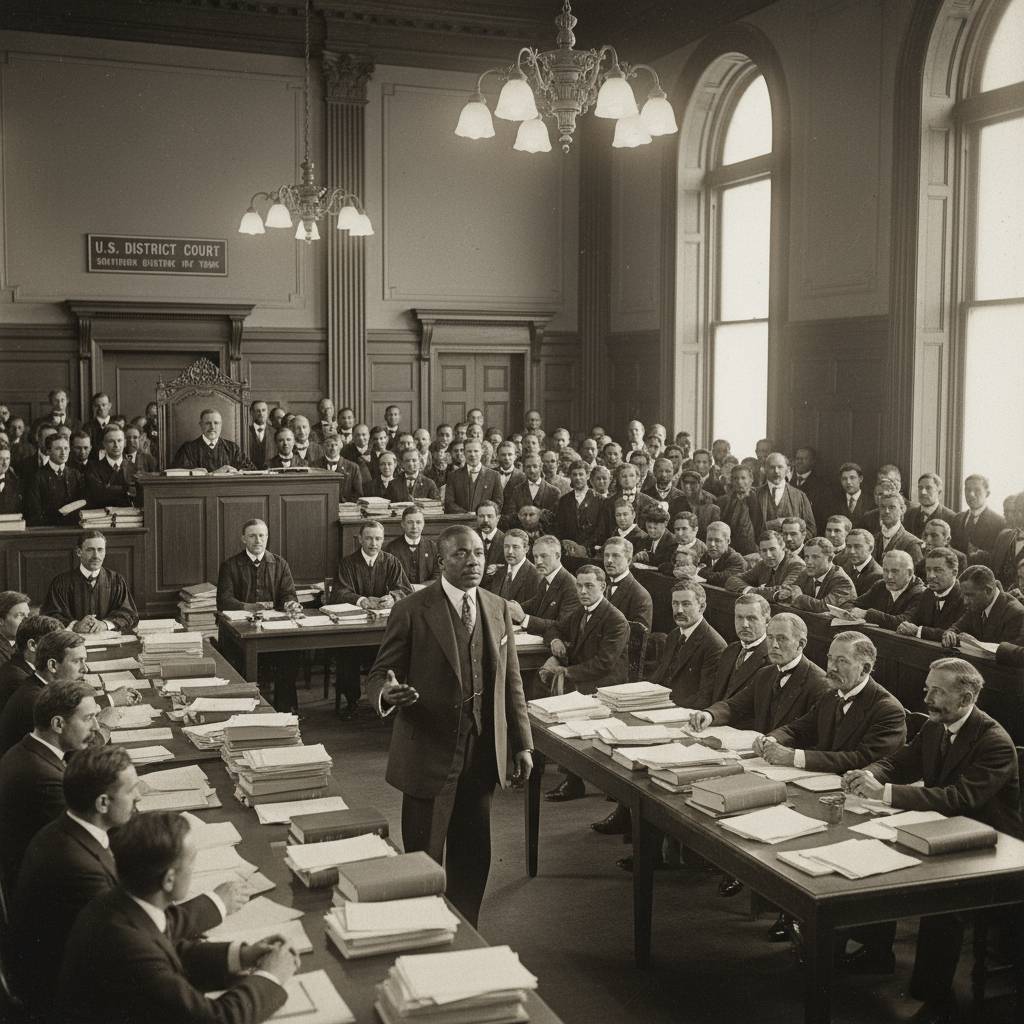
The government’s case centered on the Black Star Line, Garvey’s shipping venture meant to connect Black economies across continents. Agents accused him of mail fraud — claiming he had advertised stock in ships that didn’t yet exist. While similar corporate practices went unpunished among white businessmen, Garvey’s case was pursued with extraordinary zeal.
Garvey, distrustful of lawyers, chose to defend himself in court. His eloquence impressed observers, but bias was evident. An all-white jury, sensational headlines, and racialized commentary poisoned the proceedings.
“I was convicted because I was a Black man who dared to dream of ships.” — Marcus Garvey
- 1922 — Garvey indicted on mail-fraud charges related to the Black Star Line.
- 1923 — Convicted and sentenced to five years in prison.
- 1925 — Imprisoned at Atlanta Federal Penitentiary before later deportation.
Prison: Solitude and Strategy
Behind bars, Garvey refused despair. He continued writing, corresponding with UNIA leaders, and drafting essays that later became part of The Philosophy and Opinions of Marcus Garvey. His cell became a study hall, his letters a pulpit.
Amy Jacques Garvey kept the movement alive, publishing his works and organizing supporters worldwide. Garvey’s enemies believed isolation would silence him — instead, it amplified his myth.
“Look for me in the whirlwind or the storm; I shall return with a legion.” — Marcus Garvey, 1925
- Prison became a site of reflection and literary production.
- Supporters worldwide treated Garvey as a martyr, not a criminal.
- His famous “Whirlwind” prophecy transformed punishment into prophecy.
Deportation: Exile and Evolution
In 1927, after serving two years, Garvey was released and immediately deported to Jamaica. Crowds greeted him at Kingston’s harbor like a returning king. Though separated from Harlem, he continued publishing, speaking, and corresponding with UNIA branches across the globe.
He reorganized the association, hosted conventions, and advised anti-colonial activists from Africa to London. The movement’s U.S. branch declined, but its ideology spread — a trade far more powerful than any ship he could have owned.
“Exile does not end a movement; it internationalizes it.” — Reggae Dread Commentary
Impact: The Seeds of Global Freedom
Garvey’s exile coincided with rising independence movements. African nationalists like Kwame Nkrumah, Jomo Kenyatta, and George Padmore read his writings while studying abroad. In the Caribbean, Rastafari embraced him as a prophet. In the U.S., his words echoed through Malcolm X’s parents — both devoted Garveyites.
Even critics who once opposed him adopted his language of pride and self-determination. His downfall in America became a blueprint for others: that persecution could forge resilience.
- 1930s–40s — Garvey’s essays circulate in anti-colonial networks.
- 1950s — African independence leaders cite his example.
- 1970s — Reggae artists revive his philosophy in sound and spirit.
- Today — Pan-African unity conferences honor his foundational role.
Reflection: Triumph Beyond the Verdict
History’s irony is clear: the government that tried to silence him helped immortalize him. His conviction became proof of integrity; his deportation, a metaphor for diaspora strength. While his body left America, his vision remained — living in music, literature, and activism.
“Garvey lost his trial, but won eternity.” — Reggae Dread Archives
Today, his philosophy survives not only in textbooks but in movements for reparations, cultural pride, and economic justice. The man who was caged for selling dreams ended up freeing countless minds.
Marcus Garvey’s story reminds us that the true measure of victory is endurance. Empires crumble, institutions fade, but ideas — when rooted in dignity — travel further than any ship or decree.
Explore the full “Marcus Garvey in New York (1916–1924)” mini-course series:
- From Kingston to Harlem: Garvey’s Rise as the Voice of Black Nationalism
- Building the Black Star Line: Garvey’s Dream of Economic Liberation
- UNIA and the Harlem Renaissance: How Garvey Sparked a Global Black Awakening
- Love, Leadership & Legacy — Amy Ashwood and Amy Jacques: The Women Behind Garvey’s Movement