What Does Rasta Livity Mean in Everyday Life?
From the food on a table to the way a community remembers its history, livity connects spiritual belief with the choices and relationships that shape an ordinary day.
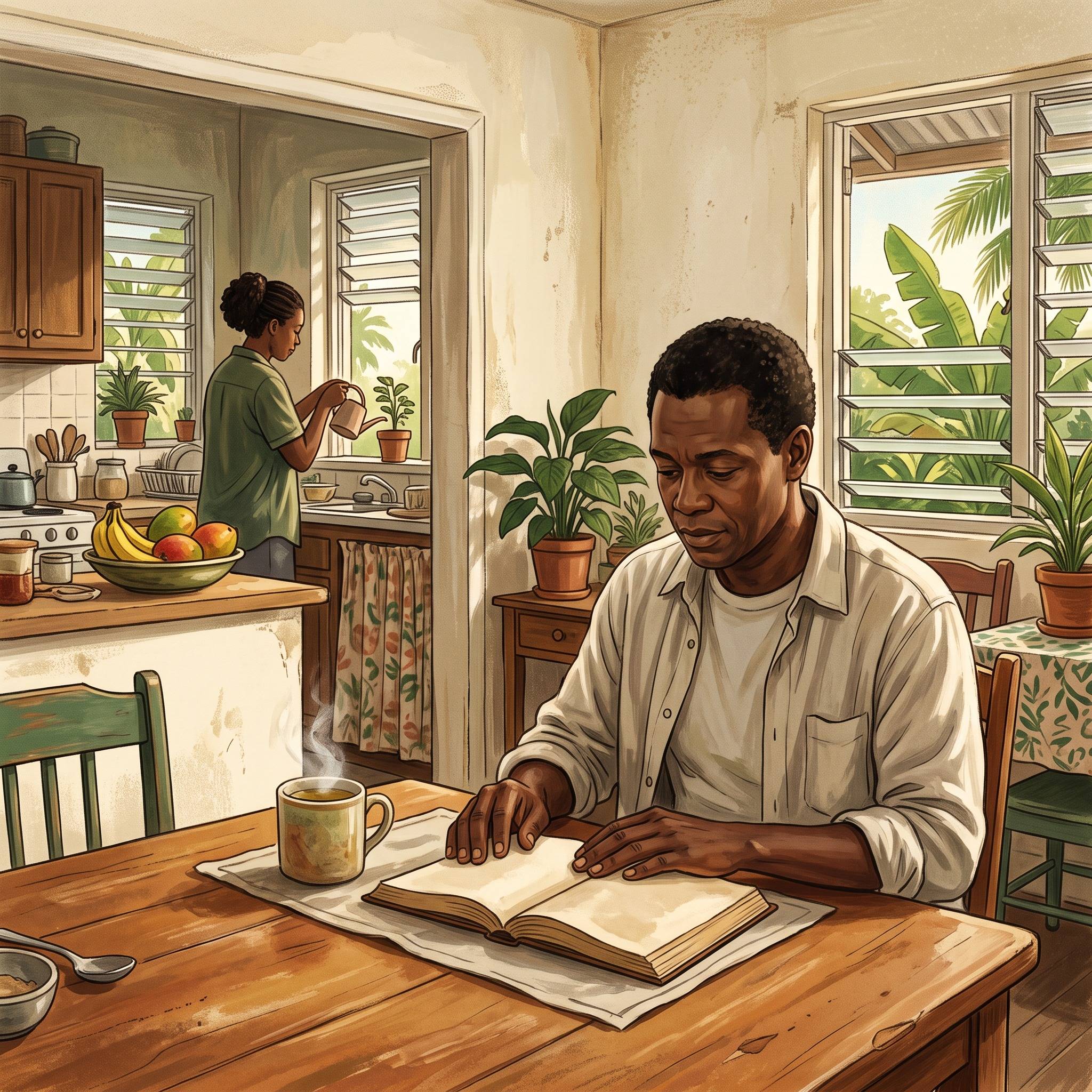
Morning begins with decisions. There is food to prepare, work to reach, perhaps a child to get ready for school. Someone needs a ride. A bill is waiting. A neighbor stops to talk. The day moves forward through small encounters that can seem too ordinary to carry much meaning.
For many Rastafari, those moments belong in a larger spiritual and historical conversation. How a person eats, speaks, earns, shares, remembers and cares for the earth can be connected to a way of life known as livity. The word points toward life as it is practiced: belief expressed through relationships, responsibilities and daily choices.
That explanation is a beginning, not a definition that can contain every Rasta life. Rastafari includes different communities, houses, generations and interpretations. Some people describe Rastafari as a faith or religion; others emphasize a way of life. What matters here is to listen to the people who live it and to understand the history from which it grew.
Livity begins with history and identity
A movement rooted in Black dignity
Rastafari emerged among Black Jamaicans in the 1930s, when Jamaica was under British colonial rule. Its early history cannot be separated from the conditions in which people lived: racial hierarchy, poverty, colonial power and the struggle to claim dignity on their own terms.
The movement drew on several streams of thought, including Ethiopianism, biblical interpretation, Pan-African ideas and the wider influence of Marcus Garvey’s call for Black pride and self-determination. These influences did not produce a single voice. They helped form a living movement in which individuals and communities developed their own understandings of liberation, divinity and belonging.
For many Rastafari, His Imperial Majesty Emperor Haile Selassie I of Ethiopia holds sacred significance. Empress Menen Asfaw is also spiritually important to many. Interpretations of their significance differ, and a short description cannot stand in for the teachings of every house or individual. What is clear is that Rastafari’s affirmation of African identity offered a profound challenge to systems that had treated Black life and history as inferior.
In her research on Rastafari in Ghana, scholar and Rastafari woman Shamara Wyllie Alhassan describes livity as lived philosophy, connecting daily practice with Black affirmation and Pan-African politics. Her work helps us see why a conversation about livity must include history and power as well as personal habits. Read her study.
Why the word reaches beyond a routine
It can be tempting to describe livity as a checklist: eat certain foods, dress a certain way, use particular words and follow a morning routine. That approach misses something essential. A practice has meaning within the beliefs, experiences and relationships of the person who lives it.
A meal, for example, can raise questions about the treatment of life, the source of food, spiritual discipline and the people with whom a table is shared. Growing a plant can connect someone to care for the earth and to memories of land. A conversation can become an opportunity to listen, reason and consider responsibility to another person.
Not every Rasta will explain those choices in the same way. Some people belong to organized Rastafari houses or mansions; others place greater emphasis on individual understanding. There is no single authority that speaks for every Rastafari person. The diversity does not make the movement less meaningful. It asks us to be more careful and specific when describing it.
Beyond the image
Many people first encounter Rastafari through reggae. Music has carried Rastafari language, beliefs and political questions to listeners around the world. Yet a song or a photograph is only a doorway. It cannot tell us everything about a family’s daily life, a woman’s spiritual work or a community’s struggle for recognition.
The Jamaican scholar Ennis B. Edmonds traces the movement’s journey from social marginalization to a visible place in Jamaican culture. He also examines what happens when Rastafari symbols become commercial products. That tension remains useful to consider whenever the outside world celebrates an image while knowing little about the people behind it.
A day of choices: food, land and care

The meaning of Ital
Food belongs in that conversation. Ital is often associated with fresh, plant-centered cooking, but its meaning reaches into spiritual ideas about life, the body and the natural world. For some Rastafari, deciding what to eat is part of a wider commitment to living in a way that honors creation.
Researcher Joseph Powell’s interviews with Rastafari in Jamaica and the United Kingdom show both shared concerns and individual differences in food practice. Many participants described predominantly plant-based ways of eating, while some included certain animal products at times. The same study found differences in shopping, cooking and access to ingredients. Its findings describe the people interviewed; they are not a rulebook for all Rastafari. Read Powell’s research.
Someone shopping for a household may look at the freshness of produce, ask where it came from or read the ingredients on a package. Another person may be deciding which foods can be bought with the money available that week. These choices take place within real conditions, not in an ideal kitchen with unlimited time and resources.
That matters because food conversations can easily become judgmental. A person who cannot reach a farmers market, grow a garden or buy a preferred ingredient is not living outside history or outside responsibility. Price, disability, location, work schedules and family needs all shape what is possible.
Reggae Dread’s earlier article, Ital, Livity & Clean Living, offers a companion discussion of food and daily discipline. The deeper question is not how to make every plate look the same. It is how people understand the relationship among nourishment, faith, access and care.
The garden and the land
For some Rastafari, planting, tending and harvesting food makes a relationship with the earth visible. There is work in preparing the soil, patience in waiting for growth and attention in noticing when a plant needs water or protection. A garden can also be a place where elders pass knowledge to younger people.
Land has a history as well. In Jamaica and across the African diaspora, access to land has been shaped by enslavement, colonial rule, displacement and unequal ownership. Speaking about a garden without acknowledging who has had access to land can turn a difficult political history into a pleasant image.
Not every Rasta is a farmer or has a yard. A person in an apartment might keep a few herbs by a window, visit a community garden or buy food from a local seller. Others may have no opportunity to do any of those things. A meaningful relationship with nature is not something an outsider can measure by the size of a garden.
The point is to notice the connection where an individual describes it: between the earth and a meal, between the labor that grows food and the person who eats it, and between care for one’s household and concern for the wider living world.
The work behind the meal
An Ital meal does not arrive on the table by itself. Someone plans it, travels to purchase ingredients, washes vegetables, cooks, serves and cleans up. In some households that work is shared; in others it falls unevenly on particular family members. Asking who does the work helps us take everyday life seriously.
Food can also build a bridge between people who do not eat in the same way. A shared pot, a separate dish prepared with care, or a question about a guest’s needs can become a small expression of hospitality. These moments are ordinary, but ordinary does not mean unimportant.
The people around us: language, family and reasoning

“I and I” and the question of relationship
A reader may have heard the expression I and I in reggae or Rastafari speech. Its meanings are rich and context-dependent, but it is often connected to ideas of spiritual unity, shared humanity and the relationship between the individual and the divine.
In “Social Death and Rastafari Reason,” published in the Du Bois Review, political scientist Robbie Shilliam discusses Rastafari language and its relationship to collective life. His analysis invites a practical question: if another person’s dignity matters as deeply as our own, how should that shape the way we treat them?
There is no need for an outsider to imitate Rastafari speech to consider that question. Words belong to living communities and carry histories. The more respectful approach is to listen to how people use them, ask what they mean in context and avoid treating the language as decoration.
Livity at home
Home is a place where values meet other people’s needs. A parent may be thinking about what to teach a child, how to respond to a school rule or how to help a young person feel secure in an identity that others misunderstand. A couple may be deciding how to divide work or manage limited money. An elder may be passing along a story that has never been written down.
In a Smithsonian oral-history interview catalog, Dorothy Baker’s account includes her introduction to Rastafari, her hair, family life and challenges her children encountered at school. The catalog is valuable because it points toward a particular person’s experience rather than asking us to imagine a typical Rasta family. Access to the full archived interview may require an appointment.
No household is free of disagreement. Family members may have different beliefs, eating habits or expectations. Children may ask questions adults find difficult. A serious discussion of livity makes room for those tensions instead of assuming that spiritual language automatically resolves them.
It also asks whose work and whose decisions are visible. Rastafari women have shaped homes, communities, theology and movements, even when histories have given greater attention to men. Listening to women as authorities in their own lives changes what we understand about the movement.
Reasoning and the value of listening
Reasoning is a term associated with conversation, reflection and the exchange of ideas in Rastafari contexts. A reasoning can involve spiritual questions, history, politics and the concerns of daily life. Its setting and customs vary; it should not be reduced to a generic conversation technique.
For a reader encountering the idea, one lesson is the importance of allowing people to explain the world in their own words. Listening does not require agreement with every view. It does require enough patience to hear the meaning behind a position before reducing it to a stereotype.
Work, pressure and the wider world
Livity under pressure
A spiritual commitment does not make a rent payment disappear. People still have to work, find transportation, care for children and navigate institutions. The distance between a person’s ideals and the options available on a difficult day can be real.
A worker may have to consider whether a workplace accepts their hair or clothing. A parent may negotiate school expectations. A small-business owner may face rising costs. Someone who wants particular foods may have to travel farther than their schedule or budget allows. These are questions about public life and access as well as personal choice.
The word Babylon can appear in discussions of the systems that produce injustice and separation. Its meaning is not exhausted by a list of modern inconveniences. For many Rastafari, it points toward a larger critique of domination, colonialism, racism and institutions that deny human dignity.
That is why livity cannot be reduced to buying a different product or creating a calmer home. Personal decisions matter, but the conditions surrounding those decisions matter too. An honest account can consider both: what a person chooses and what society makes difficult to choose.
Living in different places
Rastafari began in Jamaica and has grown across the Caribbean, the Americas, Britain, Africa and elsewhere. A Rasta living in Kingston, a rural Jamaican community, London, Ghana or the United States may share some ideas with others while facing distinct histories and daily circumstances.
Alhassan’s study of a Ghanaian Rastafari woman, identified as Sista Pama, shows how studying African history and Pan-African thought informed her sense of identity and public voice. Her account is one person’s experience, not a template for all Ghanaian Rastafari, but it helps demonstrate how livity can be lived and interpreted in a specific place.
Place changes practical possibilities. Climate affects what can grow. Local markets determine which ingredients are available. Schools, employers and neighbors respond differently to visible expressions of identity. To understand a person’s daily life, we need to ask where that life is being lived.
The difference between inspiration and appropriation
Readers who are not Rastafari may find value in thinking more carefully about food, community or the natural world. Curiosity is welcome. But the movement should not be presented as a collection of useful habits detached from its people, sacred meanings and history of Black liberation.
Learn the history. Credit the people whose work you use. Support Rasta-owned businesses and creators where possible. If you interview someone, ask how they wish to be identified and whether their words can be published. Above all, avoid claiming that one conversation or one article gives you authority to define an entire community.
Respect also means allowing disagreement. Some people will emphasize spiritual discipline; others will speak first about justice, family or land. Different voices can illuminate one another without being forced into a single approved answer.
Bringing the conversation home
Questions for reflection
An article about livity is not a test of whether a reader performs the right set of actions. It is an invitation to pay closer attention to the relationship between what people believe and how they live.
Consider these questions as a place to begin:
- What histories and people are connected to the food on your table?
- Whose labor makes your household or community possible?
- How do you listen when someone’s experience differs from your own?
- What makes it easier or harder for people in your community to live according to their values?
- Which stories about Rastafari have you heard most often, and whose voices might be missing?
The answers will not be the same for everyone. They may change with age, place and circumstance. The value of the questions is that they bring large ideas back to human relationships.
Frequently asked questions
Is livity the same as Rastafari?
Livity refers broadly to lived practice or lived philosophy within Rastafari. Rastafari also includes histories, spiritual beliefs, communities and political commitments. People explain the relationship in different ways.
Do all Rastafari eat the same foods?
No. Ital practices are important to many, and plant-centered food is common, but individuals differ in their choices and circumstances. Ask how a particular person or community understands its practice.
Do all Rastafari have dreadlocks?
No. Locks have deep meaning for many Rastafari, but appearance alone cannot establish a person’s beliefs or identity.
Can someone who is not Rastafari learn from livity?
Yes. Learning begins with respect for Rastafari voices, spiritual traditions and Black liberation history. It is important not to present borrowed practices as the whole meaning of the movement.
Where should I begin?
Read and listen to Rastafari people, seek out women as well as men, and pay attention to the place and time of each account. A published interview, oral history or scholarly work can offer a starting point; a conversation with a willing community member can add another perspective.
A way of life, lived among others
Livity becomes easier to understand when we pay attention to the relationships surrounding a day: the people who grow and prepare food, the family members sharing a home, the neighbors who need care, and the histories that shape what choices are available.
For Rastafari, those relationships can be inseparable from spiritual conviction and the continuing pursuit of Black dignity and freedom. They are lived differently by different people, but they ask to be taken seriously in the places where life actually happens.
The next time we hear a song speak of life, unity or freedom, we can listen for more than an inspiring phrase. We can ask what those words mean at the kitchen table, on the way to work and in the care one person offers another. That is where the conversation continues.
Sources and further reading
- Shamara Wyllie Alhassan, “We Stand for Black Livity!”: Trodding the Path of Rastafari in Ghana, Religions, 2020.
- Joseph Powell, “Ital Hermeneutics: The Innovative Theological Grounding of Rastafari Dietary (Ietary) Practices”, Black Theology, 2021. Access may depend on the publisher.
- Ennis B. Edmonds, Rastafari: From Outcasts to Culture Bearers, Oxford University Press, 2003. Book information and abstract; full text may require access.
- Smithsonian Institution, catalog search containing Dorothy Baker’s oral history. The interview is an archival item; consult the repository about access.
- Robbie Shilliam, “Social Death and Rastafari Reason”, Du Bois Review, Cambridge University Press.