
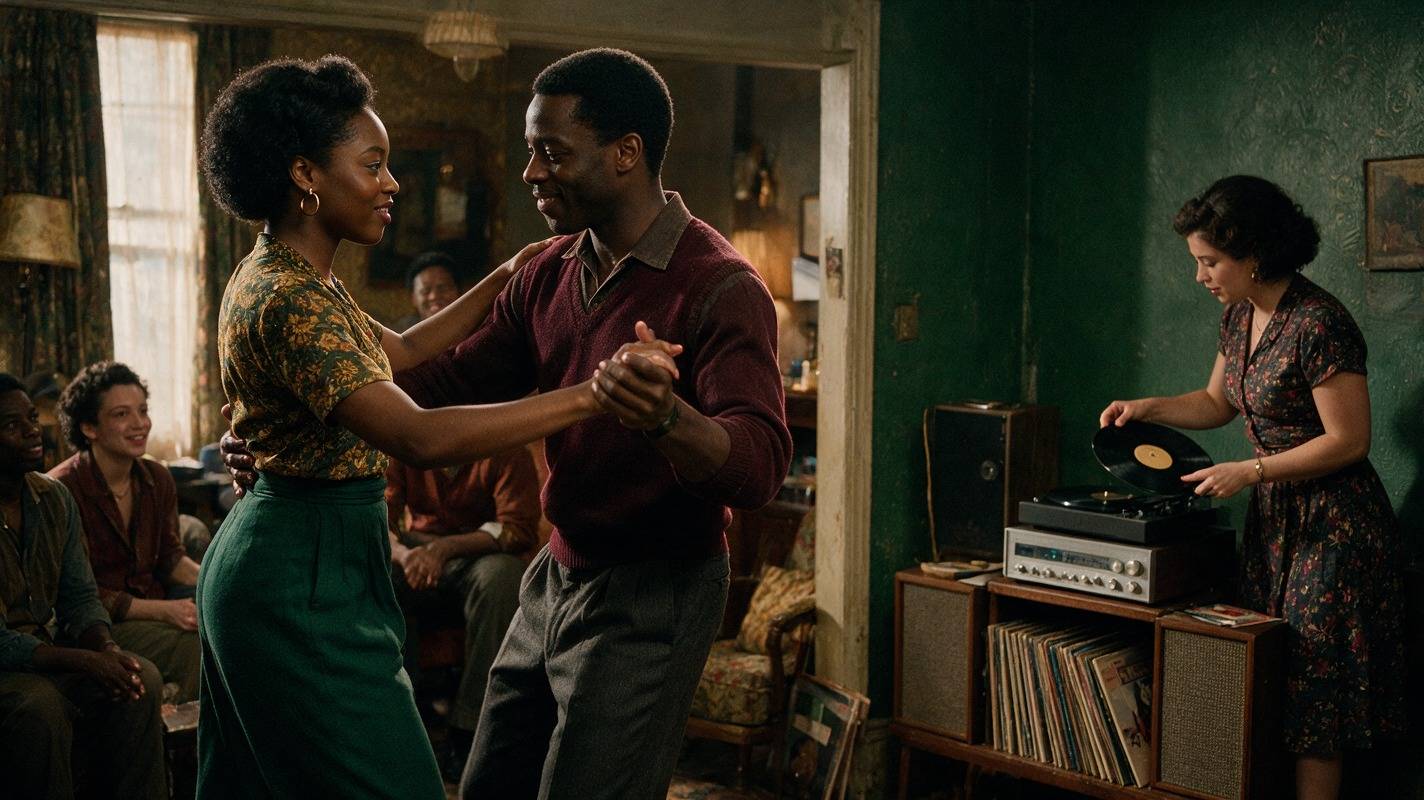
1. A song that changes the room
Put on a reggae love song you know well. Before you look up the year, before you check the producer or check lovers rock reggae history, let it play. Perhaps your shoulders settle into the rhythm. Perhaps a particular voice brings someone to mind. Perhaps you reach a line you have sung for years and discover that its meaning has changed with your own life.
That encounter deserves a place in music history. Songs accompany relationships, family gatherings, private disappointments and the small acts through which people make a life together. A record can hold an argument, an apology, a wish or the courage to approach somebody across a room. Its emotional usefulness is part of its cultural importance.
Lovers rock gives us a particularly rich way into that history. Taking shape within Black British musical life during the 1970s, it brought reggae and soul into an intimate conversation. Women occupied a prominent place among its defining voices. Its records circulated through a world of sound systems, clubs, parties and independent enterprise.1
Follow Louisa Mark, Janet Kay and Carroll Thompson, and a larger question emerges: what can the music people choose for affection and pleasure tell us about the communities they build? The answer begins with listening. It extends into migration, creative work, gender and the right to be understood as a whole person.
Bring a favourite song and an open ear. There is room here for the music you already love, and for hearing it differently.
2. Jamaican roots, British life
Romantic expression already had a home in Jamaican music before lovers rock acquired its British identity. The melodies and vocal approaches of soul and rhythm and blues travelled into Jamaican recording, while ska, rocksteady and reggae offered changing ways to carry them. Lovers rock developed within that movement of music and people; Jamaica Information Service’s historical overview places its roots in earlier Jamaican romantic styles.2
A useful distinction follows. “Reggae love song” describes a wide field of repertoire. “Lovers rock” also names a particular musical and social formation associated with Britain, especially its emergence in the 1970s. A song can be romantic without belonging to that specific scene. The distinction lets us appreciate connections without flattening different histories into one playlist category.
Janet Kay’s own biography provides a small, revealing map of those connections. Born in London to Jamaican parents, she grew up admiring Motown singers. In 1977, an introduction to Alton Ellis led to her recording Minnie Riperton’s “Lovin’ You” under his production. Jamaican experience, American repertoire and a young London voice met in one working relationship.3
That is a more interesting picture than imagining a sealed British style suddenly replacing Jamaican influence. Migration creates relationships that continue to move. A singer can learn from family records, radio, church, friends and rehearsals. A producer can bring knowledge from one musical setting into another. The resulting music belongs to the place where those encounters become audible, while retaining connections elsewhere.
Origin stories deserve similar care. Hackney Museum places Ginger Williams’s “I Can’t Resist Your Tenderness” in 1974 and identifies Louisa Mark’s 1975 “Caught You in a Lie” as one of the earliest lovers-rock singles. These landmarks help explain a developing scene more generously than awarding the whole history to a single supposedly uncontested beginning.1
Listen across that history with movement in mind. Ask what a familiar romantic song gains from a different rhythmic setting or vocal personality. A cover can be an act of interpretation: another singer changes where the emphasis falls, how vulnerability sounds, and whom the song appears to address. Familiar material becomes the starting point for a new relationship with listeners.
There is no need to make a listener choose between inherited music and the place where they live. A record collection can hold both. The interesting questions concern the choices people make within that inheritance: which songs they keep, which sounds they change, and how their own voices become part of a tradition. Musical continuity depends on people having something of their own to contribute.
For Reggae Dread readers coming from our Marcia Griffiths listening guide, this is a natural next step. Follow the connections between repertoire, performance and collaboration, while allowing British lovers rock its own people, places and creative decisions.

3. The dance as a place to belong
A recording’s history includes the circumstances in which people heard it. The same song can feel different through headphones, on a car journey or in a room where strangers gradually begin singing together. Lovers rock asks us to take those social settings seriously.
In the testimony preserved by Menelik Shabazz’s The Story of Lovers Rock, participants recall youth clubs, larger sound systems and house parties as overlapping parts of their social lives. One recollection connects gathering at home with the hostility and lack of welcome encountered elsewhere. These are remembered experiences, rather than evidence that every venue or neighborhood worked identically.4
The practical work of making a gathering deserves attention alongside the records. Someone has to arrange the space, carry equipment, choose the sequence and respond to the room. When we ask who created a musical experience, those responsibilities belong beside the names on the sleeve. The people who enable listening help determine what listeners encounter.
A selector’s choices can give a familiar song a new position. Played after another record, it may feel like a reply; saved until later, it may become an anticipated arrival. Thinking about this work changes the dance from a backdrop into a setting where musical meaning is actively made.
It also changes what we might preserve. A party flyer, a carefully annotated record sleeve or a remembered sequence of songs can help reconstruct an evening’s organisation. The famous recording gives us one part of the story. The invitation, the venue and the people responsible for the sound can explain how that recording found its audience.
Getting ready matters too. London Museum’s account of Caribbean style connects clothing with dignity, identity and self-presentation across generations. Dressing for an evening can express care for oneself and for the people one hopes to meet. That investment belongs to the occasion’s meaning, alongside its music.5
Yet a warm collective memory should leave space for different experiences. A room remembered fondly by one person may have felt restrictive or uncomfortable to another. Questions about unwanted attention, freedom to refuse a dance, and who controlled the evening belong in an honest account of pleasure. Community is something people negotiate through their behaviour toward one another.
That makes oral history especially valuable. Ask a relative which record changed the atmosphere, then ask who chose it, where they heard it and whether everybody enjoyed the same part of the night. A specific recollection is more illuminating than a general claim that the old days were better. It can reveal the companionship, skill and uncertainty that a nostalgic playlist alone cannot contain.
5. What to listen for beneath the sweetness
Start with the bass. Give it one complete listen without trying to follow every word. Notice the length of the notes and the spaces between them. Ask whether the movement feels like a continuous path or a series of short answers. Your description can be ordinary and precise: “the bass waits here” is useful if you can point to the moment.
Then turn to the drums. Listen for the relationship between the steady pulse and the smaller movements around it. A rhythm can support close dancing while containing considerable detail. Softness of effect does not tell you how simple or demanding the playing was.
Bovell’s account of making “Silly Games” offers a concrete example. In his UCL conversation with Paul Gilroy, he describes designing a drum pattern that brought together disco, calypso and Afrobeat ideas, and asking Drummie Zeb to realize it. His recollection directs attention toward rhythmic invention within a record often remembered first for its vocal.8
Next, find the short guitar or keyboard sounds around the beat. Listen to how they organize the gaps. Does a chord seem to open the space for the singer, or answer something already sung? You do not need to settle every instrument’s identity. An uncertain description kept close to the sound is more useful than a confident guess.
Now return to the voice. Listen for changes within a line rather than only the highest note. A singer may delay an entrance, release a word quickly or give the end of a phrase more room. Those choices can suggest hesitation, conviction or a thought being reconsidered. Treat the feeling you hear as an interpretation that the performance has prompted.
Harmony adds another relationship. A second voice might reinforce a statement, soften its edges or make a solitary feeling seem shared. When voices blend, resist the temptation to identify individuals without reliable credits. You can describe the contribution clearly while leaving the names to documentation.
Finally, notice what repetition does. The return of a phrase can reassure a listener, intensify a complaint or change the emotional weight of words already heard. Repetition gives a song time to work on us. The meaning of the last chorus may depend on everything that has happened since the first.
These listening habits preserve pleasure while giving it detail. Instead of saying that a record has a wonderful atmosphere, you begin to hear the decisions through which that atmosphere becomes possible. The musicians and singers become more present inside your enjoyment.
Try the exercise at an unhurried volume. Let one complete play finish before searching for another version or reading somebody else’s verdict. Your first response is worth keeping, even if later information complicates it. Learning about a record can extend the encounter without deciding in advance what you are supposed to feel.
6. Three records to spend time with
Use these selections as a short listening journey. The links lead to an artist’s own release page or a licensed music service. Availability and full playback can depend on your territory or account. The edition notes distinguish a record’s earlier history from the date attached to a later digital issue.
Louisa Mark — “Caught You in a Lie”
The record: Hackney Museum holds a 1975 Safari seven-inch single and identifies Lloyd Coxsone as producer. Its account describes Mark’s version as an adaptation of Robert Parker’s earlier recording. The physical single pairs the vocal with “Caught Dubbing,” making a connection between song performance and sound-system use visible on the record itself.9
Listen here: “Caught You in a Lie” on Queens of Reggae. Apple Music dates this compilation appearance to 2007; that date is separate from the 1975 single.10
Take one question: How does a singer make an accusation persuasive? Attend to emphasis, pauses and the relationship between vocal intensity and a rhythm that keeps moving. Does your impression change between the first and last statement? Keep the narrator separate from Mark’s biography: performing a story does not establish that the singer personally lived it.
The pairing with a dub side offers another question for a future listening session: what remains compelling when attention shifts away from the lead voice? Keep that question open until you have found and identified the particular version.
Janet Kay — “Silly Games”
The record: Kay sings a Bovell composition and production; his account also identifies Drummie Zeb’s contribution to the drumming.8 Keep the documented 1979 chart success beside those creative credits, without treating popularity as a substitute for listening.
Listen here: Janet Kay’s own Bandcamp page for “Silly Games”. The page carries a digital release date of 22 November 2020. That listing is a present-day listening route, not a claim that the song originated in 2020 or that every issue uses an identical master.11
Take one question: What prepares you for the famous high vocal passage? Follow the shape of the performance before that arrival, then return to the rhythm underneath it. Consider how a memorable vocal moment can draw attention to a singer while depending on the patient work of the surrounding arrangement. Give both your attention.
If you know the song through a film or family gathering, notice what you bring to this play. Recognition is part of listening. Separating the recording from its associated memory, even briefly, may reveal a detail previously hidden by familiarity.
Carroll Thompson — “Hopelessly in Love”
The record: The title track provides an entrance into Thompson’s 1981 album. Taylor’s interview identifies her songwriting and the album’s co-production by Thompson and Bertie Grant, with Anthony “Chips” Richards as executive producer. Those are distinct contributions, and album-level credits should not automatically become a personnel list for every track.7
Listen here: “Hopelessly in Love (2021 – Remaster)”, from the 40th Anniversary Expanded Edition. Keep that remaster designation in your notes when comparing it with another issue.12
Take one question: How does repetition affect a declaration of devotion? Follow the singer through a returning phrase and decide where the emotional emphasis changes, if it does. Then continue into the album. One familiar title can open a longer encounter with an artist’s writing, performance and collaborations.
An album also asks for a different kind of attention from a compilation. Stay for the less familiar selections and notice how your impression of the singer develops. A favourite may remain your favourite, while the surrounding songs give you more reasons to return.
7. Intimacy and the freedom to define a life
Reggae’s accounts of injustice, spiritual conviction and liberation remain essential. Love songs widen the range of experience that a history of the music can hold. A person facing discrimination can also be impatient for a phone call, uncertain about a relationship, proud of an outfit or delighted by somebody’s company. Those experiences coexist within one life.
Scholar Lisa Amanda Palmer gives this discussion an important foundation. Her 2011 study challenges the tendency to assign romantic lovers rock to a supposedly less serious feminine sphere while reserving political significance for masculinized roots reggae. She argues for understanding love, gender and Black cultural self-definition together, while recognizing their contradictions.13
One useful consequence of that argument is a broader idea of what deserves preservation. The archive should have room for the record someone played after a breakup as well as the song associated with a public struggle. Both may illuminate the choices, pressures and aspirations of a particular life.
This is an invitation to interpretation, not a claim about every songwriter’s intention. Unless an artist has explained a political purpose, we should avoid assigning one on their behalf. A song can acquire cultural significance through its reception, its setting and its place in memory. That significance does not require every lyric to carry an explicit programme.
Nor does affection excuse everything said in its name. Listeners can question possessiveness, unequal expectations or the treatment of a partner. Taking love songs seriously includes examining the relationships they imagine. Enjoyment and disagreement can occupy the same listening session.
The most useful question may therefore be: what kind of relationship becomes possible inside this song? Is there room to speak, to refuse, to ask for care, to admit uncertainty? Different records will offer different answers. The variety matters.
Through that listening, pleasure becomes a way of noticing people more fully. We hear a culture making room for feelings that public accounts of crisis can leave out. The resulting history has more voices, more contradictions and more life.
8. What the films preserve
Two films offer different routes into this musical world. Menelik Shabazz’s The Story of Lovers Rock is a documentary. Steve McQueen’s Lovers Rock, released in 2020 within Small Axe, is a dramatic film. Keeping that distinction clear makes both more useful to a curious listener.14, 15
Shabazz’s film preserves recollections alongside musical performance and discussion. The testimony gives participants room to describe how an era felt from inside it. A remembered night can be vivid without establishing every date or detail. That is part of the value of oral history: it preserves what people experienced as significant, while leaving room for comparison with other evidence.
McQueen’s film uses performance, staging and cinematic form to evoke a house party. The BFI’s review draws attention to the communal singing around “Silly Games” and to the presence of both pleasure and danger within the evening.16 Its characters and scenes should be understood through the work’s dramatic construction, rather than treated as footage of a documented historical gathering.
Try pairing either film with one recording and one participant’s account. Ask what each medium makes available. The record preserves a performance; testimony gives a person’s recollection; a film selects, organizes and interprets experience. None has to carry the entire history alone.
This also gives families a useful starting point for conversation. Someone may recognize a style of dancing but disagree with the atmosphere, clothes or behaviour on screen. That disagreement can lead to a more specific memory. Ask where, when and with whom they heard the music. Let the film open the conversation, then give the people who lived their own versions of that period room to answer.
For younger viewers, the next step can be wonderfully simple: follow a name from the soundtrack into an artist’s catalogue. A film may supply the first invitation. Staying with the music allows the singer’s career to become larger than the scene through which you discovered it.
9. Make the listening your own
Choose one song from this guide and make a small listening card. Record the artist, title and edition. Add two audible details in your own words, one contributor confirmed by a reliable source, and one question you cannot yet answer. Keep observation, documentation and interpretation distinct.
Then invite somebody else to listen. Compare the moments that caught your attention. If a family memory emerges, ask permission before recording or sharing it, and preserve the speaker’s wording alongside the date of the conversation. A personal archive can begin with that modest act of care.
Continue through Reggae Dread Academy when you want a more structured approach to guided listening and credits. Return to an artist’s catalogue when you want another song. Both routes can deepen the same relationship: enjoying the music while becoming more attentive to the people who made it.
10. What the song keeps
Return to the record you chose at the beginning. You may still move at the same moment. Now another detail may reach you: a drummer’s restraint, a singer’s insistence, a name you have finally learned.
Love songs belong in reggae history because people’s emotional lives belong there. Lovers rock preserves creative ambition, shared pleasure and the desire to be heard with tenderness. Its history grows richer when we listen closely and give credit carefully.
Which reggae love song carries a memory for you—and who introduced you to it? Begin with the record. Let the story follow.