
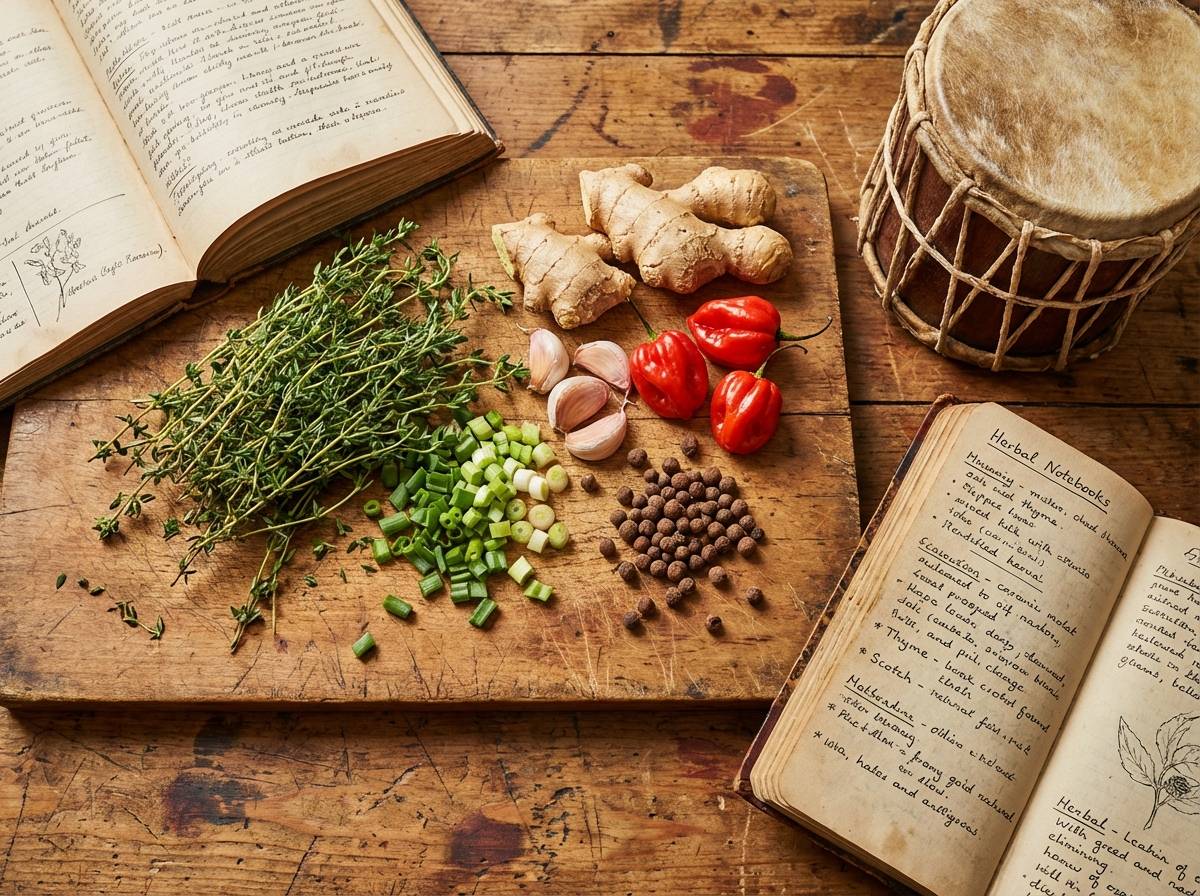
Before the supermarket aisle of bottled sauces and powdered seasonings, there was the yard: a patch of earth filled with thyme, scallion, pimento, ginger, turmeric, and a handful of bitter bushes that could clean the blood and clear the mind.
In the Rasta Ital diet, herbs and spices are not extras. They are the bridge between healing, flavor, and African memory. They allow Rasta cooks to build deep, layered taste without leaning on Babylon salt or chemical flavor packets. They turn simple peas, pumpkin, and greens into medicine that can be sipped from a bowl.
This chapter explores:
- The role of herbs and spices in Ital cooking.
- Key seasonings in the Ital kitchen and what they bring to the pot.
- Bush teas, roots tonics, and their uses.
- How to build bold flavor with little or no added salt.
- Simple Ital-inspired herb and tea ideas you can use wherever you live.
By the end, you will see why an Ital cook can step into the kitchen with a handful of herbs, a few roots, and almost no packaged seasonings—and still produce food that tastes like the earth singing.
From Yard to Pot: The Sacred Role of Herbs in Ital Cooking
If you walk into a traditional Caribbean yard, you may not see neat rows of garden beds. Instead, you notice little pockets of green everywhere: a clump of fever grass by the fence, a stand of callaloo near the back, pots of thyme and mint near the kitchen door. This is the living pantry of Rasta Ital lifestyle.
For Ital cooks, herbs and spices are:
- Flavor builders – They create depth, aroma, and complexity without relying on heavy salt or bottled sauces.
- Medicinal allies – Many herbs used in the pot also appear in bush teas and roots tonics for blood, nerves, and digestion.
- Cultural memory holders – They carry stories from Africa, from Maroon communities, from grandmothers who knew how to treat a fever without a pharmacy.
- Spiritual companions – Cleaning the body with herbs helps clean the mind, making it easier to hold the higher reasoning that Ital supports.
In an Ital kitchen, herbs and spices are not sprinkled at the end as decoration. They are part of the cooking from the first sizzle of the pot:
- Scallion, garlic, and thyme hitting warm coconut oil to form the base of a stew.
- Ginger and turmeric slowly infusing a pot of peas.
- A few pimento berries (allspice) dropped in for a warm, rounded perfume.
The result is food that feels alive, even after hours on the fire—food that smells like the hillside and tastes like the market.

Core Ital Herbs & Spices: The Foundation of Flavor
Every Ital cook has personal preferences, but certain herbs and spices appear again and again across pots, stews, soups, and one-pot dishes. They are the backbone of Ital flavor, especially when you are keeping salt low or leaving it out entirely.
Thyme: The Quiet Backbone
Thyme is one of the most important herbs in Caribbean cooking, and Ital kitchens are no exception. A few small sprigs added early to the pot:
- Give stews and soups a deep, earthy undertone.
- Blend well with peas, pumpkin, carrots, and callaloo.
- Help build a savory base without adding meat stock or bouillon cubes.
Fresh thyme is often preferred, but dried thyme can also be used if that is what is available. The trick is to add it early enough that it can release its oils into the cooking liquid.
Scallion: Green Aroma and Gentle Bite
Scallion (also called spring onion or green onion) brings a fresh, green aroma to the pot. In many Ital dishes, scallion is:
- Chopped and sautéed with onion, garlic, and thyme at the beginning.
- Used in marinades for vegetables and tofu alternatives.
- Added near the end for a burst of brightness.
Scallion helps create that unmistakable Caribbean smell—familiar even before you taste the food. It carries a gentle bite without overwhelming the dish.
Garlic: Cleanse, Protect, and Season
Garlic is beloved in Ital cooking for both its flavor and its reputation as a cleanser of the blood and protector of the body. It:
- Adds sharp, savory depth to beans, grains, and vegetables.
- Pairs well with ginger and turmeric in healing broths.
- Can be used raw in small amounts in dressings or marinades for extra potency.
For Ital cooks, garlic does more than season. It feels like a small daily shield: something that helps keep Babylon’s pollution from settling too deeply in the body.
Pimento (Allspice): Warmth and Roundness
Pimento berries, known elsewhere as allspice, bring a warm, rounded flavor that hints at cloves, cinnamon, and nutmeg all at once. In Ital cooking, pimento:
- Is often added whole to soups and stews.
- Helps create depth in one-pot peas and pumpkin dishes.
- Bridges the savory and slightly sweet notes in root-heavy meals.
Because pimento is potent, a few berries go a long way. They whisper a subtle complexity through the dish, especially important when you are not leaning on meat stock or processed flavor boosters.
Ginger: Fire, Circulation, and Brightness
Ginger is one of the true stars of Rasta Ital recipes. It is used:
- In the pot, to season peas, soups, and sauces.
- In teas, to warm the body and aid digestion.
- In juices, to add heat and circulation to cold fruit blends.
Ginger brings:
- A bright, fiery heat that wakes up the tongue.
- Support for the stomach, helping the body handle fiber-rich Ital meals.
- A sense of movement—stagnant energy feels stirred and loosened.
It is no accident that ginger is a common thread between the pot and the tea cup. It connects daily eating with gentle, everyday medicine.
Turmeric: Earth Gold and Anti-Inflammatory Power
Turmeric has become popular worldwide in wellness circles, but Ital cooks have valued it long before it became a trend. Turmeric:
- Gives stews and curries a golden color and earthy flavor.
- Pairs naturally with ginger and black pepper.
- Is associated with anti-inflammatory benefits and overall cleansing.
In Ital cooking, turmeric is another way to bring the color of yard soil and sunset into the pot. It reminds the eater that healing can be simple and rooted—quite literally—in the ground.
Hot Pepper: Heat with Respect
Many Ital cooks use a little Scotch bonnet or other hot pepper to add heat and floral aroma to stews and soups. But the pepper is treated with respect:
- Often added whole to the pot and removed at the end for gentle heat.
- Sometimes pierced once or twice to let some spice through without overwhelming the dish.
- Handled carefully, because its fire can easily dominate everything else.
Not all Rastas use hot pepper, but when they do, it is usually woven into the pot as part of a symphony of flavor—not a stunt to burn the mouth. Heat, like livity, is meant to be strong but balanced.
Bush Teas & Roots Tonics: Ital Herbs as Everyday Medicine
The same herbs that season the Ital pot often show up in steaming cups and dark-toned bottles. Bush teas and roots tonics are a key part of Rasta Ital lifestyle, bridging the gap between food, drink, and medicine.
What Are Bush Teas?
A bush tea is simply a tea made from local herbs, leaves, grasses, or roots, often picked fresh from the yard. These teas can be:
- Soothing – calming the nerves and helping with sleep.
- Cleansing – supporting digestion and elimination.
- Cooling or warming – balancing the body depending on the herb used.
Common bush tea herbs include:
- Fever grass (lemongrass) – fragrant and calming.
- Cerasee – bitter and cleansing.
- Mint – refreshing and soothing to the stomach.
- Soursop leaf – associated with relaxation.
These teas are usually made by boiling or steeping the herbs in hot water, sometimes with a touch of natural sweetener or left completely unsweetened for full bitterness.
Roots Tonics: Strength in a Bottle
Roots tonics are more intense preparations, often combining multiple roots, barks, herbs, and spices into one concentrated drink. They are taken:
- In small amounts (shots or sips), not as casual beverages.
- For strength, stamina, and blood building.
- As part of periodic cleansing routines or daily maintenance.
A roots tonic might include:
- Roots like sarsaparilla or strongback.
- Herbs such as ginger, garlic, turmeric.
- Sometimes a small amount of natural sweetener or wine as a carrying medium, depending on tradition.
For Rasta, roots tonics are not quick fixes. They are part of a long-term relationship with the body—a way of slowly feeding the blood with what it needs.
Herbs as Memory and Ancestral Technology
When a Rasta prepares a tea or tonic, they are not just following a recipe. They are tapping into ancestral technology—knowledge passed down by mothers, grandmothers, midwives, and bush doctors who did not have formal training but knew the language of plants.
In this sense, herbs:
- Carry stories – how they were used in the hills, in Maroon communities, during times when pharmacies were far away.
- Carry resistance – how people survived with little money but plenty of leaves, bark, and roots.
- Carry continuity – links back to African herbal traditions disrupted by enslavement but never fully erased.
Every sip of bush tea is a small act of remembering.
Flavor Without Babylon Salt: Building Taste the Ital Way
One of the most distinctive features of Ital cooking is its careful, often minimal use of salt. In many Rasta reasonings, high salt is seen as:
- A driver of high blood pressure and other health issues.
- A way Babylon hooks people on its processed foods.
- A mask that covers up the true taste of natural ingredients.
So how does Ital food still taste rich, satisfying, and complex without heavy salt or chemical seasonings? The answer lies in layering herbs, spices, and natural elements.
Layering Aroma from the Start
Ital cooks often build flavor from the very first moment the pot touches the fire:
- Warm a small amount of natural oil (like coconut oil) or use water if you are cooking oil-free.
- Add chopped onion, scallion, garlic, and thyme.
- Allow them to soften and release aroma before adding peas, pumpkin, or other vegetables.
- Drop in a few pimento berries and a slice of ginger or turmeric.
By the time the main ingredients are added, the cooking liquid already carries a complex herbal base that makes salt almost unnecessary.
Using Acid and Bitterness for Balance
Another Ital secret is using acid and bitterness to balance flavors. Instead of dumping in more salt when a dish tastes flat, an Ital cook might:
- Add a squeeze of lime or lemon near the end.
- Stir in a small amount of bitter greens or herbs.
- Serve the dish alongside a bitter or sour side, like a raw salad with lime.
Our tongues respond to a mix of tastes. When acid and bitterness are present, the dish feels more complete even if salt is low.
Harnessing Natural Sweetness
Ital cooking also recognizes the gentle power of natural sweetness. Slow cooking:
- Carrots
- Pumpkin
- Sweet potato
- Onions
allows their sugars to caramelize and soften, adding body and warmth to the dish. When this natural sweetness meets herbs like thyme and spices like pimento, you get a savory-sweet depth that makes salt feel less urgent.
Finishing Herbs and Fresh Elements
Ital cooks often hold back a small handful of fresh herbs or scallion to add at the end of cooking. This:
- Brightens the flavor with fresh, green notes.
- Adds a final wave of aroma as the dish hits the table.
- Reminds the eater that the food is alive with plant energy, not drowned in a single flavor.
Combining these techniques—layered aromatics, balanced acidity, natural sweetness, and finishing herbs—creates Ital dishes that satisfy the tongue and nourish the body without leaning on Babylon’s salt and seasoning packets.
Practical Ital Herb & Tea Ideas You Can Use Anywhere
You do not need to live in Jamaica or have a full yard garden to bring herbs and spices in Rasta Ital into your life. With a small collection of herbs and a few simple habits, you can begin to cook and drink in a more Ital-inspired way right where you are.
Start a Small Ital Herb Corner
Even if you only have a balcony or windowsill, you can grow a few key herbs:
- Thyme
- Mint
- Scallion (grown from scraps)
- Basil
- Parsley or cilantro (if available)
Fresh herbs like these can transform simple peas, rice, and vegetables into Ital-style dishes with minimal effort.
A Simple Ital-Inspired Seasoning Base
When you want to cook Ital-inspired food, you can create a basic seasoning mix using:
- Chopped onion
- Chopped scallion
- Grated garlic and ginger
- Fresh or dried thyme
- Crushed pimento (or a pinch of allspice)
Sauté this mix lightly in a bit of oil or water, then:
- Add canned or dried beans (cooked), such as red kidney beans or lentils.
- Add chopped pumpkin, carrot, or sweet potato.
- Add water or coconut milk and simmer until everything is tender.
Adjust with lime juice and a small pinch of salt if needed. You now have an Ital-style stew built on herbs, roots, and whole foods.
Daily Bush Tea Ritual
You can also adopt a simple bush tea routine:
- Choose one or two herbs you can access easily (mint, lemongrass, ginger, etc.).
- Boil water and steep the herbs for 5–10 minutes.
- Drink slowly, without distraction, giving thanks for the plant’s support.
This small daily ritual does more than hydrate. It anchors the day in a moment of connection with nature and with your own body.
Respecting Strength and Bitter Medicines
Some Ital herbs and teas, especially bitters like cerasee or strong roots tonics, are powerful. They should:
- Be used in moderation.
- Be researched and understood, especially if you have health conditions.
- Be approached with respect, not as trends or extreme cleanses.
Part of Rasta Ital lifestyle is knowing that more is not always better. The goal is balance, not punishment.
Herbs, Memory and the African Thread in Ital
The herbs and spices in Ital cooking are not random flavor choices. They sit at a crossroads of African memory, Caribbean landscape, and Rastafari insight.
When you season a pot with thyme, scallion, pimento, ginger, and turmeric, you are:
- Calling on African and Indigenous knowledge about plants and healing.
- Honoring the creativity of Caribbean people who turned scarcity into rich cuisine.
- Continuing a tradition that refuses to let Babylon have the final say on health.
For Ital cooks, herbs are a way to remember where we come from and what we survived. They prove that even without fancy equipment or expensive products, you can create food that is:
- Healing – supporting the blood, nerves, and digestion.
- Flavorful – layered, aromatic, and satisfying.
- Rooted – connected to land, ancestors, and livity.
From Herbs in the Pot to Power in the Protein: What Comes Next
In this chapter, you have stepped into the Ital kitchen and met the herbs and spices that give it life. You have seen how:
- Thyme, scallion, garlic, pimento, ginger, and turmeric form the backbone of Ital flavor.
- Bush teas and roots tonics turn everyday plants into medicine and memory.
- Ital cooks build flavor with aromatics, acid, bitterness, and natural sweetness rather than leaning on heavy salt and chemical seasonings.
- Herbs hold a line of African and Caribbean knowledge that survived slavery, colonialism, and modern food systems.
But herbs and spices are only part of the Ital story. A common question critics ask is: “Where do you get your protein on this kind of diet?” The next chapter answers that question directly.
In Part 4 – “Power in the Pot: Vegetarian Protein Sources the Ital Way”, you will explore how peas, beans, nuts, seeds, and grains become the strength food of Ital living. You will see why an Ital stew of red peas and pumpkin can fuel a day of work, music, and reasoning just as powerfully as any meat-heavy plate—without the heaviness, without the toxicity, and with a different kind of spiritual charge.
Herbs and spices set the stage. In the next article, the power foods step into the spotlight.
Previous: Part 2 – rasta-ital-vs-vegetarian-vegan-comparison/
Next: Part 4 – vegetarian-protein-sources-ital-way/
Related: