
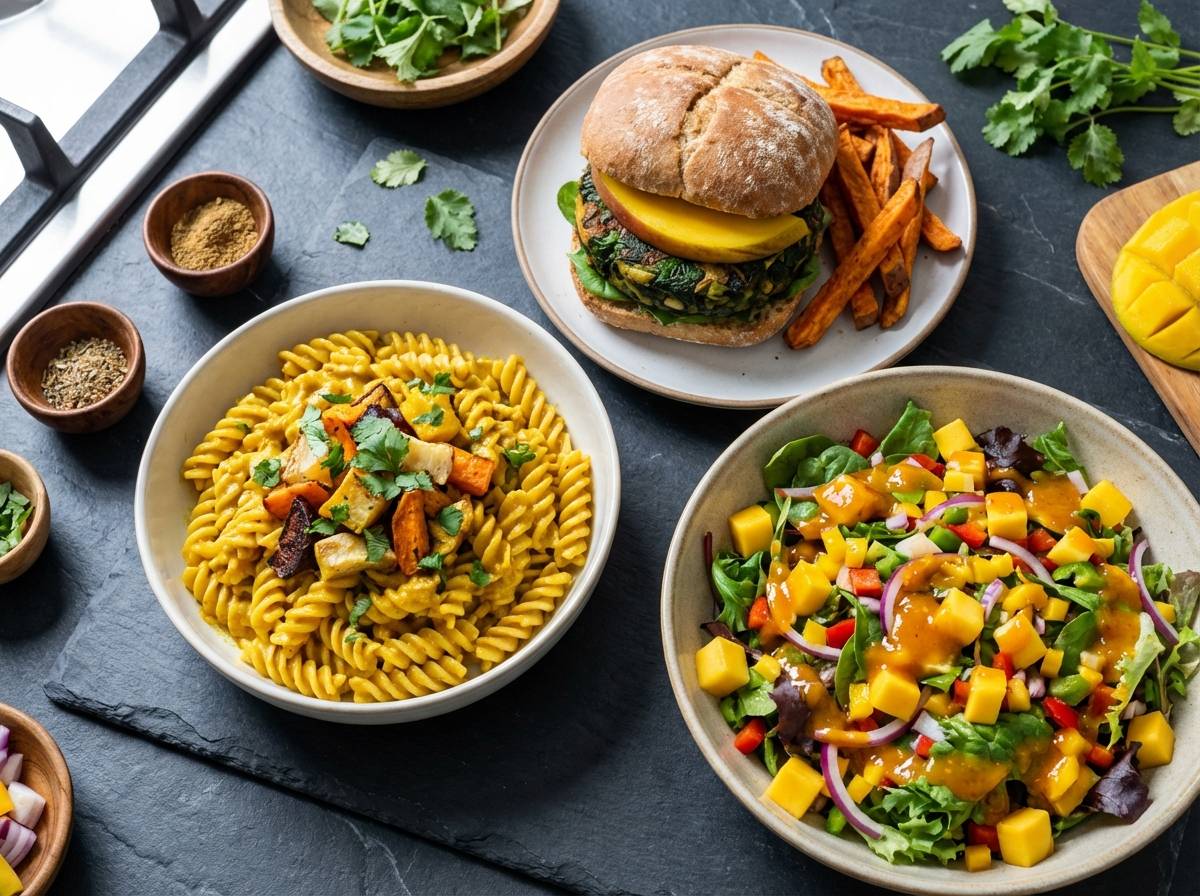
By now, you’ve seen Ital in its home element: yard food, one-pot stews, boiled roots, coconut-scented rice and peas, and simple plates built straight from the earth. But what happens when Ital wisdom walks into a kitchen filled with pasta, tortillas, noodles, or casseroles? Can you keep the Rasta Ital lifestyle intact and still enjoy global vegetarian comfort foods?
This chapter says yes. Here we explore vegetarian recipes that keep their cultural identity—lasagna, tacos, burgers, stir-fries—while receiving a roots twist: Ital seasonings, cleaner fats, more whole foods, and a deeper sense of livity on the plate.
You’ll discover:
- How to apply Ital principles to everyday vegetarian cooking.
- Frameworks for “rooting up” popular comfort foods.
- Sample recipes you can adapt to your own culture and pantry.
- Ways to keep respect for Ital’s origins while experimenting freely.
This is not about turning every dish into a stereotype of “Caribbean food.” It’s about letting Ital values travel—meeting other cuisines halfway, and leaving each one a little more conscious.
What Is a “Roots Twist” on Vegetarian Food?
A roots twist isn’t just adding Scotch bonnet pepper or a few thyme sprigs to a recipe and calling it Ital. It’s a deeper shift in how you think about vegetarian meal ideas.
Core Ital Values Behind a Roots Twist
When you give a vegetarian dish a roots twist, you are asking:
- Can I make this more natural? — Less processed food, more whole ingredients.
- Can I make this more earth-connected? — Using seasonal produce, roots, and greens.
- Can I make this more spiritually aligned? — Less heavy salt, chemicals, and excess; more herbs, teas, and livity.
- Can I honor culture, not erase it? — Keeping the soul of the original dish while layering Ital wisdom.
From “Vegetarian” to “Ital-Influenced Vegetarian”
A standard vegetarian recipe might be plant-based but still:
- Loaded with cheese and processed oils.
- Dependent on fake meats and packaged sauces.
- High in salt but low in herbs and roots.
A roots twist gently shifts this:
- Cheese becomes a garnish, or is replaced with nut-based sauces.
- Fake meats give way to beans, lentils, nuts, and seeds.
- Herbs, roots, and natural aromatics step forward as the real flavor makers.
You are not just swapping ingredients. You’re changing the spirit of the dish—bringing it closer to Ital without forcing it to stop being what it is.

Global Vegetarian Comfort Foods, Roots-Style
Let’s take some familiar vegetarian-friendly dishes and see how they change once Ital wisdom enters the kitchen.
1. Roots Lasagna: Callaloo, Pumpkin & Coconut Layers
Traditional lasagna is heavy on cheese and processed sauces. A roots lasagna keeps the comforting layers but leans into vegetables and herbs.
Framework:
- Base: Whole-grain lasagna sheets or thin-sliced roasted sweet potato.
- Green layer: Steamed callaloo or spinach sautéed with onion, garlic, thyme.
- Orange layer: Mashed pumpkin seasoned with nutmeg, black pepper, and a touch of coconut milk.
- Sauce: Simple tomato sauce cooked with scallion, garlic, thyme, and ginger.
- Cream element: Optional cashew or sunflower seed cream instead of heavy cheese.
Bake until the top is lightly browned and the layers settle into each other. You still get the comfort of baked pasta, but now the dish carries Ital colors and ingredients—callaloo, pumpkin, coconut, herbs—in every bite.
2. Ital-Inspired Tacos or Wraps
Tacos and wraps are already flexible. A roots twist pushes them toward peas, roots, and greens instead of processed fillings.
Framework:
- Base: Corn tortillas, whole-wheat wraps, or lettuce leaves.
- Protein: Seasoned lentils or black beans cooked with onion, garlic, thyme, and a touch of hot pepper.
- Roots: Roasted sweet potato or pumpkin cubes.
- Greens: Shredded cabbage, callaloo, or kale.
- Sauce: Lime-tahini or coconut-lime dressing with cilantro and scallion.
The end result still fits into your hand like a taco, but the filling tastes like yard food and global street food met in the middle.
3. Roots Burger with Plantain or Ground Provision Sides
Vegetarian burgers can easily become ultra-processed. A roots twist focuses on whole ingredients and Ital seasoning.
Framework:
- Patty base: Cooked black beans or chickpeas, mashed.
- Binders: Cooked brown rice, oats, or grated sweet potato.
- Flavor: Onion, garlic, scallion, thyme, pimento, and a little grated ginger.
- Optional crunch: Finely chopped pumpkin seeds or sunflower seeds.
Pan-sear or bake the patties, then serve:
- On a whole-grain bun, or
- On a bed of greens with roasted plantain or boiled yam on the side.
The burger shape and general idea remain, but the patty becomes an Ital bean-and-grain medley rather than a fake meat disc.
4. Stir-Fry with Ital Aromatics
Stir-fries are quick vegetarian favorites. A roots twist layers in Caribbean aromatics without disrespecting Asian roots.
Framework:
- Start with onion, garlic, ginger, and scallion.
- Add a touch of thyme and a few crushed pimento berries.
- Stir-fry mixed vegetables (broccoli, carrots, cabbage, bok choy, bell pepper).
- Add cubes of tofu or tempeh if using, or cooked chickpeas for protein.
- Finish with lime, fresh herbs, and a light drizzle of natural soy or coconut aminos if desired.
The dish still feels like a stir-fry, but it carries Ital’s love of thyme, pimento, and lime into the wok.
Building a Roots-Ready Vegetarian Pantry
To make vegetarian recipes with a roots twist part of your regular lifestyle, it helps to have a pantry that supports Ital-inspired cooking.
Herbs, Spices & Flavor Foundations
From Part 3, you already know the Ital flavor backbone. For roots-twist recipes, make sure you have:
- Thyme (fresh or dried)
- Scallion (green onion)
- Garlic
- Ginger
- Pimento (allspice berries or ground)
- Curry powder without additives (optional)
- Black pepper, nutmeg, cinnamon
Roots, Greens & Produce
Keep a rotation of:
- Roots: sweet potato, yam, pumpkin, carrot, beetroot.
- Greens: callaloo, kale, spinach, bok choy, cabbage.
- Alliums: onion, scallion, leek.
- Flavor vegetables: bell peppers, tomatoes, okra, zucchini.
- Fruit: bananas, plantain, mango, citrus, seasonal local fruit.
Protein & Grain Staples
For strength and flexibility:
- Peas & beans: red peas (kidney beans), gungo peas, lentils, chickpeas, black beans.
- Grains: brown rice, millet, quinoa, bulgur, cornmeal.
- Nuts & seeds: pumpkin seeds, sunflower seeds, sesame seeds, almonds or other nuts.
- Optional: tofu, tempeh, and simple soy products if they fit your livity.
Fats & Liquids
Ital uses fat carefully:
- Coconut milk and coconut oil.
- Small amounts of olive oil or other natural oils.
- Plenty of lime juice and sometimes apple cider vinegar for brightness.
With this pantry, almost any vegetarian recipe you encounter can be nudged toward a roots twist simply by altering the fats, flavor base, and protein choice.
Four Sample “Rooted” Vegetarian Recipes
Let’s put everything together with four structured but flexible recipes. Use them as blueprints, not rigid formulas.
1. Coconut Callaloo Lentil Pasta Bake
Essence: Baked pasta, Ital greens, lentil protein.
Steps:
- Cook whole-grain pasta until just tender; set aside.
- In a pan, sauté onion, scallion, garlic, ginger, and thyme.
- Add cooked green or brown lentils, plus chopped callaloo or spinach.
- Pour in a light mix of coconut milk and water; season with pimento, black pepper, and a pinch of salt if using.
- Toss the pasta with this mixture, place in a baking dish, and bake until the top is slightly crisp and fragrant.
Serve with a simple side salad. You’ve taken pasta bake—a familiar comfort food—and anchored it in Ital greens, coconut, and lentil strength.
2. Roots & Greens Shepherd’s Pie
Essence: Classic casserole, Ital filling and topping.
Steps:
- Boil a mix of sweet potato and yam; mash with a little coconut milk and nutmeg.
- Sauté onion, scallion, garlic, thyme, and carrot until softened.
- Add cooked lentils or black-eyed peas, diced pumpkin, and peas or corn if desired.
- Pour in a bit of water or vegetable broth; simmer until thick and stew-like.
- Transfer filling to a baking dish, top with the mashed roots, and bake until lightly browned.
This dish reads as classic shepherd’s pie but carries Ital comfort, color, and plant-based strength throughout.
3. Ital Falafel & Roots Salad Bowl
Essence: Middle-Eastern-inspired, Ital-seasoned.
Steps:
- Blend soaked (but not cooked) chickpeas with garlic, scallion, thyme, cilantro, and a little cumin and coriander.
- Shape into small patties or balls; bake or lightly pan-fry.
- Assemble a bowl with shredded cabbage, grated carrot, chopped greens, and roasted pumpkin or sweet potato.
- Top with falafel and drizzle with tahini-lime sauce flavored with garlic and ginger.
You keep the soul of falafel while inviting Ital herbs and roots into the base, sauce, and sides.
4. One-Pot Ital Noodle Soup
Essence: Noodle comfort with bush pot intuition.
Steps:
- Sauté onion, scallion, garlic, ginger, and thyme in a pot.
- Add sliced carrot, chopped pumpkin, and greens.
- Pour in water or light vegetable stock; add a few pimento berries.
- Add whole-grain noodles (soba, brown rice noodles, or whole-wheat spaghetti broken into pieces).
- Simmer until the noodles and vegetables are tender; finish with lime and fresh herbs.
This bowl feels like a cross between Ital soup and global noodle soups— the kind of dish you can modify forever with different vegetables and herbs.
Respect, Creativity & the Line Between Fusion and Erasure
As you remix vegetarian recipes with Ital elements, there’s a delicate balance between creative fusion and cultural erasure.
When Fusion Is Honest
Fusion is powerful when:
- You clearly acknowledge the traditions you’re drawing from.
- You learn enough about Ital and the other cuisine to avoid caricature.
- You retain core values—natural ingredients, respect for the body, gratitude for the land.
A good roots twist might say openly: “This is an Ital-influenced version of a Mexican taco,” or “This pasta bake is inspired by Rasta Ital cooking and Italian comfort food together.”
When Fusion Becomes Erasure
Fusion slips into erasure when:
- Ital roots are removed from the story and the dish is just sold as another trendy vegan recipe.
- Rasta is reduced to a marketing image instead of a living spiritual movement.
- Caribbean and African diaspora contributions are treated as flavor, not culture.
The goal of this chapter is not to strip Ital of its meaning. It is to let Ital teach vegetarian cooking, and to let vegetarian cooking become a wider stage for Ital values.
From Roots-Twist Recipes to Cultural Food Questions: What Comes Next
In this chapter, you’ve seen how Ital can step into:
- Lasagna, tacos, burgers, stir-fries, casseroles, and noodle soups without losing itself.
- Everyday vegetarian recipes and gently reshape their ingredients and energy.
- Global comfort foods while still honoring their origins and keeping Ital’s spiritual backbone.
- Your own kitchen, no matter where you live, through pantry choices, herb use, and simple frameworks.
But when food travels, so do questions. Whose recipes are these? Who gets credit? How do empire, migration, and resistance show up on the plate? Once you start tracing these lines, you quickly realize that food is never just food.
In Part 7 – “Cultural Food Differences: What Ital Teaches About Empire & Identity”, we’ll step back from the cutting board and look at the larger picture:
- How colonialism shaped what different cultures call “normal” food.
- How Ital challenges those norms by centering African memory and earth wisdom.
- What happens when plant-based movements ignore or uplift the contributions of Black and Caribbean communities.
- How your personal food choices can become acts of cultural respect and self-definition.
The pots and pans will still be there when we return. For now, the next chapter invites you to reason about empire, culture, and identity through the simple question, “What’s on the plate, and how did it get there?”