Livity is the real doctrine
Rastafari doesn’t survive because people can recite ideas. It survives because people live those ideas. That living is called livity—the discipline of keeping life aligned with truth. Livity is what makes Rasta hard to counterfeit. You can copy a hairstyle. You can print red-gold-green on a hoodie. You can even sing the chorus. But livity shows up when nobody is watching.
And livity isn’t only about being “pure.” It’s about being awake. Being intentional. Being careful with the mind, careful with the tongue, careful with the body, careful with the community. In Babylon, carelessness is normalized. Rasta treats carelessness like a leak in the vessel.
ReggaeDread lens: Rasta is not a weekend vibe. It’s a daily way of carrying the world.
Daily life: simplicity that protects the spirit
On an ordinary day, Rasta livity often looks simple from the outside: work, family, food, music, conversation. But inside that simplicity is strategy. The strategy is to reduce Babylon’s access to the mind.
Babylon enters through noise, through addiction, through vanity, through constant stimulation. Rasta daily life—at its best—aims to reduce those openings. That can mean staying close to nature, staying close to community, staying close to clean food, and staying close to reasoning.
Common daily livity rhythms (varies by person and mansion)
- Morning grounding: quiet time, prayer, meditation, or reflective reading.
- Clean consumption: Ital-leaning meals, herbal teas, intentional intake.
- Work with purpose: livelihood not separated from ethics.
- Community connection: checking in, sharing, supporting, reasoning.
- Music as atmosphere: reggae and chant as mental alignment.

Reasoning sessions: the culture’s mental gym
Part 4 introduced reasoning as the Rasta classroom. Part 9 shows it as daily maintenance. Reasoning sessions are where people refine thought, correct each other, interpret events, and build consensus around what livity requires in changing conditions.
Reasoning is not always “soft.” It can be sharp. Because truth is not always comfortable. But the ideal is constructive sharpness—cutting confusion, not cutting people.
What reasoning does in real life
| Function | What it looks like | Why it matters |
|---|---|---|
| Interpretation | Discussing scripture, history, current events | Protects the mind from propaganda |
| Correction | Calling out ego, hypocrisy, harmful behavior | Maintains moral discipline |
| Solidarity | Sharing burdens and solutions | Keeps people from isolation |
| Transmission | Elders teaching youth through lived knowledge | Preserves culture beyond trends |
Ritual and rhythm: spiritual practice without performance
People often imagine ritual as something dramatic. In Rasta life, ritual can be quiet: how you greet, how you speak, how you cook, how you maintain your space, how you handle conflict, how you correct yourself.
And sometimes ritual is communal: gatherings, chants, drumming, sabbath rhythms, family celebrations, remembrance of elders, and community support when someone is in trouble. The form differs, but the purpose remains: keep life aligned with Jah, keep community aligned with truth.
Examples of “everyday ritual” (small actions, big meaning)
- Mindful speech: resisting negativity and gossip as spiritual pollution.
- Herbal tea and cleansing: daily reset, daily respect for the body.
- Music selection: choosing message over mindless noise.
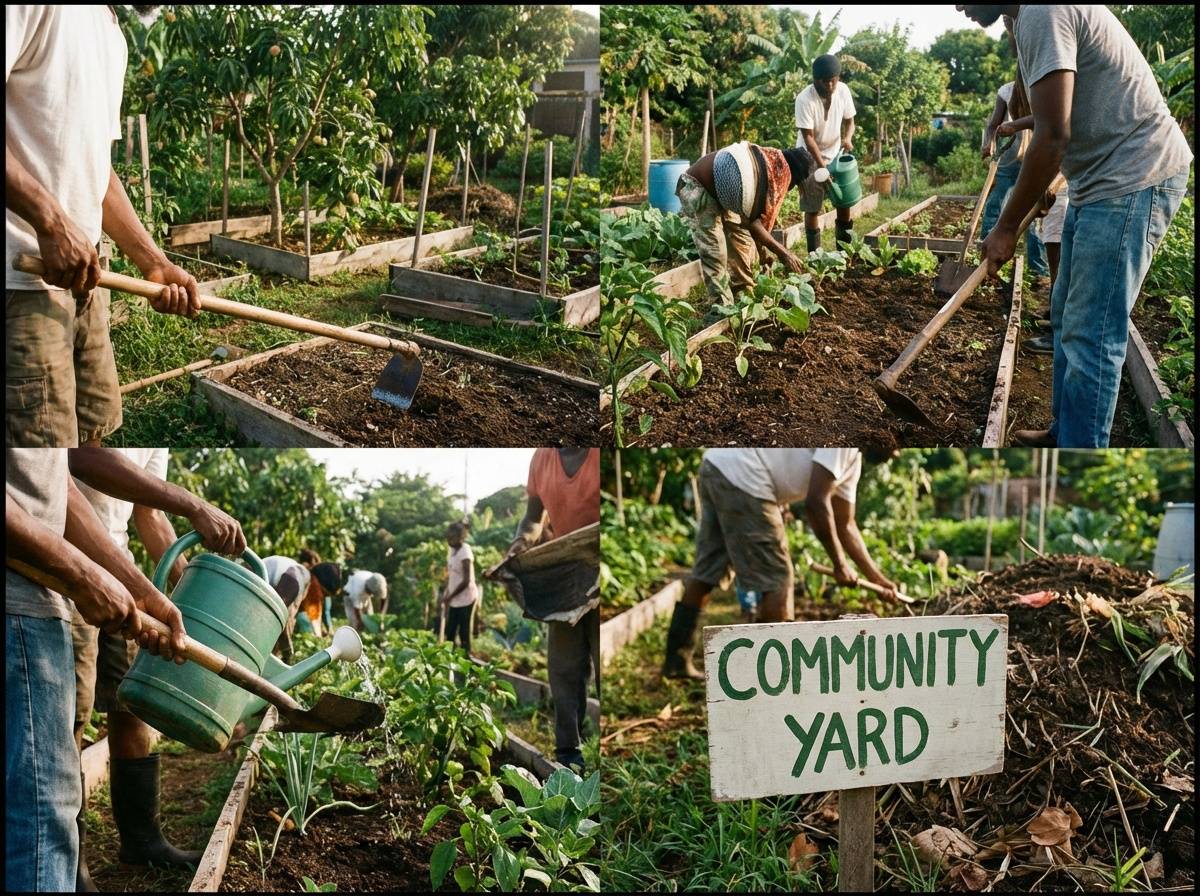
- Grounding in nature: yard work, gardening, sea breeze, barefoot time when possible.
Important clarity: Rastafari is diverse and not every household follows the same ritual pattern. Avoid treating one mansion’s practice as universal rule.
Community living: family, elders, and the ethics of belonging
Rastafari is not built only around individual spirituality. It is built around community ethics. The culture tends to value unity, support, and mutual responsibility—especially because the movement historically faced hostility. When the outside world tries to isolate you, community becomes protection.
Elders often carry weight not because of formal titles, but because of time and discipline. The community watches who lives what they say. Authority is earned through consistency. That is why hypocrisy is treated seriously: it threatens the entire social trust.
Community ethics often emphasized
- Respect: for elders, for family, for the sacred.
- Responsibility: to community, not only to self.
- Truth: honesty as a moral baseline.
- Upliftment: helping each other rise, not competing to look superior.
Work and “earning”: living clean inside a messy economy
One of the most practical challenges in Rasta daily life is this: Babylon’s economy is often built on compromise. People are pressured to trade ethics for survival. That pressure is real.
Rasta livity does not pretend money doesn’t matter; it tries to keep money from becoming god. That means aiming for livelihoods that don’t require constant betrayal of self. Some choose trades, farming, crafts, music, entrepreneurship, community work—paths where they can keep dignity intact.
The ideal is not poverty. The ideal is freedom: enough to live, without selling the soul.
ReggaeDread principle: Babylon will pay you to forget who you are. Livity is refusing that salary.

Modern adaptation: how livity survives phones, algorithms, and global noise
Today, Babylon doesn’t only come through police and politicians. It comes through screens. Algorithms pull attention into loops. Outrage becomes addiction. Vanity becomes currency. And identity becomes content.
Modern Rasta livity faces a new battlefield: mental space. Many still use the old tools—reasoning, chant, Ital, community—to protect the mind. But adaptation is necessary. The question becomes: how do you live rooted when the world is built to keep you scattered?
Examples of modern livity adaptations
- Digital discipline: limiting doom-scroll, choosing message, protecting attention.
- Community continuity: keeping real gatherings alive, not only online identity.
- Education on demand: teaching youth cultural literacy (Part 8) to prevent dilution.
- Health focus: Ital and wellness as defense against modern stress and sickness.
When livity gets misunderstood: “chill” is not the same as disciplined
Outsiders often read Rasta calmness as “laid back.” Sometimes it is. But often it is discipline. Calmness in Babylon can be an achievement. It can mean you did not let pressure steal your soul.
That’s why the culture has depth. The calm is not laziness. It’s strength with no need to shout. It’s confidence rooted in truth, not in performance.
How Part 9 prepares Part 10: global spread, adaptation, and authenticity challenges
Once you understand daily livity, you can understand what gets threatened when Rasta goes global. Part 10 explores Rastafari around the world—diaspora, cultural exchange, new reggae scenes, and the ongoing struggle between adaptation and dilution.
FAQ: the Rasta lifestyle in daily life
What does “livity” mean in practice?
Livity is living aligned with spiritual truth—clean consumption, disciplined speech, ethical work, community responsibility, and daily protection of the mind from Babylon’s corruption.
Are reasoning sessions formal meetings?
Often they are informal gatherings where people discuss scripture, history, current events, and ethics. The form varies, but the purpose is consistent: clarity, correction, and upliftment.
Is Rasta lifestyle the same everywhere?
No. Rastafari is diverse across mansions, regions, and households. Shared principles exist, but practices vary with context.
How does modern technology affect Rasta livity?
Technology introduces new Babylon pressures—attention loops, vanity culture, constant noise. Many adapt through digital discipline, community grounding, Ital living, and cultural education.
Next (Part 10): Rasta Culture Around the World — diaspora, cultural exchange, global reggae scenes, and the authenticity challenges that come with worldwide influence.
Continue the series: Part 10 — Rasta Culture Around the World