
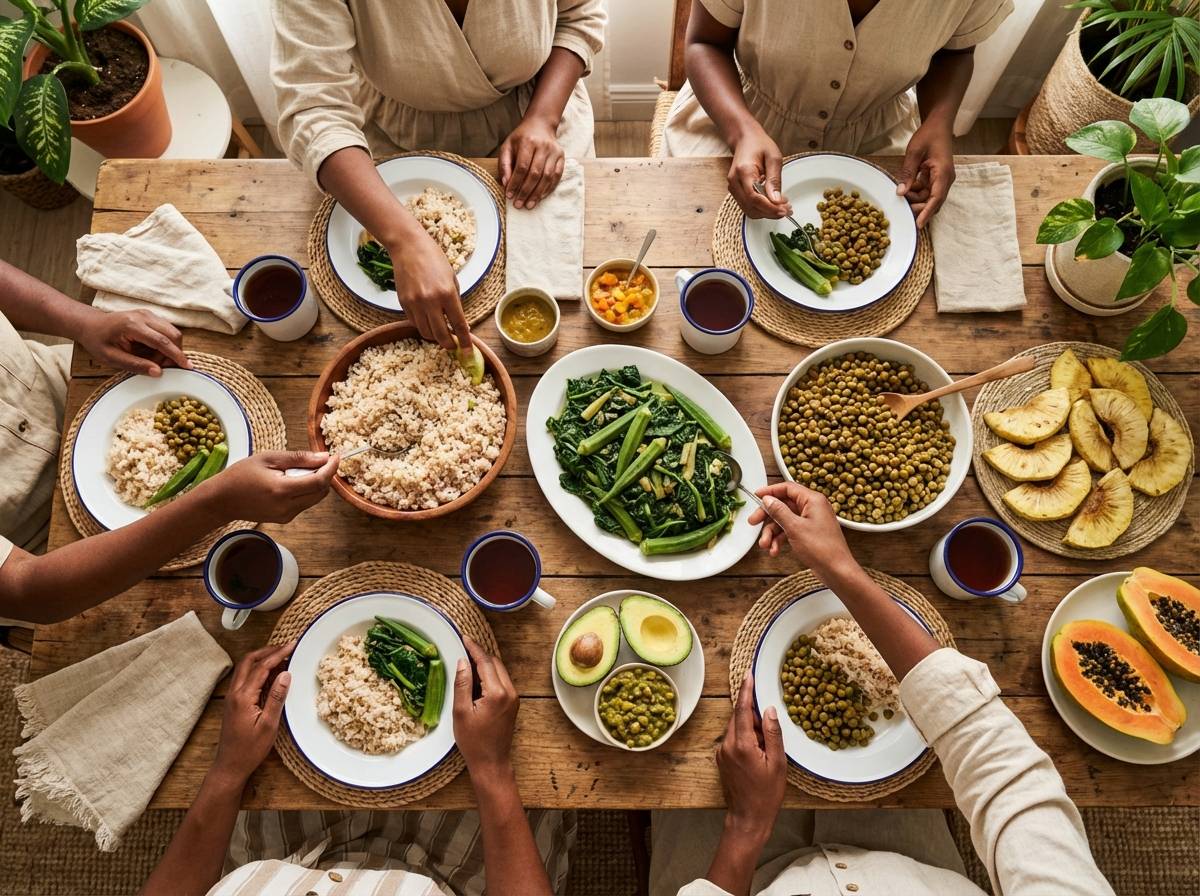
Up to now, we have talked about Rasta Ital diet in terms of history, herbs, and protein. But livity truly shows itself in the everyday: the plate you build when you come in tired from work, the pot you put on when bredren and sistren pass through, the breakfast you make before a day of labor or prayer.
Ital is not just a once-a-month special meal. It is a way of eating that repeats, day after day, until simple ingredients begin to feel like family: yam and green banana, callaloo and pumpkin, rice and peas, ginger tea and fresh fruit. The magic is not in rare superfoods—it is in the way ordinary foods are cooked with intention, herbs, and respect.
In this chapter we move from concept to kitchen with practical Rasta Ital recipes and Rasta Ital meal ideas:
- The anatomy of an Ital plate: starches, greens, legumes, and fats.
- Ital-style breakfast, midday meals, and evening suppers.
- One-pot stews and soups that define Ital comfort food.
- Simple, flexible recipe frameworks you can adapt to your own yard and market.
Think of this as a roots cookbook chapter written in prose: not strict measurements, but strong patterns you can carry into every kitchen you touch.

The Anatomy of an Ital Plate: Color, Balance & Livity
If you look at an Ital plate with a careful eye, you will notice a certain balance repeating itself. It might not be written down, but it’s there:
- Ground provisions or grains – the foundation.
- Greens and vegetables – the life and color.
- Peas, beans, or lentils – the strength.
- Healthy fats – often from coconut, nuts, or seeds.
- Herbs and spices – thyme, scallion, garlic, pimento, ginger.
1. Ground Provisions & Grains: Rooting the Body
Ground provisions are the root crops that have fed Caribbean people for generations:
- Yellow yam
- Sweet potato
- Dasheen (taro)
- Cassava
- Green banana and plantain
- Breadfruit
These foods are boiled, steamed, or roasted, not drowned in oil. They give slow, steady energy and a sense of groundedness. Alongside them, Ital kitchens often use brown rice, millet, bulgur, quinoa, or cornmeal as grain options.
2. Greens & Vegetables: Color as Medicine
The Ital plate is rarely beige. You’ll see:
- Dark greens like callaloo, spinach, or kale.
- Orange and yellow from pumpkin, carrot, and sweet pepper.
- White and cream from coconut and breadfruit.
- Red from tomatoes, beetroot, or bell peppers.
These colors aren’t just pretty—they reflect different nutrients, all working together to keep the body strong and the blood clean.
3. Peas & Beans: Strength in Every Spoon
As we saw in Part 4, peas and beans are central to vegetarian protein sources in Ital cooking. A typical plate often includes a ladle of:
- Red peas (kidney beans),
- Gungo peas (pigeon peas),
- Lentils, or
- Chickpeas.
These may appear as stew, as sauce over rice, or as part of a one-pot dish with roots and vegetables.
4. Healthy Fats & Finishing Touches
Ital food uses fat with purpose, not recklessly. Common sources include:
- Coconut milk and coconut oil.
- Avocado slices.
- Nuts and seeds sprinkled over veggies or blended in sauces.
Herbs, lime juice, and a small touch of salt (if used) finish the story. The result is a plate that feels alive: heavy enough to satisfy, light enough to keep you moving.
Ital Breakfast: Roots to Start the Day
Ital breakfast is not about sugar highs or processed flour. It’s about planting your feet in the day with food that can carry you through work, study, or spiritual practice. Here are core Rasta Ital meal ideas for the morning.
1. Boiled Food & Callaloo Plate
A classic yard-style breakfast might look like:
- Boiled yam, green banana, and sweet potato.
- A side of steamed callaloo with onion, garlic, and thyme.
- A drizzle of coconut oil or a few slices of avocado.
- A cup of ginger tea or fever grass tea.
This is humble food, but it offers complex carbs, fiber, greens, and healthy fats. It’s the kind of breakfast that makes you feel rooted rather than restless.
2. Ital Porridge Bowl
Ital porridge avoids heavy condensed milk and refined sugar. Instead, build it like this:
- Base: oats, cornmeal, plantain or green banana blended with water.
- Liquid: water with a little coconut milk for richness.
- Seasoning: cinnamon, nutmeg, vanilla, ginger.
- Sweetening: mashed ripe banana, dates, or a touch of unrefined sweetener.
Top with sliced fruit or a sprinkle of seeds. This turns porridge from a sugar crash trap into a steady, nourishing morning ritual.
3. Fruit, Nuts & Tea Simple Start
On lighter mornings, an Ital breakfast can be as simple as:
- A plate of seasonal fruit (mango, papaya, orange, banana, melon).
- A small handful of nuts and seeds.
- Bush tea (mint, lemongrass, ginger, soursop leaf, etc.).
This kind of breakfast cleans the system, hydrates, and gives gentle energy without weighing down the stomach.
Midday Ital Meals: Stews, Bowls & One-Pot Strength
Midday is when many people need a combination of strength and clarity. You want to feel fueled, not sleepy. Ital responses to this need are often stews, soups, and one-pot bowls.
1. Classic Rice & Peas Ital-Style
Rice and peas is a Caribbean classic, but the Ital version keeps the spirit while dialing back the salt and processed fats.
Basic framework:
- Cook red peas (or gungo peas) with garlic, scallion, thyme, pimento, and a piece of ginger.
- Add coconut milk and water, bring to a gentle boil.
- Stir in washed brown rice.
- Simmer until the rice is tender and the liquid absorbed.
Serve with a side of steamed callaloo, cabbage, or mixed vegetables. The result is a fully plant-based dish rich in protein, complex carbs, and healthy fats.
2. Pumpkin & Red Lentil Yard Soup
This soup is simple and forgiving—a perfect everyday Ital recipe.
Framework:
- Sauté onion, scallion, garlic, and thyme in a little coconut oil or water.
- Add cubed pumpkin and grated carrot.
- Add a cup of red lentils (no soaking needed).
- Cover with water, add a few pimento berries and sliced ginger.
- Cook until everything is soft, then lightly mash or blend for creaminess.
Finish with lime and a sprinkle of fresh herbs. This soup is gentle on digestion but surprisingly filling—a good option for anyone easing into plant-based diets.
3. Ital Veggie Rundown (Fish-Free)
Traditional Jamaican rundown uses salted fish simmered in coconut milk. The Ital version keeps the coconut base but drops the fish.
Framework:
- In a pan, warm coconut milk until it starts to thicken slightly.
- Add onion, scallion, garlic, thyme, and a slice of hot pepper (optional).
- Add chunks of pumpkin, okra, carrot, and other veggies.
- Simmer until everything is tender and coated in creamy coconut sauce.
Serve with boiled food or brown rice. This is Ital comfort food—a reminder that plant-based meals can be rich and satisfying without any flesh.
Evening Ital Meals: Light but Nourishing
Evening Ital meals lean toward light, calming, and easy to digest. The idea is to restore the body, not overload it before rest.
1. Steamed Veg & Roots Plate
A typical evening plate might include:
- Lightly steamed greens (callaloo, spinach, bok choy, etc.).
- Steamed or roasted pumpkin and carrot.
- Small portions of yam or sweet potato.
- A spoonful of peas or lentils left from the midday pot.
Drizzle with a bit of coconut oil or sprinkle with seeds, then finish with lime juice. This kind of meal fills the belly gently and supports better sleep.
2. Simple Ital Stir-Fry with Ground Provisions
If you have leftover boiled food, you can turn it into a quick stir-fry:
- Sauté onion, scallion, garlic, and ginger with a pinch of thyme.
- Add sliced leftover yam, green banana, or sweet potato.
- Add chopped greens and sweet pepper for color.
- Finish with lime and fresh herbs.
This is a good way to avoid waste and give new life to leftover provisions without heavy oil or salty sauces.
3. Soup & Tea Wind-Down
Some evenings, a simple bowl of leftover pumpkin or lentil soup with fresh herbs on top, plus a cup of bush tea, is enough. This small, warm combination wraps up the day on a soft note and supports overnight digestion.
Flexible Ital Recipe Frameworks (No Exact Measurements Needed)
A powerful feature of Rasta Ital recipes is their flexibility. You do not need exact measurements to begin; you can follow frameworks and adjust based on what you have.
Framework 1: Any-Bean Ital Stew
Use this whenever you have beans or peas and a few vegetables:
- Sauté onion, scallion, garlic, thyme, and ginger.
- Add cooked or soaked-and-boiled beans (red peas, gungo, lentils, etc.).
- Add chopped vegetables (pumpkin, carrot, greens).
- Add water or a little coconut milk and simmer until flavors combine.
- Finish with lime and fresh herbs; adjust salt lightly if using.
Framework 2: Ital Grain & Vegetable Bowl
Great for meal prep and busy weeks:
- Cook a pot of brown rice, quinoa, or millet.
- Steam or roast a tray of mixed vegetables (pumpkin, carrot, broccoli, okra, etc.).
- Cook a separate pot of beans or lentils.
- Assemble bowls with grain at the bottom, veggies on one side, beans on the other.
- Top with a simple dressing made from lime, herbs, and a touch of oil or tahini.
Framework 3: Quick Ital Veg Sauté
For nights when you have little time:
- Heat a pan with a little coconut oil or water.
- Add onion, garlic, and thyme; cook until fragrant.
- Add chopped mixed vegetables (whatever you have).
- Stir-fry lightly until just tender but still bright.
- Serve over leftover grain or boiled food.
Cooking Rhythm: Making Ital Work in Real Life
One of the biggest barriers people feel when approaching Ital or any plant-based diet is time. They imagine standing over the stove for hours every day. Ital cooking does take some care, but it also leans heavily on rhythm and repetition.
Weekly Ital Rhythm Ideas
You might try:
- One big pea/bean pot per week (red peas, gungo peas, lentils).
- Two grain pots per week (brown rice one day, millet or quinoa another).
- Regular boiled food days with yam, green banana, and sweet potato.
- Daily herbs and teas to keep flavor and healing running through.
With these basics cooked ahead or in large batches, assembling plates becomes simple: you mix and match portions, adding fresh vegetables and herbs as needed.
Leftovers as Strategy, Not Accident
Ital cooking loves leftovers because they deepen in flavor overnight. Yesterday’s:
- Pea stew can become today’s soup with extra water and herbs.
- Boiled food can become tonight’s stir-fry.
- Rice and peas can turn into a stuffed vegetable filling.
This approach saves time, money, and energy while keeping livity intact.
From Ital Plates to Global Vegetarian Fusion: What Comes Next
In this chapter, you stepped into the everyday kitchen of Rasta Ital recipes and saw how simple ingredients—roots, greens, peas, grains, and herbs—can be arranged into endless combinations:
- Breakfasts built on porridge, boiled food, fruit, and tea.
- Midday meals centered on stews, rice and peas, and one-pot strength bowls.
- Evening plates that are light, calming, and easy to digest.
- Flexible frameworks that free you from strict recipes while still feeding you well.
You’ve now tasted Ital in its home setting—yard, pot, simple fire. But plant-based livity is not limited to the Caribbean. Around the world, people are exploring vegetarian and vegan dishes through their own traditions.
In Part 6 – “Vegetarian Recipes with a Roots Twist”, we will:
- Blend Ital principles with popular vegetarian dishes from other cultures.
- Show how to “roots up” comfort foods like pasta, pies, and burgers.
- Offer ideas for people who want Ital energy but are cooking in non-Caribbean kitchens.
- Keep the focus on whole foods, herbs, and livity—no Babylon processed shortcuts.
Ital has shown how to build a plate from the earth up. Next, we see how those same roots can twist their way through global vegetarian cooking, making every cuisine a little more conscious, a little more alive.