Ask almost anyone what they think about plant-based diets and sooner or later the same question appears: “But where do you get your protein?” When people hear about the Rasta Ital diet, they often imagine nothing but steamed greens, a little rice, and maybe a piece of fruit. They picture weakness, not strength.
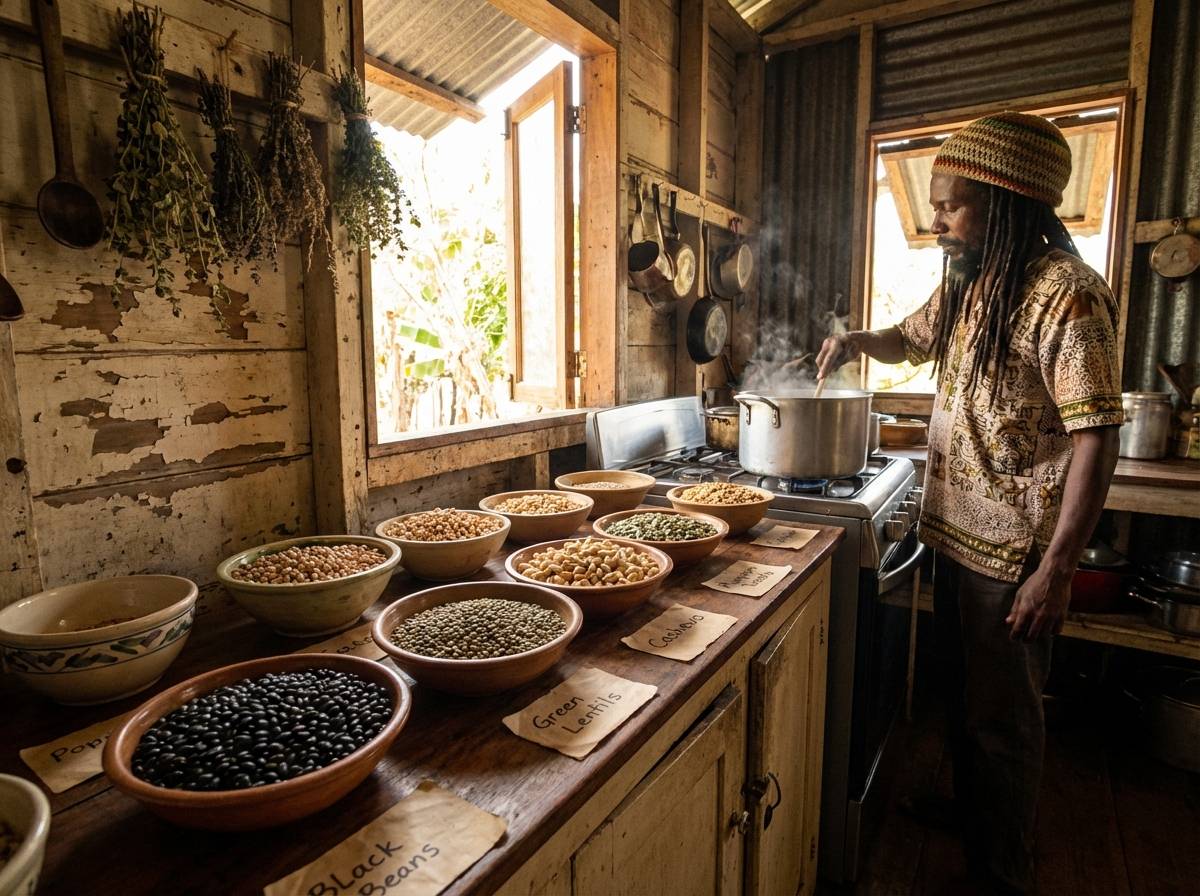
Yet for decades, Rastas have been building houses, farming hillsides, playing sound systems, touring the world, and chanting all night on food that is largely vegetarian, often close to vegan. The secret is not a secret at all. The power has always been in the pot: in peas, beans, nuts, seeds, and whole grains cooked with love, patience, and Ital flavor.
In this chapter, we explore vegetarian protein sources through an Ital lens:
- The “weak food” myth and why it never matched reality.
- How peas and beans form the backbone of Ital strength.
- The role of nuts, seeds, and grains in everyday livity.
- Where tofu, tempeh, and modern meat substitutes fit (or don’t fit) for Ital.
- Sample Ital-style high-protein meal ideas you can cook anywhere.
By the end, the question won’t be “Where do you get your protein?” but rather, “How did we ever forget that the earth itself is a source of strength?”

The Protein Myth: Why Ital Isn’t “Weak Food”
In many cultures, meat is treated as the definition of strength. A big piece of flesh on the plate means power, success, and masculinity. A plant-only meal is seen as light, feminine, or temporary—a side dish, not a main event.
This idea isn’t accidental. For generations, advertising, colonial mindsets, and class politics have linked meat with status and plant foods with poverty. People were taught:
- That “real men” eat meat, and lots of it.
- That beans and peas are “poor food” for those who can’t afford beef.
- That animal protein is superior to plant protein.
Into this world stepped Rastafari, rejecting Babylon’s yardstick for strength. While many people associated power with a steak, Rastas were living on red peas stew, callaloo and green banana, pumpkin soup, and rice and peas—and still carrying blocks, tilling soil, and holding Nyabinghi reasoning until morning.
Strength Measured Differently
In Rasta Ital lifestyle, strength isn’t only about muscle size or how much weight you can lift once. Ital looks at a broader question: How long can you move with vitality, clarity, and peace of mind?
When the measure of strength is:
- Consistent energy across long days.
- Healthy blood, heart, and nerves.
- Clear thinking and stable emotions.
- Endurance in work, family life, and spiritual practice.
then a plant-based diet built on whole foods begins to make far more sense. The same peas and beans that some call “poor food” become the quiet pillars of everyday power.
Peas & Beans: Foundation of Ital Protein
When you look into the pot of a serious Ital cook, you will almost always see one of the following:
- Red peas (kidney beans).
- Gungo peas (pigeon peas).
- Lentils (brown, green, or red).
- Chickpeas (garbanzo beans).
- Black-eyed peas or other traditional legumes.
These foods are not side notes. They are the foundation of vegetarian protein sources in Ital living.
The Power of Legumes
Peas and beans offer a powerful combination:
- Protein to build and repair tissue.
- Complex carbohydrates for slow, steady energy.
- Fiber to support digestion and blood sugar balance.
- Minerals like iron, magnesium, and potassium.
When paired with whole grains like brown rice, millet, or quinoa, they provide complete protein—all the essential amino acids the body needs. For Ital cooks, this is not about nutrition charts. It is about long experience: they know that peas and beans “hold you” for the day.
Cooking Peas and Beans the Ital Way
In many Rasta Ital recipes, legumes are slow-cooked until they are soft and creamy, absorbing herbs, spices, and sometimes coconut milk. A basic Ital-style legume pot might involve:
- Soaking beans overnight to reduce cooking time and improve digestion.
- Rinsing and placing them in a pot with fresh water.
- Adding chopped onion, scallion, garlic, and thyme.
- Dropping in pimento berries and a slice of ginger.
- Simmering until the peas are soft and the liquid thickens into a light gravy.
This kind of pot can stand alone with some ground provisions (yam, sweet potato, green banana) or be served over brown rice or millet. Either way, the plate is fully capable of meeting protein needs—and then some.
Digestive Comfort and Gas Myths
Many people avoid beans because of fear of gas and discomfort. Ital living responds with simple, practical tips:
- Soak peas and beans and discard the soaking water.
- Cook with ginger, garlic, and sometimes bay leaf or other carminative herbs.
- Introduce legumes gradually if your diet was previously low in fiber.
Over time, the digestive system adapts. What once felt heavy becomes natural, and the body benefits from the steady, grounded energy that legumes provide.
Nuts, Seeds & Healthy Fats: Concentrated Strength
Where peas and beans offer slow, solid energy, nuts and seeds bring concentrated strength. In the Rasta Ital diet, they are often used more sparingly than legumes and grains, but their impact is powerful.
Everyday Ital-Friendly Nuts and Seeds
Depending on location and access, common nuts and seeds in Ital and vegetarian living include:
- Sesame seeds (and tahini).
- Sunflower seeds.
- Pumpkin seeds (pepitas).
- Almonds and other tree nuts.
- Flax and chia seeds in more modern adaptations.
These foods bring:
- Protein to complement legumes and grains.
- Healthy fats for hormones, brain function, and skin.
- Micronutrients like zinc, iron, calcium, and vitamin E.
How Ital Cooks Use Nuts and Seeds
Rather than eating huge handfuls of nuts, Ital cooks often integrate seeds and nuts into dishes:
- Adding ground sesame seeds or tahini to sauces and dressings.
- Sprinkling pumpkin or sunflower seeds over steamed vegetables or salads.
- Using crushed nuts in veggie patties or loaf-style dishes.
- Blending nuts into plant-based “milks” for porridge or tea.
In this way, nuts and seeds enrich meals with more than just protein; they bring texture, flavor, and a feeling of luxurious nourishment, even in a modest kitchen.
Whole Grains: The Steady Fire Beneath the Day
Whole grains may not be the first thing people think of when they talk about protein, but they play a quiet role in the vegetarian protein sources puzzle. Combined with legumes, they help build complete proteins and steady energy.
Common Ital-Friendly Grains
Different communities and households will have different grain habits, but common choices include:
- Brown rice – a staple in many Ital kitchens.
- Millet – small, hearty, and versatile.
- Quinoa – more modern but valued for its high protein content.
- Barley – used in soups and stews.
- Cornmeal – for porridge, dumplings, or bakes.
Grains and Legumes: A Classic Combination
When grains and legumes are eaten in the same day—or better yet, in the same meal—they complement each other, providing all essential amino acids. This is why dishes like:
- Rice and peas
- Lentils and millet
- Chickpea stew with quinoa
are such power plates in plant-based cuisines around the world. The Ital version of this pattern is simple: cook a pot of peas with herbs and serve it over or alongside a nourishing grain. The result is filling, grounding, and nutritionally complete—without any meat.
Tofu, Tempeh & Meat Substitutes: An Ital Perspective
In modern vegetarian and vegan circles, tofu, tempeh, and meat substitutes are popular protein sources. From soy burgers to plant-based nuggets, entire sections of the supermarket are now dedicated to “mock meats.”
Where Tofu and Tempeh Fit
Traditional tofu and tempeh come from centuries-old Asian food cultures and can be part of a healthy, whole-food diet. From an Ital-friendly perspective:
- Tofu and tempeh can be used in moderation, especially if minimally processed.
- They should be seasoned and cooked with herbs, roots, and vegetables, not as a main event alone.
- They are not essential if peas, beans, nuts, and grains are already present.
For some Rastas, soy products may feel too far from their own tradition. For others, they are simply another plant-based option to use wisely.
Highly Processed Meat Substitutes
The Ital critique becomes sharper when it comes to highly processed mock meats:
- Products with long ingredient lists and chemical additives.
- Fake meats designed to mimic taste, texture, and even the bleed of animal flesh.
- Items marketed as health foods but full of salt, oils, and flavor enhancers.
From a Rasta Ital lifestyle perspective, these are often seen as just another corner of Babylon’s food system. They may be technically vegetarian or vegan, but they are far from the earth, and far from the simplicity Ital values.
Ital asks a simple question: Is this food natural, clean, and life-giving? If the answer is “not really,” then it belongs more to marketing than to livity.
Sample Ital High-Protein Meal Ideas
To make the conversation practical, here are some Ital-style meal ideas that bring together peas, beans, nuts, seeds, and grains into full, satisfying plates.
1. Red Peas & Pumpkin Strength Stew
Core protein: Red kidney beans
A classic Ital stew might combine:
- Soaked and cooked red peas.
- Chunks of pumpkin and carrot.
- Onion, scallion, garlic, thyme, pimento, ginger for seasoning.
- A splash of coconut milk for creaminess (optional).
Serve this over brown rice or with boiled yam, green banana, and sweet potato for a plate that holds you for hours. This single meal offers substantial plant protein, complex carbohydrates, and a rainbow of micronutrients.
2. Gungo Peas & Quinoa One-Pot
Core protein: Gungo peas + quinoa
In a deep pot, combine:
- Cooked gungo peas (pigeon peas).
- Quinoa simmered in the same pot for complete protein.
- Chopped callaloo or other greens.
- Seasoning base: onion, scallion, garlic, thyme, ginger.
This dish cooks into a hearty one-pot meal that is easy to portion and reheat, perfect for busy days when you still want Ital strength.
3. Chickpea & Callaloo Coconut Curry
Core protein: Chickpeas + seeds (optional)
In a pan:
- Sauté onion, scallion, garlic, ginger, and turmeric.
- Add cooked chickpeas and chopped callaloo.
- Pour in coconut milk and a little water to form a sauce.
- Finish with a sprinkle of pumpkin seeds or sesame seeds.
Serve over millet or brown rice. Chickpeas bring solid protein, while seeds contribute extra protein and healthy fats.
4. Ital Breakfast Power Bowl
Core protein: Lentils + nuts + seeds
For a morning bowl:
- Warm lentils seasoned with garlic, thyme, and scallion.
- Add steamed callaloo or spinach.
- Top with a small handful of chopped nuts and seeds.
- Serve alongside boiled green banana or ground provisions.
This kind of breakfast replaces sugary cereals and processed breads with something that can fuel labor, creativity, and spiritual practice all morning long.
Protein and Livity: More Than Numbers
In many nutrition conversations, protein is reduced to a number: grams per day, grams per kilogram of body weight, grams per meal. Ital living respects the science but refuses to stop there. It asks:
- What is the source of your protein?
- How was that food grown, harvested, and prepared?
- What does it do to your mind, mood, and spirit over time?
When protein comes from:
- Peas and beans grown close to home.
- Grains and seeds cooked with herbs and love.
- Meals eaten in community, with gratitude.
it nourishes far more than muscles. It supports livity—the way you move through the world, relate to others, and connect to the Most High.
From Power Foods to Everyday Plates: What Comes Next
In this chapter, you have seen that vegetarian protein sources are not scarce in Ital living. They are everywhere:
- In pots of red peas, gungo peas, lentils, and chickpeas.
- In nuts and seeds sprinkled over veggies or blended into dressings.
- In whole grains that form the steady background of many meals.
- In mindful (and cautious) use of items like tofu or tempeh when desired.
You have also seen how Ital measures strength not only in grams of protein but in endurance, clarity, and spiritual alignment. The question isn’t just “Are you getting enough?” but “What kind of life is this food building in you?”
Now that you understand the power foods, it is time to step into full, real-world meals—the kind of Rasta Ital recipes that show up on the table day after day, in yards, community gatherings, and city apartments.
In Part 5 – “Rasta Ital Recipes: Everyday Plates for Roots Living”, we will:
- Break down the anatomy of an Ital plate: starches, greens, legumes, and healthy fats.
- Share sample breakfast, lunch, and dinner ideas that feel authentic and achievable.
- Look at one-pot dishes, soups, and stews that define Ital comfort food.
- Show how to transform your current kitchen into a rootsy Ital workspace without needing fancy tools.
The strength is already in the earth and in the pot. Next, we turn that strength into everyday plates you can cook, serve, and share.