Cultural Ownership Attribution, Royalties, archives and Reggae Justice Jamaica Is Owed
Song connection: “Pay Di Culture”Reading time: Approximately 15–17 minutes
“Play di music—pay di culture / Feed Jah roots, not greedy vulture.”
“Pay Di Culture” begins with an alarm because polite appreciation has not solved the problem.
Reggae is praised across the world. Its basslines fill festivals, films, advertisements, resorts, fashion campaigns, streaming playlists and wellness spaces. Jamaican language travels far beyond the island. Rastafari colors, lion imagery, dub effects, sound-system stacks and the promise of “good vibes” are instantly recognizable.
Recognition, however, is not the same as return.
A culture can be globally visible while many of its builders remain economically vulnerable. An artist can be famous without controlling a master recording. A rhythm can generate decades of use while credits remain confused. A pioneer can receive a lifetime-achievement tribute without receiving dependable income, health support or ownership in the institutions celebrating the work.
The song’s demand is deliberately direct: if you play the music, sell the image, book the festival, license the recording, sample the rhythm or build a brand from Jamaican cultural meaning, then respect must become material.
Pay the creator. Name the engineer. Document the source. Protect the archive. Teach the youth. Fund the institution. Strengthen the community.
Play di music—pay di culture.
The Difference Between Loving Reggae and Valuing Reggae
Millions of people sincerely love reggae. They collect records, travel to festivals, learn basslines, operate sound systems and study Jamaican history. Cultural exchange can create real solidarity. Music has always moved among peoples.
The problem is not that reggae crossed Jamaica’s borders.
The problem arises when admiration becomes extraction—when people take the profitable surface while ignoring the historical source, political meaning and economic needs of the creators.
Loving reggae is emotional. Valuing reggae is structural.
Love says the music changed my life. Value asks whether the people whose work made that transformation possible share in the benefits. Love wears the colors. Value learns what Rastafari means before turning its symbols into merchandise. Love attends a festival. Value examines who owns the festival, who receives the best slots, where vendors come from and whether local communities gain durable assets.
This distinction does not eliminate pleasure. It deepens responsibility.
“Pay Di Culture” uses the image of a vulture because extraction feeds on life without sustaining it. The vulture in the song is not every foreign listener or non-Jamaican reggae artist. It is a business model: take what can be marketed, strip away context, minimize payment, and move on before the roots can demand an account.
The opposite model is reciprocity.
Jamaica Did Not Produce Only a Genre
To understand what is owed, we must understand what Jamaica produced.
Reggae is one extraordinary result within a wider system of invention. Jamaican creators developed and refined ska, rocksteady, reggae, dub and dancehall. Sound-system culture transformed recorded music into a mobile, competitive performance practice. Selectors made sequencing and record knowledge central. Deejays developed rhythmic microphone performance. Engineers used mixing desks, filters, echo and reverb to reconstruct recordings in real time. Version culture expanded one rhythm into multiple songs and performances.
These practices influenced hip-hop, remix culture, jungle, drum and bass, garage, grime, dub techno and many other forms. The influence is musical, technical, linguistic and social.
Jamaica also demonstrated how a relatively small country could achieve enormous global cultural presence without matching industrial power. Human creativity became a form of national capital.
That achievement did not emerge from comfort. Much of the music came from communities confronting poverty, colonial inheritance, political conflict and unequal access to formal institutions. The WIPO study The Market for Music Goods and Services in Jamaica described the industry as substantially created by propertyless and marginalized groups and observed that a large share of income had been appropriated by big business, increasingly foreign.
That is the contradiction at the center of the anthem.
The people generated abundance from scarcity. The marketplace often preserved the scarcity while exporting the abundance.
“Good Vibes Only” Can Become Cultural Erasure
Reggae certainly contains joy, romance, humor, dance and spiritual uplift. No one phrase can hold the entire tradition.
Yet international marketing often reduces Jamaican music to relaxation: palm trees, cannabis smoke, beaches, easy smiles and an endlessly agreeable groove. “Good vibes” becomes a filter removing sufferation, African consciousness, anti-colonial thought, labor struggle, repatriation, police violence and Rastafari reasoning.
This reduction is economically useful because conflict-free imagery is easier to sell. A resort can use reggae to promise escape without asking visitors to think about Jamaican workers. A clothing brand can print a lion without engaging Rastafari communities. A festival can book imitative acts while treating Jamaican pioneers as heritage decoration.
The erasure is not only symbolic. It changes who appears marketable.
If reggae is defined primarily as a relaxed mood, artists who reproduce that mood may receive opportunity regardless of their relationship to the culture. Jamaican artists carrying sharper historical or political messages may be treated as less accessible.
“Pay Di Culture” answers this bleaching process with a blunt line: “Good vibes only wash struggle away.”
The song is not against good vibes. It is against “only.”
Culture must retain the right to tell the whole story.
Copyright Is Important, but Culture Is Larger Than Copyright
Copyright provides legal rights in specific forms of expression. In music, different rights can exist in the composition, lyrics, sound recording and performance. The people who wrote a song may not be the same people who own the master recording. Performers and producers may have related or neighboring rights depending on the law and the use.
Jamaica’s Copyright Act protects categories including musical works, literary works, sound recordings, films, broadcasts and performances. The country has collective management organizations serving different groups of rights holders. JACAP represents composers, authors and publishers, while JAMMS collectively administers certain performance rights for sound-recording copyright owners.
These structures matter. Registration or notification of works, accurate ownership information and collective management can help royalties reach eligible creators.
But copyright does not protect every dimension of culture.
A genre is not owned like a single composition. A drum pattern, vocal manner, spiritual symbol, historical association or general aesthetic may not fit neatly inside exclusive rights. Ethical obligations can therefore exceed legal minimums.
A company may be legally permitted to create a reggae-inspired advertisement while still presenting Jamaica irresponsibly. A festival may clear every recording license while excluding Jamaican decision-makers. A musician may avoid literal copying but build a career on cultural knowledge without meaningful reciprocity.
“It was legal” is not the same as “it was just.”
Copyright is one tool in a larger program of cultural stewardship.
Composition, Master and Performance: Three Questions Every Artist Should Ask
Music creators are often told to “own your rights,” but that phrase can remain vague. Three questions provide a practical starting point.
1. Who owns the composition?
The composition includes the underlying music and lyrics. Songwriters and composers may divide shares among themselves and may enter publishing agreements. A written split sheet completed while memories are fresh can prevent later conflict.
2. Who owns the master?
The master is the particular sound recording. A label, producer, artist or other investor may own it depending on agreements. Ownership matters because the master can be licensed for streaming, film, advertising, compilations and other uses.
3. Who performed and contributed?
Featured artists, background vocalists, musicians, producers and other contributors should be documented accurately. Legal entitlements vary, but complete credits support royalty administration, reputation and historical preservation.
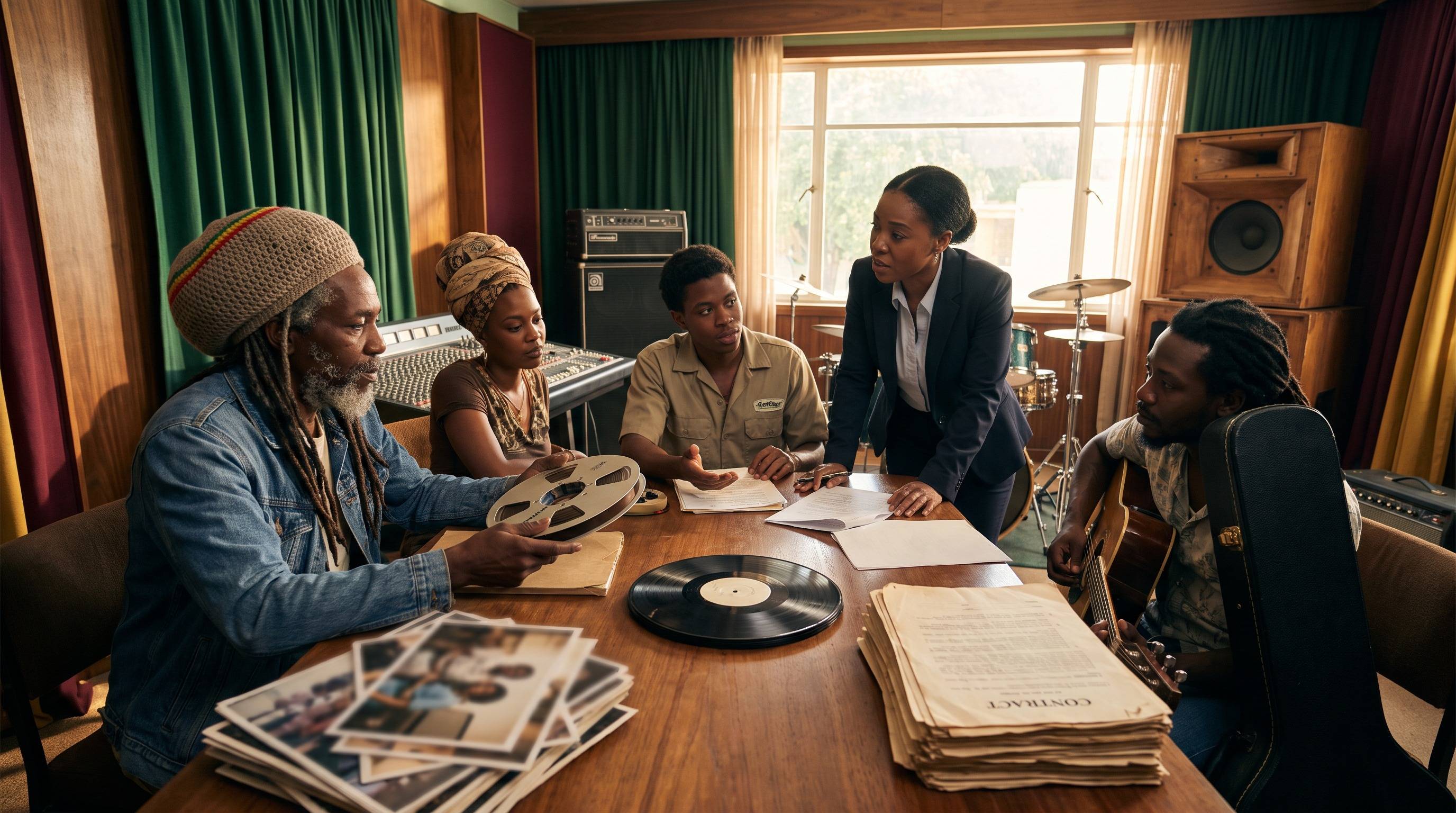
These questions sound basic, yet informal creative environments frequently postpone them. The session feels collaborative. Money is short. Everyone wants to finish the tune. A handshake seems sufficient.
Years later, success changes memory.
The solution is not to destroy trust with paperwork. It is to protect relationships by making expectations visible. A simple written agreement can be an act of respect.
Metadata Is the New Label Copy
In the vinyl era, a listener could inspect a physical label or sleeve for names, although credits were often incomplete even then. In digital music, descriptive data travels with or alongside the recording.
That metadata may include track title, artist name, writers, producers, label, genre, release information, ownership identifiers and recording codes. Accurate data helps platforms and rights organizations match uses to the correct work and people.
Bad metadata creates invisible loss.
A misspelled name can divide a catalog. A missing writer can prevent matching. Inconsistent titles can create duplicates. An incorrect identifier can send attention or money toward the wrong recording. If records are never registered or updated, royalties may remain unmatched.
For Jamaican music, metadata is also historical infrastructure. Many recordings emerged through small labels, informal agreements, reused rhythms and complex producer relationships. Digitization without careful research can reproduce old omissions at global scale.
Every archival or reissue project should therefore ask:
- Who participated in the original session?
- What evidence supports the credits?
- Have artists, families or knowledgeable community members been consulted?
- Who controls the master and composition?
- Are alternative names and spellings documented?
- Will corrected information reach distributors and rights databases?
- How will income be reported?
“Credit in metadata, cash in account” is not merely a rhyme. It is a chain that must work.
Royalties as a Pension
In a WIPO interview, Jamaican artist Shaggy described copyright as a form of pension that the reggae fraternity had lacked. The metaphor is powerful because music income arrives across time.
A creator does the original work once, but the work may continue to be broadcast, streamed, performed, licensed, sampled or sold. Rights allow some value from later uses to return to eligible owners and contributors.
That return can matter greatly in old age. Touring becomes physically difficult. Health expenses rise. Public taste changes. A properly administered catalog may provide income when live performance cannot.
But royalties do not function as a pension automatically.
The creator must own or control relevant rights. Works and recordings must be documented. Uses must be tracked. Licenses must be issued. Money must be collected, matched and distributed. Contracts must not have transferred away the entire benefit.
Even successful artists can discover that famous recordings are owned or licensed by others. For less prominent singers, musicians and engineers, the gaps can be wider.
This is why ceremonial respect is inadequate. A tribute concert may last one night. Rights administration can support decades.
Paying the culture means building systems that continue working when applause stops.
The Archive Is an Economic Asset and a Sacred Trust
Jamaican music history survives through master tapes, vinyl records, dubplates, photographs, flyers, notebooks, contracts, oral testimony, equipment and private collections.
These materials possess cultural value. They may also possess commercial value through reissues, exhibitions, documentaries, books, merchandise and licensing.
That combination creates risk.
Collectors and institutions with money can acquire materials from families under financial pressure. Foreign archives may preserve objects safely while making them inaccessible to the communities from which they came. Digitization projects may extract stories without sharing control or revenue.
Preservation is essential, but possession is not neutral.
An ethical archive should establish provenance, consent, access, attribution and benefit. Families should understand what they are transferring. Communities should receive usable copies. Commercial uses should have clear terms. Sensitive spiritual or personal material may require restrictions. Oral-history participants should know how their voices will be edited and distributed.
Jamaica also needs well-resourced institutions capable of preserving materials locally. Climate control, digitization equipment, cataloging labor, backups and rights research cost money. International partnerships can help, but they should build Jamaican capacity rather than remove the archive.
“Guard living seed, archive and tone,” the song says.
The archive is not a graveyard for dead culture. It is a seed bank for future knowledge.
Festivals Must Measure More Than Attendance
Reggae festivals create visibility, employment and tourism. They can connect artists with audiences and sustain sound-system practice. But headline attendance does not reveal how value is distributed.
A community-benefit account should ask:
- How many Jamaican and Caribbean artists received prominent placement?
- Who owned production, ticketing and concessions?
- How much procurement went to local businesses?
- Were sound systems treated as central cultural institutions or decorative side stages?
- Did veteran performers receive fair fees and suitable conditions?
- Were local vendors charged manageable rates?
- Did the festival fund training, archives or year-round venues?
- Who captured audience data and email relationships?
- What environmental and neighborhood costs remained after the event?
These questions do not attack festivals. They help distinguish a cultural economy from a cultural extraction event.
A festival can be profitable and reciprocal. It can contract Jamaican designers, engineers, photographers, food businesses and educators. It can commission oral histories. It can pair international artists with local apprentices. It can publish a transparent community-impact report.
What cannot continue is the assumption that putting reggae on a stage automatically benefits reggae’s source communities.
The gate must tell the truth.
Non-Jamaican Reggae Artists Have a Choice
Reggae’s international family includes many artists who were not born in Jamaica. Some approach the culture with humility, study and real relationships. Others reproduce surface cues while benefiting from racial, national or industry advantages.
The answer is not a purity test based solely on birthplace. Culture has always traveled, and diaspora identities are complex. The answer is accountable participation.
A non-Jamaican reggae artist can:
- Learn and publicly name the music’s Jamaican history.
- Credit specific influences rather than speaking vaguely about “island vibes.”
- Hire Jamaican musicians, engineers and designers through fair agreements.
- Share publishing when collaborators contribute composition.
- Build reciprocal tours rather than only importing aesthetics.
- Support Jamaican archives, schools and veteran funds.
- Avoid using Rastafari language as costume.
- Challenge festival lineups that marginalize Jamaican artists.
- Direct audiences toward original recordings and historical resources.
- Be transparent about their position within the tradition.
These actions do not purchase permission or eliminate criticism. They demonstrate that influence has produced responsibility.
The question is not “Can you play reggae?”
The deeper question is “What relationships does your reggae create?”
Rastafari Cannot Be Reduced to Brand Material
Rastafari has contributed immeasurably to roots reggae’s language, moral force and international identity. References to Jah, Zion, Babylon, Africa, repatriation, ital livity and I-and-I carry spiritual and historical meaning.
Commercial culture often detaches these signs from Rastafari people.
Red, gold and green become generic decoration. Locks become a costume. The Lion of Judah becomes a logo. Ganja imagery replaces the movement’s wider spiritual, political and ethical thought. Haile Selassie is invoked without history. “One love” is used to smooth over conflict rather than confront injustice.
Paying the culture therefore includes more than compensating musicians. Rastafari representatives should have meaningful roles in exhibitions, educational programs, documentaries and campaigns drawing directly on the movement. Communities should help define how sacred or sensitive imagery is used.
This does not mean every reference requires a fee or official approval. It means institutions should stop behaving as if spiritual meaning is a free design library.
Livity is conduct.
A company cannot credibly market Rasta consciousness while exploiting workers. A festival cannot praise unity while excluding originators from governance. A museum cannot display sacred meaning responsibly without relationship.
Word, sound and power must remain connected.
Brand Jamaica and the Equity Question
Jamaica’s international image is unusually powerful relative to the country’s size. Music, language, food, sport, Rastafari imagery and creative energy contribute to a globally recognizable identity.
A WIPO-hosted Jamaican report on nation branding described the country as possessing immense cultural and intellectual brand equity while not benefiting sufficiently from it. The report discussed the need to own, protect, manage and enhance Brand Jamaica and identified threats from overseas copying and adaptation of Jamaican styles.
Nation branding, however, can repeat the same problem it seeks to solve.
If the state or large companies control the brand while grassroots creators remain excluded, value is centralized rather than repaired. “Jamaica” cannot become an asset managed above the people who continuously make Jamaican culture.
A just Brand Jamaica strategy should include:
- Creator and community representation in governance.
- Transparent licensing and certification where appropriate.
- Support for small Jamaican exporters and cultural businesses.
- International enforcement paired with accessible local education.
- Investment in production, distribution and marketing capacity.
- Data showing where cultural revenue flows.
- Protection against misleading origin claims without freezing creative exchange.
The goal is not to place the entire culture behind a toll gate. It is to reduce the gap between global recognition and Jamaican benefit.
From Protest to Program
Militant lyrics are necessary when polite language hides exploitation. But anger without organization can become another performance consumed by the marketplace.
“Pay Di Culture” therefore moves from accusation to construction. Its third verse is a program:
Build Jamaican-owned labels with international reach. Build archive schools where elders teach. Build transparent festivals. Build Africa–Caribbean touring routes. Train lawyers and engineers. Buy venues, land and equipment. Fund health care and pensions. Keep cultural memory close.
Each proposal addresses a different point in the value chain.
Creation
Provide affordable studios, rehearsal spaces, instruments, production education and grants that do not require creators to surrender rights.
Documentation
Use split sheets, session logs, contracts, identifiers, metadata and secure recordkeeping.
Distribution
Develop Jamaican-controlled channels for digital delivery, physical products, audience data and direct-to-fan sales.
Performance
Strengthen venues, sound systems, festivals and touring networks with transparent terms.
Collection
Improve rights awareness, work registration, usage reporting and relationships with appropriate collective management organizations.
Preservation
Fund archives, oral histories, equipment collections and community-controlled digitization.
Welfare
Create emergency, health and retirement mechanisms for veteran and working creators.
Education
Teach culture and commerce together so that young artists do not inherit the old vulnerabilities.
This is how “pay di culture” becomes more than a slogan.
A Seven-Point Cultural Reciprocity Standard
Any organization profiting substantially from reggae or Jamaican sound-system culture can apply a simple test.
1. Attribution
Are Jamaican origins and specific contributors named clearly?
2. Compensation
Are creators, workers, advisers and communities paid fairly and on time?
3. Ownership
Do Jamaican participants retain meaningful rights, assets or equity?
4. Access
Can source communities access the recordings, archives, events and educational products created from their culture?
5. Governance
Do they participate in decisions, or are they invited only to perform?
6. Reinvestment
Does part of the value support training, preservation, welfare or infrastructure?
7. Accountability
Is there public information showing what was promised and what was delivered?
An organization may not satisfy every point immediately. The standard creates direction. It converts appreciation into measurable practice.
What Listeners Can Do
Structural change requires institutions, but listeners are not powerless.
Buy music and merchandise from artists or authorized sellers when possible. Attend Jamaican-led events. Read credits. Follow producers, engineers, labels and sound systems—not only lead singers. Support archival releases that document sources carefully. Learn the history behind familiar rhythms. Question vague “tropical” branding that uses Jamaican signs while hiding Jamaica.
Listeners can also resist the algorithm’s narrowing effect. Streaming platforms tend to reward frictionless familiarity. Seek roots recordings carrying history, spiritual reasoning and political depth. Share context when sharing music.
Do not treat elders as homework. Their work is full of pleasure, experimentation, humor and sonic force.
Most importantly, allow knowledge to change spending.
If a festival’s marketing celebrates Jamaica but its lineup and ownership do not, ask why. If a brand sells Rastafari imagery without relationship, do not reward the shortcut. If an artist demonstrates reciprocity, support that practice.
The audience helps determine which economic model survives.
What “Pay Di Culture” Is Really Saying
The song uses the language of battle because culture is already inside an economic struggle.
The “ancestral bank” stores knowledge accumulated across generations. “Royalty rain” describes income returning to water the roots. “Fine-print claw” turns a contract into a trapping animal. “Algorithm feed pon ancestral trust” names a digital system consuming inherited creativity. “One bass drop mek di balance sheet real” insists that every cultural experience rests on labor.
The repeated command—play the music, pay the culture—joins enjoyment to obligation.
It does not say that only Jamaicans may participate. It says participation must not erase origin or reproduce extraction. It does not demand that every cultural influence be monetized. It demands material justice where substantial commercial value is created. It does not oppose global reggae. It asks global reggae to maintain a living relationship with its roots.
The militancy is therefore constructive.
The goal is not to stop the sound. The goal is to change the ledger.
Conclusion: Respect Must Reach the Account
Reggae has already proven its value. The world has danced to it, advertised with it, built genres from it, organized festivals around it and used it to communicate rebellion, peace, romance and identity.
Jamaica should not have to prove the music matters.
The unfinished work is converting cultural importance into durable benefit for creators, workers, families and communities. Copyright education is part of that work. So are metadata, collective management, fair contracts, artist-owned masters, transparent festivals, archives, venues, training and welfare.
No single law or institution can repair every historical loss. Some rights were transferred decades ago. Some contributors were never documented. Some cultural value cannot be assigned to one owner.
But uncertainty cannot justify inaction.
Begin with what can be done now. Put agreements in writing. Register works. Correct credits. Audit catalogs. Pay advisers. Return archival copies. Publish benefit reports. Create apprenticeships. Place Jamaican people inside governance. Build institutions that can hold assets across generations.
Respect is beautiful, but respect must become structure.
Credit must reach the metadata. Ownership must reach the contract. Money must reach the account. Memory must remain accessible to the people.
Play di music.
Pay di culture.
Selected Sources and Further Reading
- Jamaica Intellectual Property Office: Copyright Explained
- Jamaica Ministry of Justice: The Copyright Act
- JIPO: Collective Management Organisations
- JACAP: Who We Are
- WIPO: The Market for Music Goods and Services in Jamaica
- WIPO Magazine: Reggae—Jamaica’s Gift to the World
- WIPO Magazine: Shaggy—Dancehall Comes to WIPO
- UNESCO: Reggae Music of Jamaica
This article provides general cultural and educational information, not individualized legal advice. Creators should obtain qualified advice for specific contracts, ownership disputes or rights questions.