Ital begins with one simple principle: life must stay clean
In Babylon, people eat fast and feel slow. People swallow stress, swallow additives, swallow habits that don’t love them back. Then they blame themselves for being tired. Ital refuses that whole arrangement.
Ital is rooted in a spiritual logic: if the body is a vessel, you don’t fill the vessel with trash and expect clarity. You treat food like medicine, like discipline, like respect. Not because you’re trying to impress anyone, but because you’re trying to keep the mind bright enough to reason and the spirit strong enough to stand.
This is why Ital is not just “what you eat.” It’s how you relate to eating: with intention, simplicity, and a refusal to normalize poison.
ReggaeDread lens: Ital is livity you can taste. It’s belief made edible.

What “Ital” means (and what it doesn’t)
The word “Ital” comes from “vital,” but in Rasta culture it becomes more than a linguistic shortcut. It becomes a philosophy: the food should support life, not drain it.
Ital often leans plant-based, often avoids processed foods, and often aims to keep ingredients close to their natural state. But Ital is not a rigid menu with one official rulebook. Different mansions, different elders, different households— practices can vary. What stays consistent is the goal: purity and life-supporting intention.
Important clarity: Ital practice varies widely. Some keep strict vegan Ital, some include fish, some avoid salt, some use small amounts. The shared thread is clean living and spiritual intention.
Ital as a “why,” not a checklist
| Ital focus | What it aims for | What it avoids |
|---|---|---|
| Natural ingredients | Food close to earth | Heavy processing, artificial additives |
| Clean energy | Clarity, strength, balance | Foods that fog the mind or dull the body |
| Respect for life | Non-violence orientation | Exploitation as “normal” consumption |
| Spiritual discipline | Consistency and intention | Mindless eating as a lifestyle |
Food as spiritual hygiene: why the kitchen becomes a temple
In many traditions, spirituality lives in churches or special ceremonies. In Rastafari, spirituality also lives in the kitchen. Because the kitchen is where discipline becomes real. It’s where you decide whether your belief is only a conversation—or a practice.
Babylon is loud. It sells convenience. It sells cravings. It sells addiction. It normalizes sickness as a price of “modern life.” Ital pushes back—not with a protest sign, but with a pot on the stove and a different standard of living.
When food is treated as spiritual hygiene, the question shifts from “What tastes good?” to “What keeps me clean enough to live my truth?” That is a powerful shift. It is also a difficult shift, because it asks you to change habits that were built by necessity, poverty, stress, and survival.
Ital as resistance you can actually practice
- Resistance to exploitation: choosing food that respects life and community.
- Resistance to addiction: rejecting the cycle of cravings and crash.
- Resistance to mental fog: eating for clarity so reasoning stays strong.
- Resistance to Babylon’s pace: slowing down enough to cook, prepare, and be intentional.

The roots of Ital: African memory, Caribbean reality, Rasta discipline
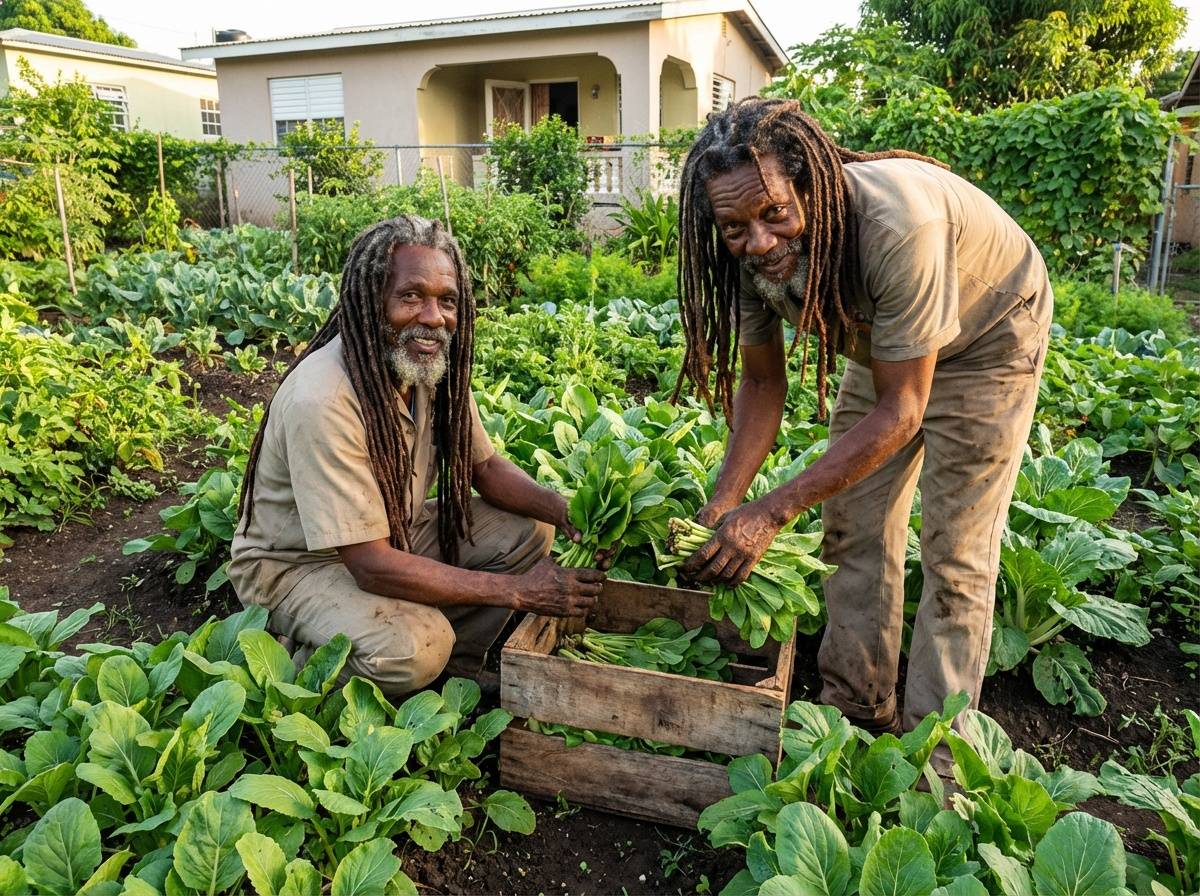
Ital didn’t develop inside a laboratory. It developed inside real Caribbean life—where people grew food, cooked from scratch, and used herbs as medicine long before wellness influencers made it aesthetic.
Many Caribbean communities already had strong traditions of plant-forward meals: provisions like yam, sweet potato, plantain, pumpkin, callaloo and other greens, beans and peas, coconut-based cooking, and herbal teas. Rastafari takes these traditions and deepens the intention: not only “this is what we have,” but “this is what supports life.”
And because Rasta is a movement of interpretation, Ital becomes more than cultural habit. It becomes spiritual practice.
Salt, oil, and “strictness”: why Ital debates exist inside the culture
Outsiders sometimes imagine Ital as one strict rule set. But inside Rasta communities, there have long been debates about “how strict” Ital should be. Some avoid salt entirely. Some use small amounts. Some avoid refined oils. Some keep it simple but not rigid.
These debates happen because Ital is not only about food—it’s about values. The deeper question is always: “What supports life, and what compromises it?” Different people answer that differently based on health, access, tradition, and mansion.
The point is not perfection. The point is intention.
ReggaeDread principle: Ital is a direction. Not everybody is at the same mile marker, but the compass points the same way.
Herbs and bush medicine: the original wellness knowledge
Ital livity often includes respect for herbs—not as magical shortcuts, but as part of a broader relationship to nature. In Caribbean culture, “bush tea” isn’t a trend. It’s generational knowledge.
Herbs carry memory. They also carry responsibility. In Rasta practice, herbs can support cleansing, relaxation, digestion, and overall balance. But Rasta wisdom often emphasizes moderation and discernment: nature is powerful, and power must be respected.
Examples of commonly referenced herbs in Ital culture
Note: Traditions vary by island and community. This is cultural overview, not medical advice.
- Ginger: often used in teas and tonics for warmth and digestion support.
- Turmeric: used in cooking and teas, valued for cleansing and balance.
- Mint: commonly used for calming and digestion.
- Lemongrass: widely used in teas; associated with cleansing and relaxation.
- Guava leaf / cerasee / soursop leaf: referenced in many Caribbean bush traditions.
Respect note: Herbal traditions are cultural knowledge. People should use discernment, especially with health conditions, pregnancy, or medications. Ital wisdom values responsibility, not reckless experimentation.
Ital plates: simple, balanced, and rooted
A real Ital plate isn’t trying to be fancy. Ital is often humble: greens, beans, provisions, ripe fruit, coconut, and seasoning that honors the ingredients instead of burying them.
The beauty is in the balance. The rhythm is in the repeat. When a lifestyle is built on discipline, the meals become predictable in a comforting way: food that holds you steady. Food that doesn’t turn your body into a battlefield.
Common Ital building blocks
| Category | Examples | Why it fits Ital livity |
|---|---|---|
| Greens | Callaloo, spinach, cabbage, steamed leafy veg | Mineral-rich, cleansing, grounding |
| Beans/peas | Kidney beans, lentils, chickpeas | Plant protein and steady energy |
| Provisions | Yam, sweet potato, pumpkin, plantain | Rooted carbohydrates, satisfying without heavy processing |
| Coconut | Coconut milk, coconut water | Traditional Caribbean ingredient, rich and natural |
| Seasoning | Thyme, scallion, garlic, ginger, pepper | Flavor with function, not artificial enhancement |
Ital is also economics: clean living under pressure
Here is the truth many wellness conversations skip: clean eating is easier when you have money. In Jamaica’s history, many people lived with limited access. They cooked what they could get. Rastafari developed within these realities. Ital was not always luxury. Sometimes it was necessity turned into philosophy.
That’s why Ital cannot be reduced to “just buy organic everything.” Ital is about proximity to earth, simplicity, and intention. You do what you can with what you have. You grow what you can. You share when you can. You reduce harm where possible.
In that sense, Ital is not elitist. It is adaptive discipline.
ReggaeDread lens: Ital is not about perfect purity. It’s about choosing life even when Babylon makes life expensive.
Fasting, cleansing, and “reset” practices
In some Rasta communities, cleansing practices and fasting rhythms appear as part of spiritual discipline. The idea is not punishment—it is reset. A way to pull the body out of overload and bring the spirit back into focus.
Again, practices vary. But the cultural logic is consistent: if you want clarity, you sometimes have to reduce intake and reduce noise. The same way reasoning clears the mind through conversation, cleansing clears the body through intentional simplicity.
What cleansing often symbolizes
- Self-respect: treating the body as worthy of care.
- Freedom: breaking dependence on cravings and compulsions.
- Spiritual focus: reducing distractions to hear the inner voice.
- Discipline: proving livity through action.
From Ital to identity: how food becomes culture
A diet can be private. Ital becomes public because it’s tied to worldview. When people eat Ital, they’re not only choosing flavor—they’re choosing alignment. They are saying: my body is not Babylon’s property.
This matters because Rastafari is not a movement of empty symbols. It is a movement of embodied meaning. When the body is treated with respect, the mind becomes more capable of reasoning, and the spirit becomes more capable of standing.
And when you understand that, you can also understand the next chapter—because identity markers like dreadlocks are often interpreted the same way: not fashion, but covenant. Not trend, but testimony.
How Part 5 prepares Part 6: dreadlocks, identity, and covenant
If Ital is discipline in the kitchen, dreadlocks become discipline in appearance—an outward marker of inward commitment. Part 6 moves into dreadlocks not as a hairstyle, but as a cultural and spiritual symbol tied to identity, vow, and resistance.
FAQ: Ital livity and clean living
Is Ital always vegan?
Not always. Many Ital practices are plant-based, but strictness varies by community and person. The consistent aim is clean, life-supporting food with spiritual intention.
Why is food treated as spiritual in Rastafari?
Because livity connects belief to daily practice. If the body is a vessel, what enters the vessel affects clarity, discipline, and spiritual focus. Ital treats food as part of moral and spiritual alignment.
Is Ital only about health?
Health is part of it, but Ital is also identity and resistance. It rejects Babylon’s normalized poisoning and promotes simplicity, dignity, and intentional living.
How does Ital connect to reggae later?
Ital is livity—life as message. That same message later becomes lyrics, chant, and cultural expression in roots reggae (Part 7). Music and food both carry discipline and worldview.
Next (Part 6): Dreadlocks, Identity & Covenant: Beyond Fashion — how hair becomes vow, how identity becomes visible, and why meaning gets lost when style is copied without root.
Continue the series: Part 6 — Dreadlocks, Identity & Covenant: Beyond Fashion