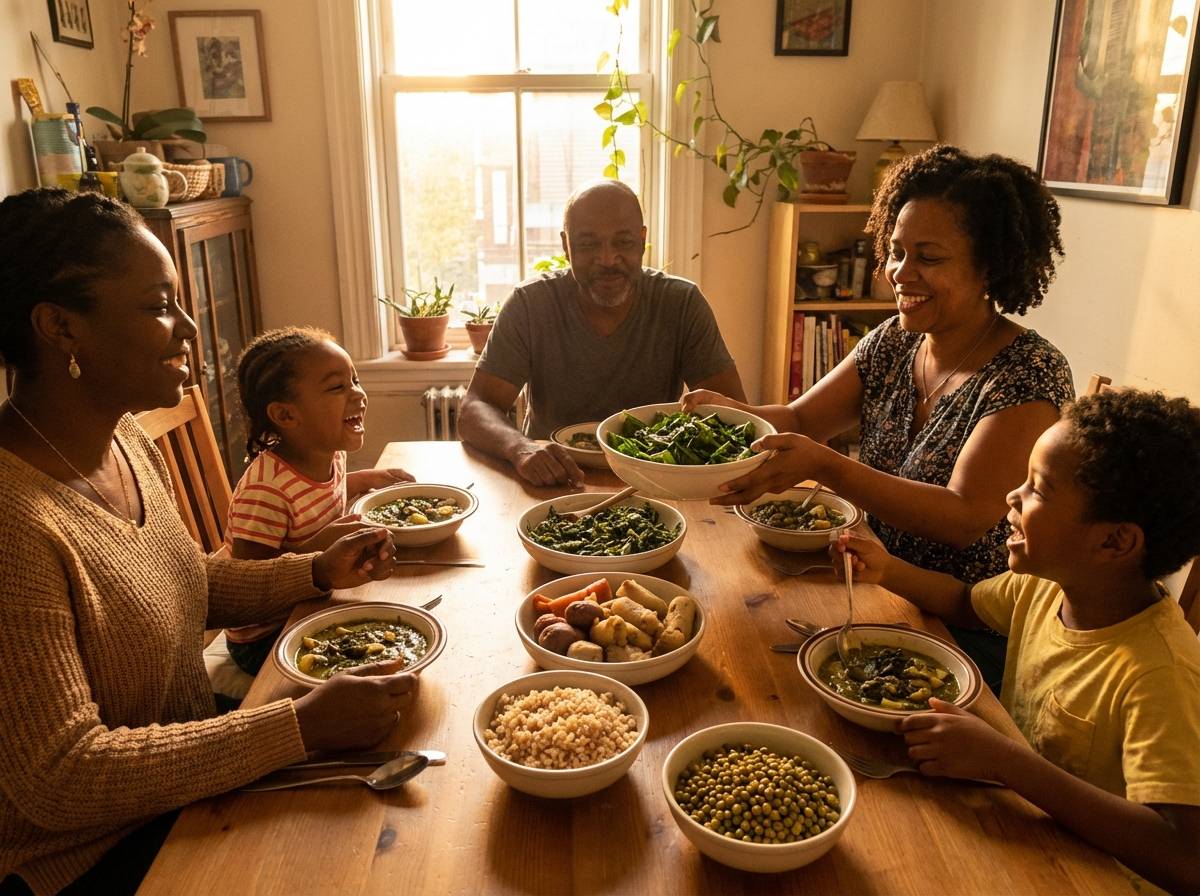
It’s one thing to choose Rasta Ital diet for yourself. It’s another thing entirely to bring that livity into a home full of different personalities, schedules, cravings, and opinions. Children see bright-colored junk food everywhere. Partners may not share your convictions. Elders might ask, “So the pickney not getting any meat?”
Yet, from its earliest days, Ital has always been about more than a single person’s plate. It’s about household livity—the shared pots, the Sunday table, the school lunch box, the snacks at granny’s yard. When families cook and eat Ital-inspired meals together, food becomes:
- A teacher of culture and history.
- A shield against Babylon’s junk food marketing.
- A bridge between generations.
- A daily reminder that the body is a temple, even in small mouths.
This chapter explores how to weave Ital & vegetarian livity into family life without turning the table into a battleground. We’ll explore:
- How to talk to children about Ital and plant-based eating in ways they understand.
- Managing partners and relatives who don’t share your food path.
- Kid-friendly Ital and vegetarian meal ideas, snacks, and lunchbox options.
- Practical tips for parties, school events, and holidays.
- Using food as a tool to teach heritage, self-respect, and community care.

Why Family Ital & Vegetarian Livity Matters
Children growing up in today’s world are surrounded by hyper-processed foods: sugary cereals, fast food, candy, and drinks glowing in neon colors. Advertising aims directly at them, shaping their tastes before they can read an ingredients list.
Early Plates, Long Shadows
The foods children meet in their earliest years often set the tone for life:
- Flavor preferences—sweet vs. bitter, fresh vs. fried.
- Ideas of what a “real meal” looks like.
- Comfort foods they turn to in stress or celebration.
When those early plates are rich in fruits, vegetables, roots, peas, and herbs, children learn to see natural food as normal and satisfying. When those plates are dominated by sugary and salty ultra-processed options, it becomes much harder to embrace Ital or vegetarian livity later.
Food as a Teacher of Identity
For families of Caribbean, African, or diaspora background, an Ital-leaning home can be a living classroom where children learn:
- What callaloo, yam, breadfruit, pumpkin, and gungo peas are.
- Why granny makes bush tea and roots tonics.
- How their ancestors survived on ground provisions and creative plant-based dishes.
- That their heritage food is not “peasant food” but power food.
Even for families outside the Caribbean, Ital values teach children that real food comes from earth and effort, not just from boxes and ads.
Talking to Children About Ital & Vegetarian Eating
Children don’t need lectures on colonial history to understand Ital. They do need clear, age-appropriate explanations that make sense to their world.
Keep It Simple, Honest and Positive
For younger children, you might say:
- “We eat food that helps our bodies be strong and bright, like fruits, vegetables, and peas.”
- “Ital food comes from the earth, not from factories.”
- “These foods help our hearts and brains work better.”
For older children, you can add layers:
- “Some companies make foods that taste good but hurt our bodies over time.”
- “Our people used food to survive and stay strong even when life was hard. Ital keeps that strength alive.”
- “We choose Ital and vegetarian meals because we respect our bodies and the animals and the earth.”
Focus on the power they gain, not just what they “can’t have.”
Answering Common Kid Questions
“Why can’t I eat what my friends eat?”
You might respond:
- “Different families have different food rules. Our family eats in a way that keeps our bodies and spirits strong.”
- “Sometimes we’ll share those foods at parties, but most days we stick to foods that we know are good for us.”
“Will I be weak without meat?”
Point to:
- Strong people they know who are plant-based (athletes, musicians, elders).
- Peas, beans, lentils, nuts, seeds, and tofu as “strength foods”.
- Their own energy: “Notice how fast you can run and how you feel after a good Ital meal?”
Navigating Partners, Elders & Relatives
One of the hardest parts of family Ital isn’t the food—it’s the people politics. Partners may resist change. Grandparents may worry. Relatives may tease or criticize.
1. Start with Shared Goals
Instead of opening with “We’re going full Ital now,” begin with shared desires:
- “We all want the children to be healthy and strong.”
- “We want fewer doctor visits and less sickness.”
- “We want our family to feel proud of where we come from and what we eat.”
From there, suggest Ital or vegetarian meals as one path toward those goals, not as a moral judgment on anyone’s past choices.
2. Negotiating with a Non-Ital Partner
If your partner doesn’t want to go Ital, you can still:
- Agree that family meals (especially dinners) will be plant-based or Ital-leaning most days.
- Let them add their own animal products on top or on the side if they wish.
- Keep kid meals plant-centered, with clear agreements about how much meat, dairy, or junk enters the house.
The key is consistency without constant conflict. Your livity will be most powerful when it is calm and steady, not forced through endless arguments.
3. Managing Grandparents and Extended Family
Elders often show love through food. When you say “no” to a dish, they may hear “no” to their affection. Approach with respect and clarity:
- Explain that you’re avoiding certain foods for health, spiritual, or ethical reasons.
- Ask them to help you with dishes that fit Ital or vegetarian guidelines—turn them into allies.
- Bring your own Ital dish to family gatherings and share it proudly.
Over time, as they see the children thriving, many elders soften their resistance.
Kid-Friendly Ital & Vegetarian Meal Ideas
Children’s palates are still developing. They often prefer familiar shapes and simple flavors. You don’t need to turn every meal into a lecture on roots and empire. You just need tasty, recognizable dishes that happen to be Ital-leaning or vegetarian.
1. Breakfasts Children Actually Want
-
Fruit Rainbow Bowl:
Slices of mango, banana, berries, orange, and melon in a colorful pattern with a sprinkle of shredded coconut or seeds. Serve with a small handful of nuts or a spoon of nut butter. -
Ital Porridge Cups:
Oats cooked with water and coconut milk, flavored with cinnamon and nutmeg, sweetened with mashed banana or blended dates. Serve in small bowls with fruit on top. -
Mini Roots Hash:
Diced sweet potato and pumpkin roasted or pan-cooked with a little coconut oil, onion, and mild seasoning. Serve in small portions with sliced fruit.
2. Lunches & School Snacks
-
Ital Lunchbox Bowl:
A small container with brown rice, seasoned peas or lentils, and chopped vegetables. Include a side of fruit and a small treat like a homemade oat cookie. -
Veggie Wraps:
Whole-wheat or corn tortillas with hummus or mashed peas, shredded carrot, lettuce, cucumber, and a little grated beet. Cut into pinwheels for younger children. -
Snack Stack:
Reusable containers with carrot sticks, cucumber slices, cherry tomatoes, grapes, and nuts or roasted chickpeas. Easy to grab and go.
3. Dinners That Feel Like Comfort Food
-
Rice & Peas Bowl:
Brown rice and peas cooked in coconut milk with thyme, garlic, and scallion. Serve with steamed callaloo or spinach and roasted sweet plantain. -
One-Pot Lentil Pasta:
Whole-grain pasta cooked in a tomato-based lentil sauce seasoned with herbs. Throw in spinach or chopped greens toward the end. -
Roots & Veggie Stew:
Cubes of pumpkin, carrot, sweet potato, and peas cooked in a light coconut broth with thyme and ginger. Serve with a side of boiled food or bread.
School, Parties & Holidays: Ital in Social Spaces
Children don’t just eat at home. They eat at school, birthday parties, and holiday gatherings. These spaces can feel like pressure points for Ital or vegetarian families.
1. School Lunch Strategies
Depending on your situation, you might:
- Pack lunch most days, using sturdy containers and ice packs if needed.
- Talk to teachers or administrators about your child’s dietary needs and traditions.
- Teach your child simple phrases to explain their food to peers: “My family doesn’t eat meat, but this gives me plenty of strength,” or “We eat Ital—it’s food from the earth.”
2. Birthday Parties & Treat Culture
Parties often mean sugary drinks, cake, candy, and processed snacks. You don’t have to block your child from every celebration, but you can:
- Feed them a solid Ital meal before going so they’re less tempted to binge.
- Teach them to choose one or two treats instead of everything at once.
- Bring a small alternative snack or treat they enjoy, especially if there won’t be many options.
For parties you host, you can:
- Serve Ital or vegetarian-friendly versions of familiar party foods (veggie patties, fruit platters, plant-based pizza, popcorn with herbs).
- Show children that healthy doesn’t mean boring.
3. Holidays & Cultural Feasts
Holidays are powerful opportunities to reclaim tradition:
- Prepare Ital versions of festival dishes—plant-based stews, rice and peas, roots, and vegetable sides.
- Tell stories while you cook: who taught you this dish, where it comes from, why it matters.
- Let children help with small tasks—washing vegetables, stirring pots, plating food.
In this way, holidays become rituals of memory and livity, not just excuses to overeat.
Common Challenges & Gentle Solutions
No Ital or vegetarian family path will be smooth all the time. Expect challenges, and meet them with patience.
“My Child is Picky and Rejects Ital Food”
Solutions to try:
- Introduce new foods slowly and in small amounts beside familiar favorites.
- Let them help choose vegetables at the store or market.
- Use fun shapes and colors—cut vegetables differently, arrange plates creatively.
- Keep offering without forcing; sometimes it takes many exposures before acceptance.
“Other Kids Make Fun of Their Food”
Support them by:
- Affirming at home that their food is special, powerful, and connected to something bigger than trends.
- Teaching them simple, confident responses: “This is my family’s food; it’s what makes me strong.”
- Sharing children’s books or videos that celebrate diverse foods and cultures.
“I Feel Exhausted Trying to Cook Different Meals for Everyone”
Consider:
- Agreeing that one main pot (soup, stew, rice and peas) is for everyone.
- Letting individuals customize with toppings (hot sauce, avocado, extra greens) rather than cooking separate dishes.
- Having a few “build-your-own” meals per week (bowls, wraps, tacos) where components are shared.
Using Food to Teach History, Heritage & Self-Love
In an Ital-leaning home, every pot can carry a story. You don’t have to lecture at every meal, but small comments and rituals over time build a deep foundation.
Storytelling at the Stove
While cooking, you can say:
- “Your great-grandmother used to cook peas like this when she had almost nothing.”
- “Our people stayed strong on food like this when the system wanted them to break.”
- “Herbs like thyme and ginger helped keep our ancestors healthy when there were no big hospitals.”
These small lines plant seeds of pride and awareness.
Kitchen as Classroom
Invite children to:
- Smell and name herbs: thyme, scallion, basil, garlic, ginger.
- Wash and tear leafy greens.
- Measure grains and peas.
- Stir pots and taste as seasoning evolves.
As they participate, they learn skills, confidence, and a quiet sense that they belong in their own cultural kitchen.
From Household to Movement: What Comes Next
In this chapter, you’ve seen how Ital & vegetarian livity can move from an individual lifestyle to a family rhythm:
- Shaping children’s early taste and identity with roots, greens, fruit, and peas.
- Negotiating partners, elders, and relatives with respect and steady conviction.
- Creating kid-friendly Ital meals, snacks, and school lunches that feel joyful, not restrictive.
- Navigating social spaces—school, parties, holidays—without losing your core values.
- Using food as a gentle teacher of heritage, resilience, and self-love.
When enough families move like this, something bigger begins to happen. Ital shifts from being a private choice to a visible presence in communities, markets, schools, and public conversations about health and justice.
In Part 10 – “Global Ital: Diaspora, Fusion & New Plant-Based Movements”, we’ll zoom out again and explore:
- How Ital ideas have traveled across the diaspora and influenced modern plant-based culture.
- Where Ital is visible (and invisible) in global vegan and vegetarian trends.
- What respectful fusion and solidarity look like between Ital and other plant-based traditions.
- How families and communities living Ital today are shaping the future of food freedom.
You’ve seen Ital at the family table. Next, you’ll see it out in the world—moving through cities, diasporas, kitchens, and movements that all carry the same quiet message: life in the pot, livity on the plate.