The day the diaspora felt a shift
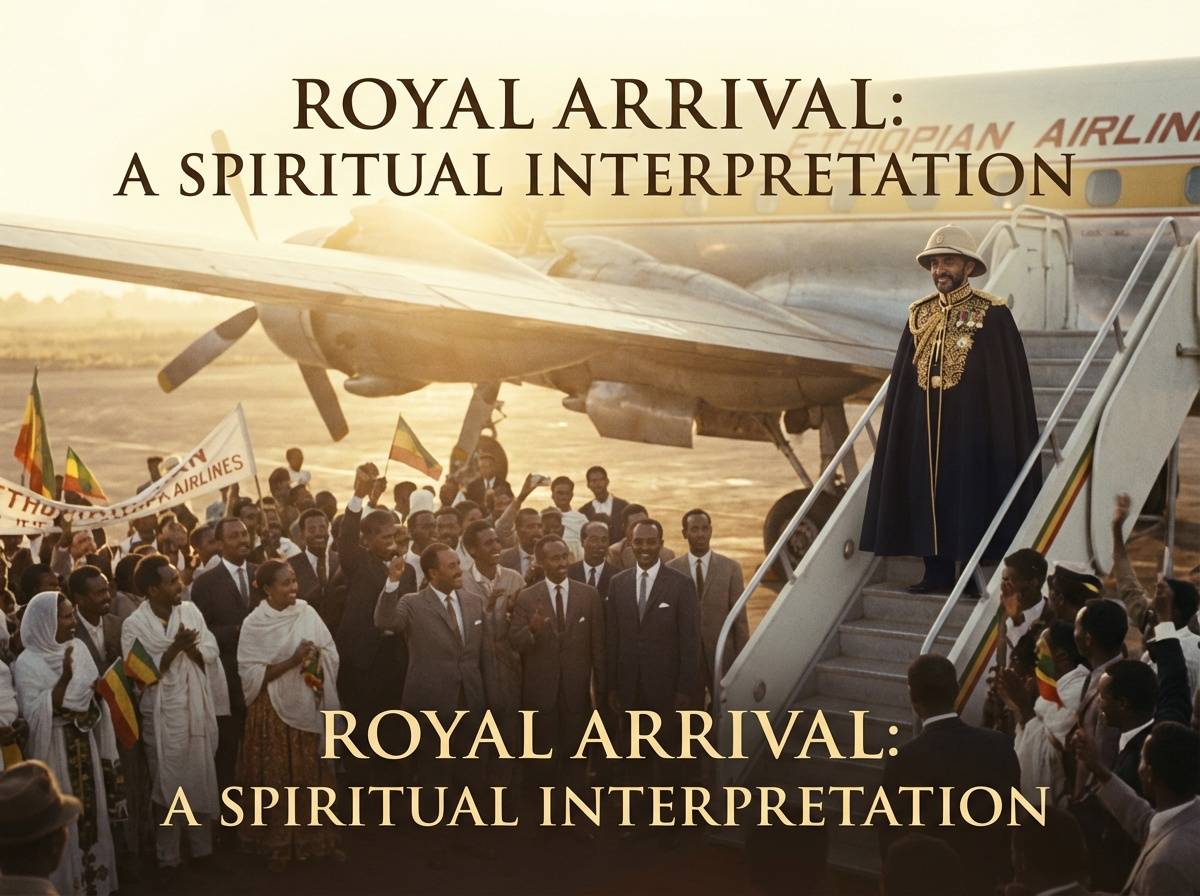
Some events are loud but forgettable. Others are quiet on the surface yet permanent in the spirit. The coronation of Haile Selassie in Ethiopia in 1930 belongs to the second kind—because for a people raised inside colonial stories, it did something rare. It disrupted the narrative.
Jamaica, like much of the Caribbean, lived under a structure where European power was treated as normal and African power was treated as myth. The system didn’t always say it plainly, but it taught the lesson every day: authority looks like empire. Civilization looks like Europe. Spiritual legitimacy arrives through institutions that don’t look like you.
Then here comes Ethiopia—independent in a world that expected Africa to be managed—and a coronation reaches the newspapers. A Black emperor, crowned with titles that echoed ancient lines and biblical language. In the diaspora imagination, this wasn’t just politics. It sounded like prophecy learning to speak in real time.
ReggaeDread lens: Movements don’t always begin with a meeting. Sometimes they begin with a headline that breaks the mind’s chains.
Who was Ras Tafari before the world called him Selassie?
Before the coronation, the name “Ras Tafari” already existed—an Ethiopian noble title and personal name that would later become the root for the word “Rastafari.” In a literal sense, the movement’s name is not invented poetry; it is connected to an actual historical figure and a specific moment in time.
But what matters here is not only the biography. What matters is what the figure represented to people hungry for dignity. In diaspora communities shaped by centuries of displacement, symbols become bridges. A symbol can carry a people across psychological exile and bring them back to a sense of belonging.
In the Jamaican context of the early 20th century, “Ethiopia” already carried weight through scripture and Black religious imagination. Garvey had already sharpened the blade of African consciousness. The soil was ready. The coronation was ignition.
A simple chain of energy
| Before | The event | After |
|---|---|---|
| Colonial Jamaica, pressure, hunger for dignity | Coronation of Haile Selassie (1930) | Prophetic interpretation intensifies, early Rasta identity forms |
| Garveyism spreads African-centered pride | Ethiopia becomes global news | “Ethiopia” becomes living reference, not distant symbol |
| Biblical language already present | Titles and ceremony feel “scriptural” to listeners | Scripture is reread through liberation and Black sovereignty |
Why the coronation mattered beyond politics
If you only read the coronation as a state ceremony, you miss the cultural impact. Rasta culture doesn’t form just by watching Ethiopia; it forms by interpreting Ethiopia through the needs of oppressed people. Interpretation is the key.
In many colonial societies, the mind is trained to accept certain limits. You may be told you can work hard, behave well, and still never truly belong to power. The coronation disrupted those limits. It offered an image of African sovereignty that could not be dismissed as fantasy.
And once the mind has seen a contradiction to its conditioning, it becomes harder to fully return to sleep. That is why this moment becomes a shockwave: it is not just “news from Ethiopia.” It is proof that the colonial story is not the only story.
Three ways the coronation re-wired the imagination
- Legitimacy: Black authority displayed publicly without apology.
- Continuity: Africa presented as ancient and enduring, not “primitive” or “empty.”
- Possibility: A spiritual and political horizon beyond Babylon’s frame.

Prophecy and interpretation: how scripture became a map
Rastafari is not a movement of passive reading. It reads the world actively—scripture, history, and headlines all become text to interpret. The coronation activated this interpretive spirit. For many early believers, Ethiopia was already sacred in biblical imagination; now Ethiopia appeared in newspapers with a face and a date.
This is where people often get confused: the power isn’t only in the titles or the ceremony. The power is in what the ceremony allowed people to do mentally. It allowed people to connect biblical language with Black sovereignty in a way that felt immediate. It allowed people to see “Zion” as more than metaphor. It gave the long memory an image.
In oppressive conditions, prophecy becomes a survival tool. It says: the system is not ultimate. It says: the oppressed are not abandoned. It says: history has a moral direction even when the present feels cruel.
Key idea: Prophecy in Rasta culture is not escape—it’s orientation. It tells you where to stand when Babylon tries to spin you.
Jamaica hears the message: the early spark in the yard
Jamaica in the 1930s was not a place where radical new ideas were welcomed by official society. The economy was strained, class divisions were sharp, and institutions often defended the colonial order. Yet ideas travel. They travel through newspapers, street conversation, sermons, dock talk, market talk, and yard reasoning.
The early Rasta emergence is not one clean story with a single founder and a single date. It is a constellation: several voices, several gatherings, several interpretations, and a growing sense that “something is happening.” A new consciousness begins to form.
The coronation did not create every detail of Rastafari culture, but it intensified the center. It gave early believers a reason to feel their interpretation was not only symbolic but historically grounded.
Why movements look “strange” at birth
New movements often look strange to a society trained to fear change. Early Rastafari was seen as disruptive: a refusal of colonial respectability, a refusal of church control, a refusal of mental submission. But that disruption was the point. Rasta culture emerges as a counter-meaning system—new language, new posture, new identity.
Important clarity: Early Rastafari developed across different groups and leaders, with diverse emphases. Avoid the trap of oversimplifying the origin into a single “official” version.
From concept to community: how identity markers form
Once the shockwave hits, the question becomes practical: how do you live the belief? This is where Rastafari becomes more than a private opinion. It starts forming culture.
Culture is not only what you believe; it is what you repeat. And early Rasta repetition had a distinct flavor: reasoning gatherings, spiritual conversation, critique of Babylon, and increasingly visible lifestyle decisions that signaled separation from colonial norms.
Over time, elements like distinctive speech, diet discipline, and hair practices become more visible. Not as costume, but as covenant—markers that the person is not simply “thinking” differently, but living differently.
Identity markers as protection
- Language: shaping speech to shape thought (developed deeper in Part 8).
- Livity: daily discipline as spiritual practice (developed deeper in Parts 5 and 9).
- Community: the yard and reasoning as a school of consciousness (developed deeper in Part 4).
- Separation: not hatred of people, but distance from systems that corrupt dignity.
Ethiopia and the politics of seeing: why this threatened Babylon
Babylon doesn’t only control with police and laws. Babylon controls with definitions: what is “normal,” what is “respectable,” what is “civilized,” what is “proper religion,” what is “acceptable history.”
Early Rastafari challenged these definitions. It claimed the right to interpret scripture outside church authority. It claimed the right to interpret identity outside colonial categories. It claimed the right to place Africa at the center of sacred meaning. That kind of claim threatens any system built on mental hierarchy.
When early Rastas honored Ethiopia, they weren’t just praising a foreign leader. They were refusing the colonial belief that Africa is spiritually and politically inferior. They were refusing the training. That refusal is what Babylon often punishes.
Babylon’s anxiety in one sentence
A person who believes they are sacred is harder to control.
Coronation as “permission”: the psychological breakthrough
Many people underestimate the role of psychological permission in liberation. Not permission from government—permission inside the self. The inner permission to stand tall, speak boldly, refuse humiliation.
The coronation served as a kind of permission slip for the imagination: if Ethiopia can present sovereignty, then sovereignty is not only European property. If Black kingship can appear publicly, then Black dignity can also appear publicly.
This matters because the colonial world trained many people to seek validation from the very system that exploited them. Rasta culture begins to reverse that: it seeks validation from the root, from the long memory, from Zion, from a spiritual identity that cannot be measured by Babylon’s approval.
ReggaeDread lens: The shockwave was not only political. It was internal. A new posture entered the body.
The diaspora amplifier: why this did not stay in Ethiopia
Black people across the diaspora were listening for signs that contradicted colonial propaganda. Ethiopia—already sacred in imagination—was one of the few African nations widely recognized for maintaining sovereignty through the late 19th and early 20th century. That fact alone made Ethiopia powerful as symbol.
When the coronation news traveled, it traveled into a network of longing: people longing for dignity, people longing for a home that wasn’t only “where you live,” but where you belong spiritually.
In Jamaica, these currents met local realities: poverty, class pressure, church dominance, colonial education. Rasta culture emerges as the place where those realities collide with a new imagination—and something has to give.
Why Jamaica became a major birthplace for this consciousness
- Colonial intensity: the pressure was sharp, and people were searching for exits.
- Religious presence: scripture language already lived in the social bloodstream.
- Garvey influence: Pan-African pride was already circulating widely.
- Creative cultural energy: Jamaica’s grassroots culture had strong traditions of reinterpretation and resistance.
A grounding note: history, faith, and the complexity of interpretation
In Rasta culture, interpretation is lived, not merely debated. But interpretation is also complex. People can interpret the same event differently based on their spiritual frame, their community, their experience, their mansion.
Some see the coronation as prophetic fulfillment. Others see it as symbolic significance without requiring identical theological conclusions. The movement’s diversity is part of its reality. A living culture is not one frozen doctrine; it is a set of shared roots and evolving branches.
Respectful approach: When speaking on Selassie and Rastafari, be careful not to flatten faith into meme. Listen for nuance. Different communities hold different depths.
How this prepares Part 4: beliefs, scripture, and reasoning culture
Part 3 is the spark. Part 4 is the structure.
Once a people feel the shockwave, they begin to build a worldview that can carry it. That worldview is not only private belief—it becomes reasoning culture: collective conversation, scripture interpretation, a moral framework, and a disciplined critique of Babylon.
If Part 3 is about how prophecy sounded like news, Part 4 is about how news becomes doctrine, discipline, and daily thought. It is about how a movement teaches itself to think.
Preview: what Part 4 will lock in
- Reasoning sessions: community dialogue as spiritual education
- Scripture re-reading: liberation-centered interpretation
- Moral discipline: livity as proof of belief
- Babylon critique: not conspiracy, but systems analysis rooted in lived reality
FAQ: Haile Selassie & early Rastafari
Why did the 1930 coronation matter so much to the diaspora?
Because it contradicted the colonial story that Black sovereignty was impossible. It turned “Ethiopia” from distant symbol into visible reality, and that reality fed identity, dignity, and prophetic interpretation in communities under pressure.
Did the coronation automatically create Rastafari?
No. Rastafari formed through multiple streams—Jamaican conditions, Garvey influence, biblical language, and grassroots reasoning culture. The coronation acted as a powerful ignition point that intensified interpretation and community formation.
Is Rastafari the same everywhere?
No. There are different mansions and interpretations. Many share common roots—Babylon critique, Zion orientation, livity discipline— but practice and emphasis can vary by community and generation.
How does this connect to later chapters on music and symbols?
Once the worldview forms, culture needs channels. Reggae and chant become broadcast systems (Part 7), and language/symbols become protection of meaning (Part 8). The coronation spark helped create the urgency that those channels later carried worldwide.
Next (Part 4): Beliefs, Scripture & Reasoning: The Inner Compass — how Rasta turns a shockwave into disciplined thought, community learning, and a lived spiritual framework.
Continue the series: Part 4 — Beliefs, Scripture & Reasoning: The Inner Compass