From Conscious Lyrics to Conscious Institutions
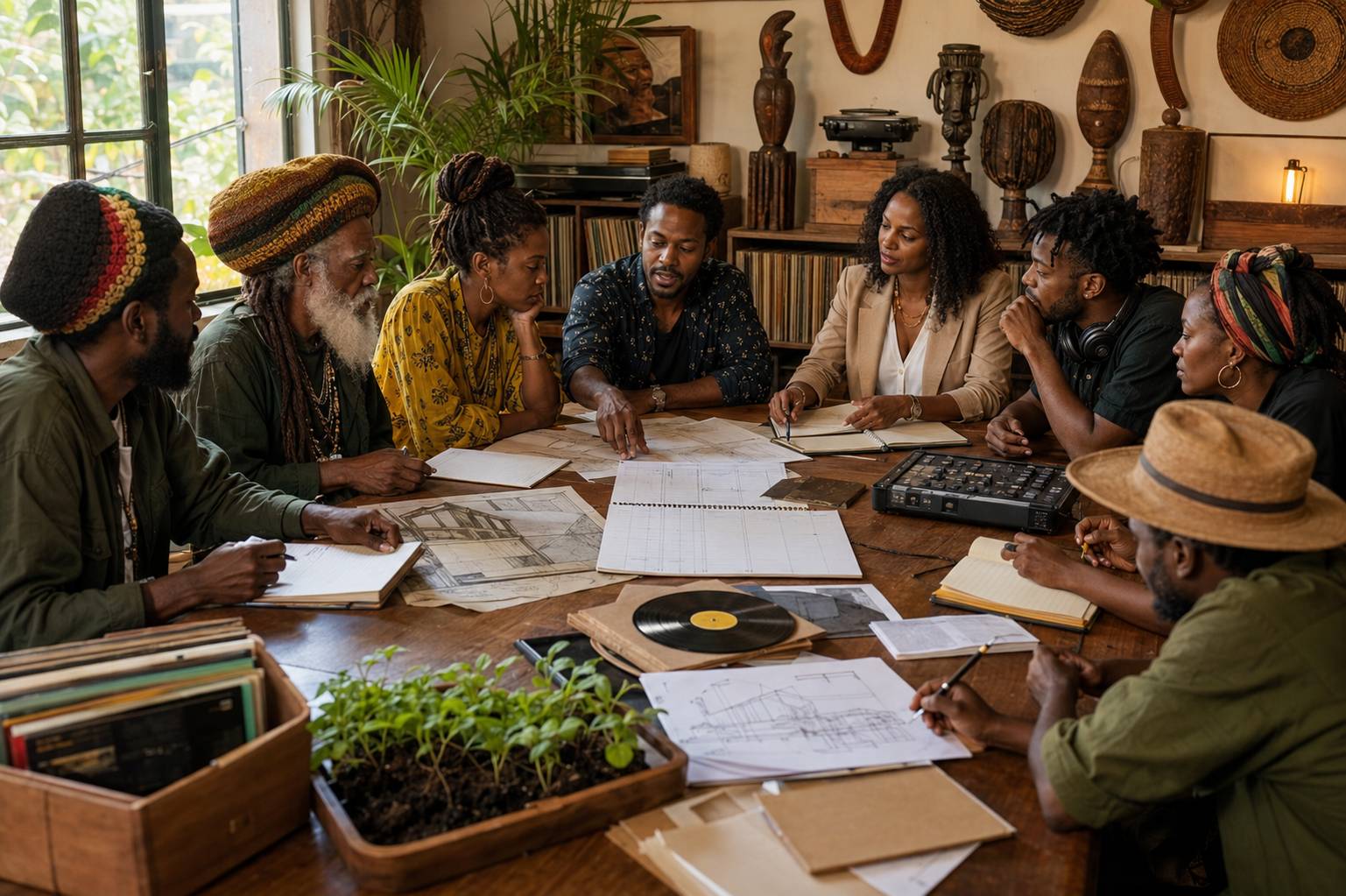
Building the Economic, Educational, Agricultural, and Cultural Structures Behind the Message
Reggae has spent decades teaching self-reliance to people who often do not own the systems carrying the lesson.
Therefore, conscious lyrics to conscious institutions.
The singer calls for freedom. The master recording belongs elsewhere. The lyric praises African unity. The tour is routed through companies with no African or Caribbean ownership. The festival invokes community while its mailing list, ticket data, trademarks, sponsorship agreements, and recorded footage remain private assets. The artist tells the youth to know themselves, then discovers that the school has no archive through which the youth can meet the music’s builders.
This contradiction does not make the song false. It reveals the distance between consciousness as expression and consciousness as structure.
A song can change the atmosphere of a life. It can give language to grief, courage to resistance, and spiritual ground to a person who has been told there is none. But a song cannot administer royalties, negotiate a visa, preserve a master tape, finance a farm, train a manager, insure a festival, or create a scholarship. Those tasks require institutions.
Marcus Garvey’s deepest challenge to future generations was not simply to feel proud. It was to organize. Rastafari livity likewise concerns relationships among spirit, body, community, land, labor, and power. If reggae carries these inheritances, its future cannot be secured through better branding alone. It must build forms capable of holding value, knowledge, and responsibility across generations.
This article proposes a practical foundation: jointly owned record labels and festivals, agricultural and educational projects, accountable diaspora investment, African history taught through music, and governance designed to keep the originators at the center without closing the culture to the world.
Why Institutions Matter
Creative communities often distrust institutions for good reason. Labels have taken masters. Governments have censored artists while celebrating them later. Banks have denied capital. Collecting systems have failed to identify rightful owners. Promoters have disappeared with gate receipts. Organizations founded in unity have fractured through ego, secrecy, and political capture.
The answer, however, cannot be permanent informality. Informality may feel free at the beginning, but it often favors the person with the strongest private network. Agreements remain unwritten. Money becomes difficult to trace. Knowledge leaves when one individual dies or withdraws. Conflict becomes personal because no trusted process exists.
A conscious institution is not one that uses revolutionary language in its mission statement. It is one whose rules distribute power fairly, protect creators, preserve memory, and allow public accountability.
The Difference Between Access and Ownership
An artist may receive access to a studio without owning the recording. A Jamaican organization may be invited to advise a festival without holding equity. An African musician may appear on a global project without controlling publishing. A community may be allowed to vend at an event whose long-term value goes elsewhere.
Access matters, but it can be withdrawn. Ownership creates durable rights. Therefore the rhythm returns to africa.
This does not mean every participant must own an equal share of every project. Contributions, risk, labor, and investment differ. It means cultural origin and creative labor should not be compensated only through temporary visibility while financial and intellectual property accumulate elsewhere.

Jointly Owned African–Caribbean Record Labels
A new label should not reproduce an old extraction model with Pan-African colors. Its purpose would be to develop artists, administer rights, finance recordings, connect markets, and return value transparently to creators and participating communities.
Governance Before Glamour
The founders must decide who controls the company before announcing the first release. A balanced board could include Jamaican and wider Caribbean music professionals, African partners from participating countries, artist representatives, business and legal specialists, and an independent community voice. Gender and generational balance should be built into the rules rather than promised later.
Founding documents should address voting rights, conflicts of interest, profit distribution, cultural-use policies, audit schedules, and procedures for removing leaders. A beautiful launch cannot compensate for vague governance.
The label might use a parent cooperative or public-benefit structure with project-specific subsidiaries. Artists could receive equity or profit participation tied to the work they help build. Community funds could receive a defined percentage of net income rather than depending on occasional charity.
Masters, Publishing, and Plain Language
Every agreement should state who owns the master, for how long, in which territories, and under what conditions rights return to the artist. Publishing splits should be completed during or immediately after sessions, not reconstructed years later from memory. Producers, musicians, translators, featured performers, and traditional contributors should receive accurate credits.
Contracts need independent legal review and plain-language summaries. Cultural closeness does not eliminate the possibility of exploitation. In fact, appeals to family and unity can pressure artists to accept arrangements they would question from a stranger.
No one should be told that asking about money proves a lack of consciousness.
A Two-Continent Development Model
The label could pair artists and professional teams across regions. A Jamaican artist might work with an Ivorian producer and Caribbean manager. A Ghanaian band might record part of an album in Kingston and part in Accra. Release campaigns would be designed for African, Caribbean, European, and North American audiences without assuming that success in the West is the only measure of international value.
Local language releases should receive translation, subtitles, metadata, and editorial storytelling rather than pressure to become English-only. The label’s catalogue would function as both commercial inventory and cultural archive.
Data as Collective Property
Streaming, ticketing, direct-sales, and audience information should be gathered ethically and shared with artists. Data can identify where a tour is viable, which songs cross language boundaries, and where educational content creates engagement. If only platforms and promoters hold this knowledge, creators remain dependent.
Privacy must be respected. The goal is not surveillance of fans but collective intelligence for cultural planning.
Jointly Produced Festivals
A festival is more than a collection of performances. It is a temporary city with its own economy, symbols, movement, food, labor, hierarchy, and public memory. A jointly owned Africa–Caribbean festival can demonstrate what the values in the lyrics look like when translated into operations.
Rotating Host Locations
Rather than establishing one permanent destination, the festival could rotate among Jamaican, wider Caribbean, and African hosts. Rotation distributes opportunity and prevents one local elite from controlling the institution indefinitely. It also forces the organization to learn different cultural and regulatory environments.
A three-year cycle might move from Jamaica to Ghana to another Caribbean nation, followed by Côte d’Ivoire or Ethiopia. Regional editions could be smaller than the flagship event while feeding artists and ideas into the larger gathering.
Shared Curation
Programming should be led by a transregional team, not by one promoter adding foreign acts to a familiar format. The lineup would include roots reggae, dub, sound systems, African reggae, ska and rocksteady history, contemporary Jamaican forms, local African traditions, poetry, film, visual art, and carefully chosen global participants.
Headliner status should reflect cultural contribution as well as current ticket metrics. This does not mean ignoring audience demand. It means using the festival’s own marketing power to cultivate demand for artists the commercial system neglects.
The Daytime Festival
The event should remain alive before the evening stage opens. Daytime programming might include:
- Publishing and royalty clinics
- Sound-system construction workshops
- Oral-history recording rooms
- Youth production laboratories
- Panels on reparations and citizenship
- Ital cooking and food-sovereignty demonstrations
- Farmers’ and artisan markets
- Film screenings and book discussions
- Meetings between promoters and emerging artists
- Language and lyric-translation sessions
These activities are not decoration. They turn attendance into relationship and leave knowledge behind after the equipment moves.
Local Procurement and Fair Labor
Food, staging, printing, transportation, security, accommodation, design, and technical services should be sourced locally wherever standards and capacity allow. When outside expertise is necessary, contracts should include local training. Workers need written terms, safe conditions, and prompt payment.
A festival preaching justice while exploiting temporary labor has failed before the first conscious lyric is sung.

Agricultural Projects as Cultural Work
Agriculture may appear distant from the music business until reggae’s history is remembered. Land, food, labor, nature, ital livity, rural displacement, tourism, and economic dependence have always stood near the culture’s concerns.
An African–Caribbean reggae movement could connect festivals and labels to practical food projects. This should not become celebrity farming for photographs. It should support existing farmers and community organizations.
Demonstration Gardens and Seed Knowledge
Partner sites in Jamaica, the Caribbean, and Africa could establish gardens focused on climate-resilient crops, medicinal plants, culturally important foods, composting, soil restoration, and seed preservation. Elders and agricultural specialists would teach alongside young growers.
Artists could help bring public attention, but farmers must shape the project. Songs, documentaries, and festival workshops could explain why food sovereignty is part of economic sovereignty.
Ital Enterprise Without Extraction
Demand for plant-based food creates business opportunity. Joint projects could develop ethically sourced spice blends, teas, preserved foods, cookbooks, meal programs, and culinary travel. Ownership and sourcing should remain transparent. “Ital” must not become another global wellness label that uses Rastafari language while excluding Rastafari communities.
A defined share of product income could fund school meals, farmer training, or youth gardens. The connection between brand and benefit should be measurable.
Climate, Land, and the Shared Future
African and Caribbean communities face severe climate pressures despite contributing relatively little to the historical emissions driving the crisis. Drought, hurricanes, flooding, coastal change, crop loss, and rising food costs create a common field for research and solidarity.
Reggae has long spoken about natural living. The next step is to connect that language with soil, water, energy, disaster preparation, and climate justice.
Educational Partnerships and Cultural Academies
Education can protect the movement from becoming dependent on a few charismatic leaders. An Africa–Caribbean Reggae Academy could operate as a network rather than one expensive campus. Universities, community studios, museums, sound systems, farms, and online platforms could contribute different forms of knowledge.
A Curriculum with Several Doors
Students might study:
- Jamaican and Caribbean history
- African history and contemporary politics
- Rastafari and Pan-African thought
- Music performance and arrangement
- Recording, dub, and live sound
- Copyright, publishing, contracts, and accounting
- Festival production and touring logistics
- Archiving, restoration, and oral history
- Sustainable agriculture and ital food enterprise
- Documentary, journalism, and cultural criticism
The academy should not separate creative and business education. Artists need to understand rights; managers need to understand culture. Engineers need history; historians need familiarity with how sound is made.
Elders as Faculty
Foundational musicians, sound-system operators, producers, community organizers, Rasta elders, cooks, farmers, and craftspeople should be compensated as teachers. Formal academic credentials cannot be the only measure of expertise.
An elder’s knowledge should not be extracted through a free interview and converted into institutional property. Consent, payment, access, and control over sensitive material must be established.
Scholarships and Mobility
The network should prioritize students who lack ordinary access to international opportunity. Scholarships could cover tuition, travel, instruments, caregiving, connectivity, and living costs. Exchange programs should avoid selecting only the already privileged because they complete applications most easily.
Mentors can help applicants translate talent and community experience into formal requirements.
Diaspora Investment with Accountability
The African diaspora possesses skills, networks, capital, and desire for meaningful connection. Investment can help build the institutions described here. It can also reproduce inequality if money arrives with entitlement.
Investment Is Not Ownership of the People
A person who finances a project deserves clearly defined rights. They do not purchase cultural authority. Governance should prevent one wealthy investor from controlling the mission, altering historical commitments, or using community relationships as personal branding.
Investment vehicles could cap individual voting power, publish annual reports, and reserve board seats for artists, workers, and local communities. Independent audits should be routine rather than interpreted as distrust.
Patient Capital
Cultural infrastructure may not generate rapid returns. Archives, education, artist development, and touring routes require years of consistent work. Investors seeking immediate profit will pressure the project toward the safest commercial content—the very pattern the movement is designed to change.
Patient capital accepts slower financial return alongside defined cultural and social outcomes. Grants, cooperative shares, low-interest loans, sponsorship, and revenue-generating businesses can be combined so that no single source controls the institution.
Measurable Community Benefit
Projects should report more than attendance and social-media reach. Useful measures include:
- Income paid to local artists and workers
- Percentage of ownership held in Africa and the Caribbean
- Royalties collected and distributed
- Students trained and employed
- Women and young people in leadership
- Acres cultivated or gardens supported
- Archival materials preserved with consent
- New touring markets opened
- Collaborations continuing beyond one event
- Local businesses receiving contracts
Measurement does not replace human judgment. It protects the mission from being reduced to inspiring photographs.
African History Taught Through Music
Reggae can carry education outside formal institutions. A release campaign can include a short documentary, annotated lyrics, a historian’s conversation, classroom materials, and an oral-history clip. A tour can partner with schools and community radio. A festival can create a digital archive accessible after the gates close.
Songs as Invitations, Not Final Authorities
Artists interpret history; they do not replace historians. Lyrics condense, dramatize, and symbolize. Educational material should help listeners move from emotional recognition toward deeper study.
A song about Garvey could link to timelines and primary documents. A song about Ethiopia could include multiple Ethiopian and Rastafari perspectives. A song about slavery could connect Caribbean sites with particular African regions and resistance histories. This approach preserves poetic freedom while encouraging accuracy.
Ownership of Educational Media
The interviews, recordings, photographs, and curriculum produced around the music must have clear rights agreements. Communities should receive copies and continuing access. Sensitive spiritual or family knowledge should not be published merely because a camera captured it.
The archive should serve descendants, not only researchers and platforms.
Independent Media as Cultural Infrastructure
Labels and festivals cannot protect the movement if the stories surrounding them remain controlled elsewhere. Media determines which release appears important, which dispute receives context, which elder is remembered, and which new artist is introduced as the future. When African and Caribbean creators depend entirely on foreign outlets, even successful work may be interpreted through priorities they did not choose.
An Africa–Caribbean media network could connect community radio, podcasts, documentary teams, photographers, critics, newsletters, and educational platforms. Its purpose would not be constant praise. A culture that cannot tolerate criticism cannot correct itself. The network should support informed journalism capable of examining contracts, festival spending, government policy, gender inequality, cultural misuse, and the performance of the institutions proposed in this article.
Owning the Narrative and the Archive
Concert footage, interviews, rehearsals, photographs, and behind-the-scenes recordings become valuable over time. Too often, creators focus on the immediate event while an outside production company retains the long-term asset. Every project should decide in advance who owns raw footage, who may license it, how participants are credited, and where preservation copies will be held.
Community access must be included. A Jamaican school should not need to negotiate with a distant corporation to show students an interview recorded in its own neighborhood. An African musician’s family should know where master files are stored and what rights remain after death.
Criticism as a Form of Care
Independent critics can help distinguish cultural respect from polished marketing. They can review whether a joint project actually shares ownership, whether an exchange gives local artists meaningful authority, and whether historical claims are accurate. This work may make institutions uncomfortable. That discomfort is healthier than a promotional environment where every initiative is declared revolutionary before results exist.
Media workers must also be paid. The expectation that writers, photographers, and archivists should contribute free labor “for the culture” weakens the very infrastructure the movement needs. Budgets should treat documentation and criticism as core functions, not optional exposure.
When communities can tell, preserve, and question their own stories, they become less dependent on outsiders to confirm that their work matters.
A Pilot Institution: Start Small Enough to Work
Grand visions often fail because they begin at the scale of the dream rather than the scale of trust. A practical pilot could involve one Jamaican partner, one African partner, one diaspora funding circle, and a two-year program.
Year one might include reciprocal artist residencies, four jointly owned recordings, a youth production workshop, two community gardens, and a small festival in each location. Year two could add a touring exchange, music-business training, an oral-history collection, and direct-to-fan sales.
All contracts, budgets, governance lessons, and evaluation results would be documented. Failures would be studied openly. The model could then expand to additional countries with evidence rather than promises.
Trust Is Also Infrastructure
Flights, studios, and contracts are visible infrastructure. Trust is less visible but equally necessary. Africa–Caribbean relationships carry expectations, historical longing, class differences, national pride, and the possibility of misunderstanding. Regular communication, conflict-resolution procedures, translation, and time for informal relationship are not optional expenses.
The movement must learn how to disagree without collapsing.
Building What the Lyrics Have Already Imagined
Reggae has given generations a language of liberation. The next responsibility is to create places where that language can live materially.
A jointly owned label can keep masters and knowledge within the relationship. A rotating festival can turn cultural exchange into shared economic value. A garden can connect livity with food security. An academy can place elders beside engineers and farmers beside artists. Accountable diaspora investment can provide resources without purchasing the soul of the movement. Historical education can ensure that innovation begins from knowledge rather than erasure.
None of these institutions will be perfect. They will face ego, scarcity, bureaucracy, political pressure, and conflict. Consciousness does not make people incapable of wrongdoing. It gives them a standard by which wrongdoing can be recognized and corrected.
The alternative is to leave reggae’s future to institutions built for other purposes. Those systems may continue selling the rhythm efficiently. They have little obligation to preserve the communities, histories, and political meanings from which it came.
The song has already told us that another way is possible. Garvey taught organization. Rastafari taught livity and resistance to Babylon. Sound-system pioneers taught that limited resources can be assembled into public power. Working-class Jamaica taught that people denied formal authority can still create a language the world must hear.
Now the message must enter the contract, the classroom, the field, the boardroom, the archive, and the tour schedule.
When consciousness becomes institution, reggae does more than remember freedom.
It begins to practice it.
Sources and Further Reading
Bob Marley Rasta Prophet


Emperor Haile Selassie Ethiopean African Heritage


Products
Rasta Roots Reggae Rhythms


Rasta Women Vibing


Fashion Revolution


