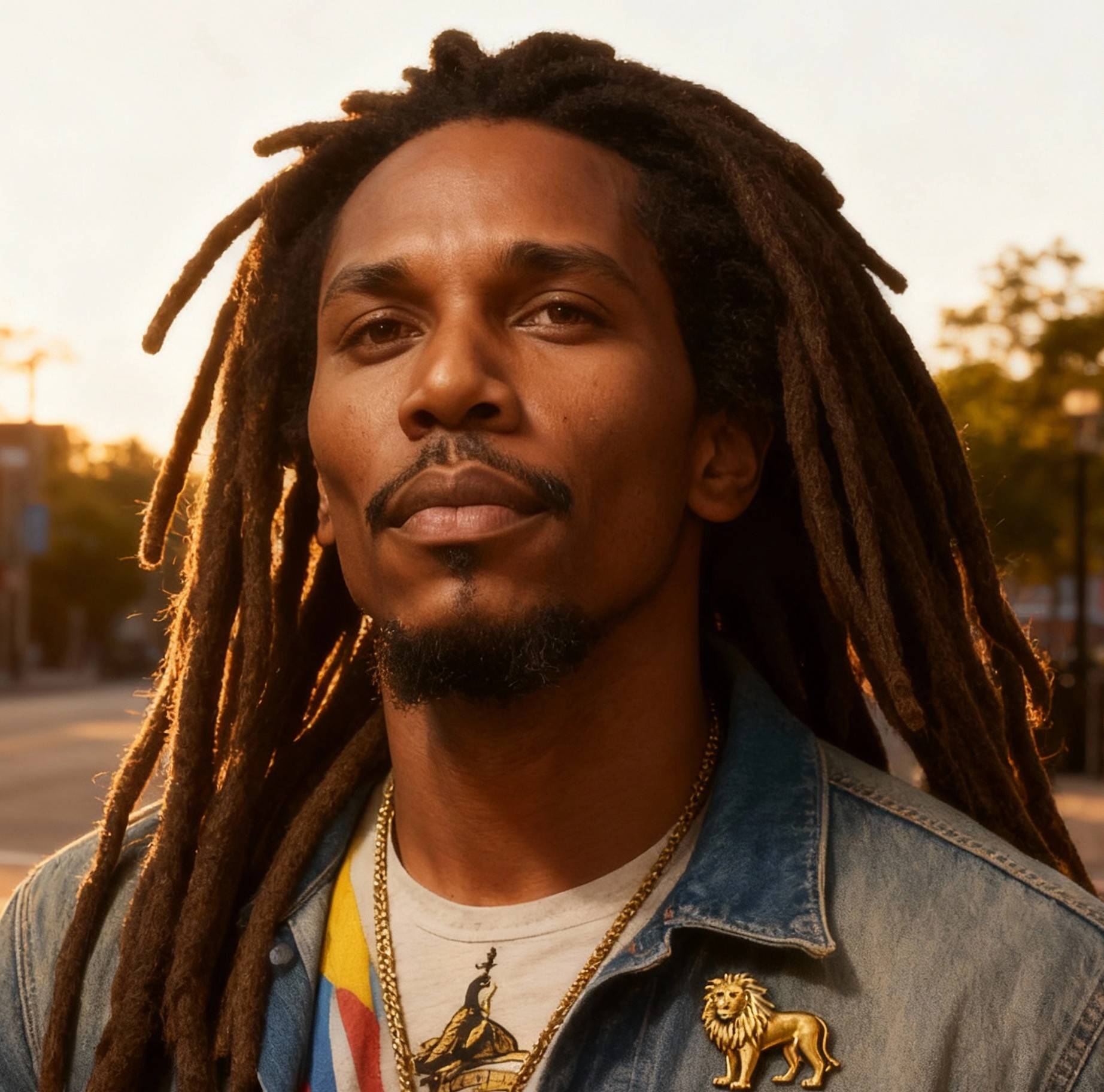


Locks as covenant: the body becomes testimony
In Rastafari, the body isn’t treated as a disposable shell. The body is a vessel. And a vessel can carry meaning. This is why outward choices—diet, speech, appearance—can become spiritual practice. Dreadlocks belong to that category: an outward sign tied to inward commitment.
For many Rastas, locks represent a vow. Not a vow to be perfect, but a vow to be aligned: aligned with naturalness, aligned with identity, aligned with resistance to Babylon’s pressure to conform. Locks are not worn for applause. In many contexts, locks attract stigma, discrimination, and misunderstanding. That’s part of the meaning: you carry the symbol even when it costs you.
ReggaeDread lens: A symbol that costs you something usually means more than a symbol that gets you likes.
Where the meaning comes from: scripture, history, and resistance
People often ask, “Where did dreadlocks come from?” expecting one origin story. But locks have appeared across different cultures and eras. The Rasta meaning is not only about hair texture or aesthetics. It’s about interpretation—scripture read through identity, resistance, and spiritual discipline.
Within Rasta thought, locks are often linked to biblical imagery (including themes associated with vows and separation), and to the idea of living in a natural, unforced state rather than reshaping the self to match Babylon’s beauty standards. In colonial societies, hair has long been politicized—used as a marker of “respectability” and social rank. Rasta locks challenge that entire logic.
Three root meanings often carried by locks
- Separation from Babylon: refusing imposed standards of “proper” appearance.
- Naturalness: allowing the body to exist without constant reshaping for approval.
- Spiritual discipline: a visible reminder of commitment and identity.
Hair as politics: why Babylon cares so much
Babylon loves control that looks like “normal.” One of the easiest ways to control a population is to police what looks acceptable. That’s why hair has been regulated in schools, workplaces, and public spaces across history. It’s not only about “neatness.” It’s about conformity.
When Rastas wear locks, they are often refusing the rule that says you must look like the system to be respected by the system. That refusal can trigger backlash because it exposes the system’s insecurity. If “respectability” is truly about character, then why does hair matter so much? Babylon’s obsession with hair reveals the deeper truth: control often hides inside aesthetics.
The real conflict
The conflict isn’t between hair styles. The conflict is between self-definition and social control.
| Babylon definition | Rasta response | What it protects |
|---|---|---|
| “Neat” means European-coded grooming | Naturalness is dignity | Identity from root, not approval |
| Authority decides what’s acceptable | Self-definition is sacred | Spiritual autonomy |
| Conform to belong | Belonging starts within | Inner freedom |
Why locks got stereotyped: fear needs an image
Early Rastafari was often treated as a threat by colonial society. When a movement is misunderstood, the public tends to reduce it into caricature. That’s how stereotypes form: they take a complex worldview and compress it into a single image that is easy to fear.
Locks became that image. Instead of being seen as vow and identity, locks were framed as “unclean,” “dangerous,” or “criminal.” That framing was never neutral. It worked as social discipline: ridicule the symbol and you discourage the spread of the worldview.
In other words, stereotypes were not just insults—they were tools.
Respect note: It’s easy to talk about locks in abstract. It’s harder to live with the discrimination that can come with them. Always treat the symbol with the seriousness it deserves.
Locks and livity: the discipline behind the style
A common misconception is that locks are “just hair.” In Rasta context, locks are tied to livity: the wider discipline of clean living (Part 5), truth-telling and reasoning (Part 4), and separation from Babylon’s corruption. The hair becomes a daily reminder: you are carrying meaning.
This is why many Rastas treat the symbol with care. Not because of vanity, but because it’s sacred representation. Like a flag, a uniform, or a religious garment, it signals belonging to a worldview.
Locks as a daily reminder of values
- Patience: locks take time; spiritual growth takes time too.
- Consistency: you don’t put on and remove the symbol when convenient.
- Humility: the symbol is not supposed to become ego.
- Resilience: you carry the meaning even when the world misreads it.

Style vs sacred meaning: when the world copies the surface
Here is one of the most delicate conversations in modern culture: the difference between appreciation and appropriation. When a symbol becomes popular, people often copy it for aesthetic reasons—without learning the history, facing the stigma, or respecting the spiritual meaning behind it.
That is how sacred symbols get turned into costumes. It’s not only disrespectful; it also distorts public understanding. People begin to associate locks with a “vibe” instead of a worldview. They assume the look is a shortcut to “cool,” without recognizing the deeper commitments the symbol can represent.
A respectful cultural posture
- Learn the root: know the history and meaning before adopting the symbol.
- Respect the lived reality: don’t romanticize what others are punished for.
- Avoid caricature: Rasta culture is not a costume, joke, or marketing aesthetic.
- Listen to communities: let Rastas speak for themselves.
ReggaeDread lens: Appreciation carries humility. Appropriation carries entitlement.
Identity and visibility: why locks became global
Locks became global for many reasons: reggae’s worldwide rise, iconic artists, and the power of the silhouette. But the deeper reason is that locks communicate something the modern world is hungry for: authenticity.
In a society built on constant performance, a symbol of vow stands out. Even people who don’t understand Rastafari can often sense that locks carry weight. They communicate nonconformity, rootedness, and spiritual seriousness.
This is also why Part 7 matters. Because once reggae becomes a global broadcast system, the symbols travel with the sound. The worldview that formed in Jamaican yards begins to ride riddim across oceans.
How Part 6 prepares Part 7: reggae as the voice of Rasta culture
If locks are a visible testimony, reggae becomes an audible testimony. Part 7 explores how chant, Nyabinghi rhythm, and roots reggae became the loudspeaker of Rastafari consciousness— carrying Babylon critique, Zion longing, and spiritual discipline into the world’s ear.
FAQ: dreadlocks and Rasta identity
Are dreadlocks required to be Rastafari?
Rastafari is diverse. Many Rastas wear locks as a symbol of vow and identity, but practices vary by mansion and person. The deeper essence is livity—alignment, discipline, and worldview—not surface alone.
Why do locks carry spiritual meaning?
Because locks can represent separation from Babylon’s standards, naturalness, and a visible commitment to livity. In Rasta context, it’s not only hair—it’s testimony.
Why were locks stereotyped as “dangerous” or “unclean”?
Stereotypes often function as social control. Early Rasta resistance challenged colonial respectability standards, and locks became an easy visual target for ridicule and fear.
How should outsiders engage respectfully with Rasta symbols?
Learn the history, respect the lived reality, avoid caricature, and listen to Rasta voices. Symbols carry weight; treat them like they do.
Next (Part 7): Reggae Music as the Voice of Rasta Culture — chant, Nyabinghi rhythm, roots reggae, lyrics as teaching, and how the message traveled worldwide.
Continue the series: Part 7 — Reggae Music as the Voice of Rasta Culture