A New Reggae Covenant An Equitable Future for the Music
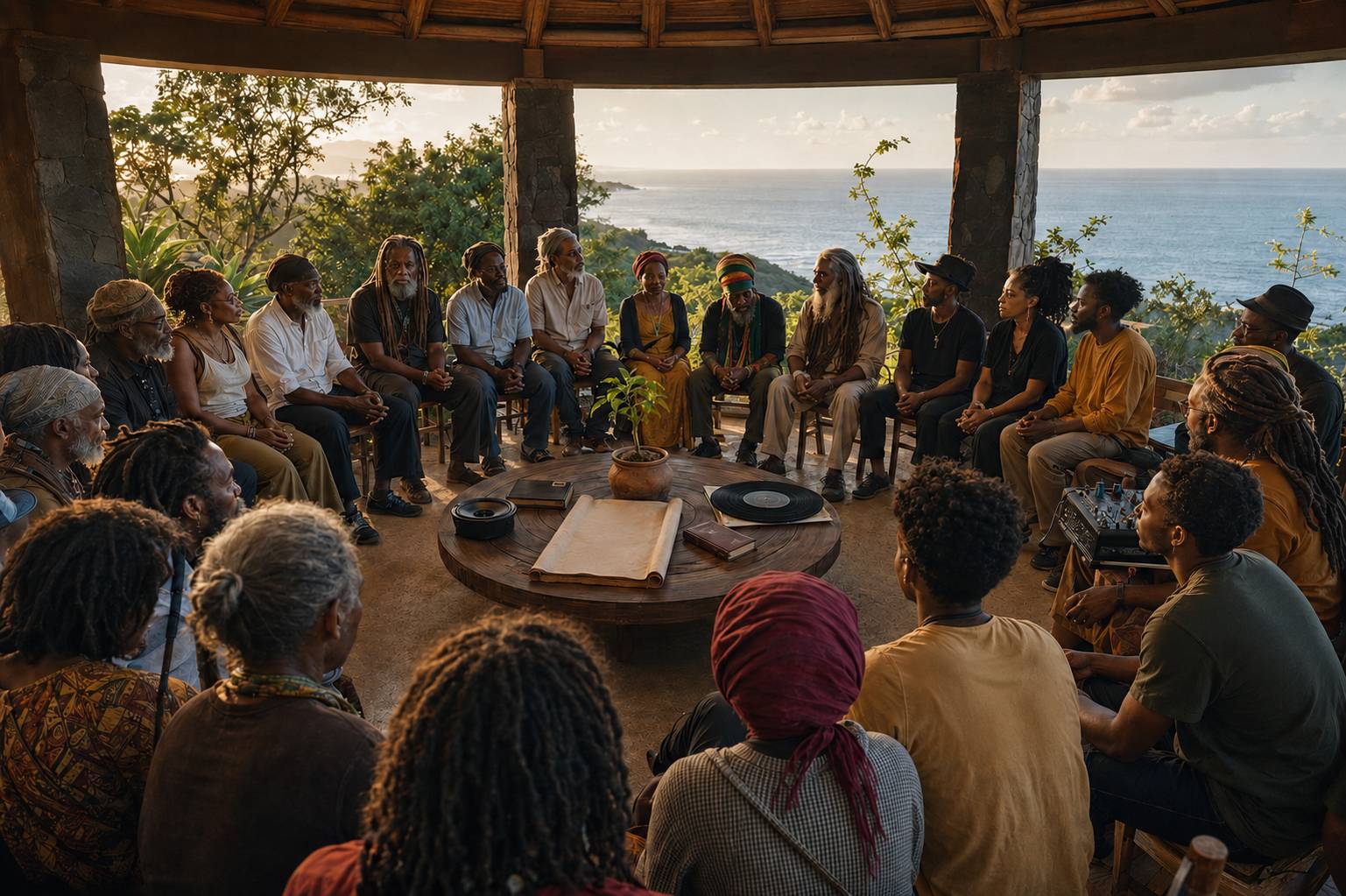
A New Reggae Covenant
Creating a Permanent, Equitable Africa–Caribbean Reggae Movement
A covenant is more than an agreement made when everybody is feeling generous. It is a promise designed to remain visible when money arrives, when attention shifts, when personalities clash, and when keeping the promise becomes inconvenient.
Reggae now needs a new covenant.
The music has reached nearly every part of the world, but reach has not guaranteed justice. Jamaican symbols circulate farther than Jamaican ownership. Rastafari language appears in markets where Rastafari people possess little authority. White-led reggae-rock bands can build powerful touring careers while Jamaican musicians confront visas, fragmented management, weak export support, and the burden of being treated as heritage within a culture they continue to create. Africa is praised as motherland while practical routes between African and Caribbean artists remain irregular.
Criticism is necessary, but criticism alone can become another form of repetition. The same panel meets, the same warning is issued, the same photographs of pioneers are displayed, and the commercial system continues because no alternative structure has been built with enough discipline to last.
This final article proposes a New Reggae Covenant: a public framework for cultural respect, economic reciprocity, historical preservation, artistic freedom, and permanent Africa–Caribbean cooperation. It does not claim legal force by itself. Its purpose is to establish principles that labels, festivals, artists, sponsors, governments, schools, media organizations, investors, and listeners can translate into contracts and practice.
The covenant begins with a truth that should require no defense: reggae is a Jamaican creation shaped by Caribbean history and African inheritance. It is now practiced globally, but global participation must not erase origin.
The First Principle: Origin Is a Living Relationship
Origin is often treated as a sentence placed at the beginning of a biography: “Reggae originated in Jamaica in the late 1960s.” Once stated, the industry feels free to move on.
But origin is not a ceremonial fact. It establishes a continuing relationship with communities, knowledge, language, and history. The people who created a form are not entitled to control every later expression, yet they should not become economically and culturally irrelevant to the form’s future.
Respect for origin should appear materially. Jamaican and Caribbean artists should hold headline positions at major reggae festivals. Jamaican musicians, engineers, historians, designers, and businesses should participate in international projects. Educational materials should name the sound-system, studio, spiritual, and working-class contexts of the music. Revenue generated through Jamaican cultural symbols should help sustain Jamaican cultural life.
From conscious lyrics to conscious institutions
Recognition Without Restriction
The covenant does not create a racial border around creativity. A white musician, Japanese selector, Brazilian band, African singer, Indigenous producer, or European sound system can enter reggae with seriousness and imagination. The tradition’s global influence is part of its greatness.
Recognition asks participants to carry history rather than impersonate it. They should speak from their own realities, credit influences, build fair collaborations, and avoid treating Jamaican language or Rastafari identity as costume. Global reggae becomes stronger when artists contribute their own truth instead of performing a borrowed identity for authenticity.

The Second Principle: Participation Must Produce Reciprocity
Appreciation becomes credible when value moves in more than one direction.
If a successful international band draws from Jamaican music, reciprocity might include touring with Jamaican artists, commissioning Jamaican production, funding historical work, sharing publishing fairly, or investing in youth infrastructure. The exact action can vary. The principle is that cultural benefit creates relationship and responsibility.
Reciprocity is not a cultural tax imposed on individual musicians. It is a normal feature of ethical exchange. Every durable industry pays suppliers, trains workers, maintains infrastructure, and protects valuable knowledge. Reggae should not be expected to survive through gratitude alone.
Collaboration Must Include Rights
A featured verse and a shared photograph do not prove equality. Collaborators need accurate credit, timely payment, publishing participation, access to performance data, and a voice in how their image is used. Traditional or communal knowledge requires consent beyond a routine session contract.
When unequal partners sing about unity, the agreement behind the song becomes part of its meaning.
The Third Principle: Africa Is Partner, Not Prop
Africa must no longer function only as lyrical destination, album-cover landscape, or abstract source of spiritual legitimacy. African artists, scholars, farmers, cultural workers, institutions, and communities should help define projects undertaken in Africa’s name.
This requires specificity. Partnerships must engage actual countries and localities, not a single imagined continent. Ethiopian history cannot be substituted for Ghanaian experience; Ghanaian return initiatives cannot stand for every African citizenship policy; Ivorian reggae traditions should be encountered on their own terms.
A Relationship Among Equals
Jamaica brings authorship of reggae, sound-system knowledge, studio innovation, lyrical traditions, and a history of carrying African consciousness through the diaspora. African partners bring diverse musical systems, languages, political histories, land-based knowledge, markets, institutions, and interpretations of Africa that no diaspora imagination can replace.
Neither side arrives empty. Neither side should arrive as master.

Permanent Africa–Caribbean Touring Routes
The most visible expression of the covenant would be a stable touring circuit connecting African and Caribbean locations. The current model relies too heavily on isolated festival invitations, expensive long-distance flights, and relationships that disappear when one promoter changes direction.
A route converts occasional contact into cultural infrastructure.
The Anchor Cities
An initial circuit might connect Kingston, Bridgetown or Port of Spain, Accra, Abidjan, Addis Ababa, Nairobi, and Johannesburg. The selection should be treated as a pilot, not a permanent map of importance. Each location would contribute venues, local partners, educational institutions, media relationships, and technical capacity.
The calendar should account for weather, major cultural events, academic terms, visa processing, and travel costs. Artists could complete several engagements in one region before crossing the ocean, making the route more economically viable.
Shared Production Resources
Participating hubs could maintain approved equipment, rehearsal space, transportation partners, and technical crews. Artists would receive clear specifications before arrival. This reduces the cost of moving full production and creates local employment.
Shared resources must not become an excuse to exclude traveling Jamaican or African musicians. The goal is flexibility. Some projects may use local collaboration; others need the complete touring band because the ensemble’s sound and employment matter.
More Than Concerts
Each stop should combine performance with at least one public cultural activity: a workshop, school visit, archive session, business clinic, farm project, film screening, or policy discussion. This requirement prevents the route from becoming ordinary entertainment decorated with Pan-African language.
Local artists should receive access to visiting professionals, and visiting artists should learn from local communities. Exchange moves both ways.
A Touring Passport and Mobility Desk
An administrative team could coordinate visa information, invitation letters, work permits, insurance, tax guidance, and travel documentation. It would not possess the power to issue visas, but it could reduce avoidable errors and collect evidence about recurring barriers.
Over time, Africa–CARICOM institutions could explore cultural-mobility agreements or designated programs that make legitimate exchange more predictable. The route would give policymakers a functioning case rather than an abstract request.
An Africa–Caribbean Reggae Council
The covenant needs a body capable of coordinating without claiming ownership of reggae itself. An Africa–Caribbean Reggae Council could serve as convener, standards developer, research hub, and guardian of shared projects.
Representation
The council should include:
- Jamaican and wider Caribbean artists
- African reggae and traditional musicians
- Rastafari representatives
- Sound-system and studio pioneers
- Women and youth delegates
- Festival and touring professionals
- Legal, publishing, and finance specialists
- Historians, educators, and archivists
- Farmers and community-development partners
- Diaspora representatives
No category should be represented by one permanent personality. Terms, rotation, and transparent selection reduce capture.
Limited but Real Authority
The council should not police who is allowed to play reggae. Its authority would come through programs and voluntary standards. It could certify festivals that meet representation and transparency criteria, publish an annual state-of-reggae report, manage exchange funds, maintain a cultural-use guide, and coordinate preservation work.
Certification must be earned through evidence, not sponsorship. A festival should not purchase the language of responsibility without changing practice.
Public Accountability
Annual reports should disclose funding sources, leadership compensation, grants, partner selection, conflicts of interest, and measurable results. Council meetings should include public sessions. Artists and communities need a process for raising concerns without risking informal blacklisting.
An institution speaking against Babylon must be willing to examine its own power.
Principles for Respectful Global Participation
The covenant welcomes international artists while setting a higher standard than vague appreciation.
Learn Before Branding
Artists and companies using reggae symbols should understand their histories. This is especially important for Rastafari language, Ethiopian imagery, Jamaican Patwa, Garvey references, and cannabis branding. Cultural advisers should be credited and paid where projects rely heavily on knowledge outside the creator’s experience.
Speak from Where You Stand
International musicians do not need to imitate Jamaican identity. Reggae became globally useful because it gave people a form through which to confront local injustice. A European band can address migration and racism in Europe. An American band can confront Indigenous dispossession, policing, and racial inequality. An African artist can name neocolonial extraction, authoritarianism, or youth unemployment.
The spirit of roots reggae is not preserved through accent. It is preserved through truthfulness and courage.
Share Platforms
Artists with larger markets can request support acts from Jamaica, the Caribbean, and Africa; commission opening playlists that educate audiences; invite collaborators for more than one song; and ensure promotional campaigns name those collaborators.
Platform sharing should create future opportunity. A guest who disappears after the tour has received a moment. A partner who gains audience data, relationships, rights, and follow-up bookings has entered a pathway.
Refuse Caricature
Costume dreadlocks, invented spiritual authority, exaggerated patois, and casual use of sacred imagery turn living people into genre accessories. Artists can be influenced without pretending to be what they are not.
Humility is not weakness. It creates room for the music to become personal without becoming counterfeit.
Protecting the Pioneers
A culture that celebrates deceased legends while living pioneers struggle has confused tribute with responsibility.
Many foundational contributors worked under weak contracts, informal accounting, missing credits, and industries that did not anticipate the long life of their recordings. Some never received royalties proportionate to their influence. Others face healthcare, housing, or retirement insecurity while younger businesses profit from the culture they helped create.
Royalty and Rights Recovery
Legal clinics can help artists and families review contracts, identify unclaimed royalties, correct metadata, register works, and investigate rights that may be recoverable. Not every historical injustice can be legally reversed, but administrative neglect should not continue unchallenged.
A Pioneers’ Fund
Festivals, labels, cannabis and apparel companies, tourism partners, and voluntary fan contributions could support an independently governed fund for healthcare, emergency assistance, housing stability, and dignified elder participation.
The fund must publish criteria and audited accounts. Elders should not have to perform public suffering to qualify for help.
Oral History with Consent
Recording elders is urgent, but urgency does not cancel ethics. Participants need clear agreements concerning use, payment, access, editing, and preservation. Families and Jamaican institutions should hold copies. Sensitive knowledge should remain restricted where appropriate.
The archive should preserve ordinary working detail as well as famous stories. Future generations need to know who carried cables, repaired equipment, cooked for sessions, mediated conflicts, and kept businesses functioning.
Passing the Music Forward
Youth cannot inherit what they encounter only as nostalgia. The covenant must create spaces where young people use history to make new culture.
Youth Sound Systems and Production Laboratories
Community programs can teach speaker design, acoustics, electronics, selecting, deejay performance, recording, mixing, lighting, event safety, and entrepreneurship. Sound-system culture provides a meeting place for art and technical education.
Young women and participants excluded by traditional gatekeeping should receive intentional access to engineering, production, and leadership roles.
Mentorship with Material Support
Advice alone is not opportunity. Mentorship programs should provide equipment access, travel stipends, paid placements, legal support, performance slots, and release budgets. The mentor’s network can matter as much as the mentor’s wisdom.
History Through Creation
Students might sample archival material with permission, compose songs responding to Garvey, create documentaries about local elders, design festival exhibitions, or build digital maps of studios and sound systems. Preservation becomes active rather than ceremonial.
Sponsorship Must Answer to the Covenant
No major touring route or festival can survive on ticket income and goodwill alone. Sponsors will be necessary, but sponsorship is not neutral. Money enters with an image, a market objective, and sometimes a desire to soften the very message that makes reggae culturally valuable.
The covenant should establish a public sponsorship policy. Partners would disclose what they fund, what branding rights they receive, and whether their business practices conflict with the movement’s stated commitments. A company should not be able to purchase moral credibility through a reggae event while harming workers, land, or communities elsewhere.
Cannabis, Tourism, and Lifestyle Companies
Businesses in these sectors have a special responsibility because they often benefit directly from reggae and Rastafari imagery. Cannabis sponsors should contribute to communities affected by criminalization, support small cultivators, and avoid using sacramental language without Rastafari participation. Tourism companies should invest beyond resort zones, hire local cultural professionals fairly, and stop presenting the Caribbean or Africa as scenery without citizens.
Wellness and apparel brands should document sourcing and labor. A shirt carrying Garvey’s image should not be produced under conditions that violate the economic dignity he advocated.
A Diversified Funding Base
The movement should combine ticket income, grants, cooperative shares, ethical sponsorship, direct fan membership, educational partnerships, merchandise, and diaspora investment. Dependence on one government, corporation, donor, or wealthy individual creates vulnerability. Diverse funding protects artistic freedom and allows the organization to refuse money carrying unacceptable conditions.
Sponsors should receive professional value, not secret control. Clear boundaries make partnership more trustworthy for both sides. The music can enter the marketplace without allowing the marketplace to rewrite its conscience.
The Twelve Commitments of the New Reggae Covenant
The movement can summarize its obligations through twelve public commitments:
- We will name Jamaica as reggae’s birthplace and the Caribbean as its immediate cultural ground.
- We will honor Africa as living partner and ancestral source, never as commercial scenery.
- We will welcome global participation without permitting participation to erase origin.
- We will pursue fair contracts, accurate credits, transparent payment, and creator ownership.
- We will place Jamaican, Caribbean, and African artists in positions of authority as well as performance.
- We will protect Rastafari from caricature and support Rastafari voices in matters using their identity.
- We will invest in pioneers, youth, women, archives, and working communities.
- We will connect music with education, agriculture, reparatory justice, and sustainable development.
- We will build permanent routes rather than depend only on ceremonial exchanges.
- We will measure whether cultural projects produce local economic and social benefit.
- We will preserve artistic freedom, including the freedom to criticize our own institutions.
- We will treat unity as accountable relationship, not silence in the presence of inequality.
These commitments can appear in festival agreements, label policies, sponsorship terms, curricula, and artist partnerships. Their value will come from application.
From Covenant to Action
A movement this ambitious should begin with a disciplined sequence.
First Year: Convene and Map
Identify credible partners, document existing Africa–Caribbean music relationships, map visa and touring barriers, survey archives, and draft governance standards. Hold public reasoning sessions in Jamaica and selected African locations. Publish disagreements rather than hiding them.
Years Two and Three: Pilot
Launch reciprocal residencies, a small touring circuit, youth laboratories, a royalty clinic, and a jointly governed cultural fund. Test shared production resources and gather transparent data.
Years Four and Five: Expand
Add regional hubs, establish rotating festivals, release co-owned recordings, open educational certificates, and pursue cultural-mobility agreements. Publish independent evaluation before scaling further.
The timeline should remain flexible, but the order matters. Trust and governance come before branding. Pilots come before claims of global transformation.
The Future Must Remember Who Built the Road
Reggae does not need protection from change. It needs protection from a change that keeps the sound while discarding the people.
The commercial reggae-rock circuit revealed both the music’s extraordinary reach and the consequences of unequal infrastructure. White musicians did not create every problem facing Jamaican reggae, and excluding them would not repair weak institutions. But refusing to discuss race, mobility, capital, and cultural authority would allow displacement to present itself as innocent evolution.
The answer is a wider and more accountable movement. Jamaica remains the birthplace. The Caribbean remains a field of living creativity rather than an aesthetic. Africa becomes partner, teacher, market, home, and co-builder. The diaspora brings resources and networks without purchasing control. International artists enter through respect, reciprocity, and truthful expression.
Then “one love” recovers its seriousness. Love becomes the practice of remembering, sharing, repairing, and building. “Repatriation” moves from chorus to relationship. “Know your history” moves from slogan to curriculum. “Self-reliance” moves from quotation to label, festival, archive, farm, and touring route.
The purpose is not to restore an imagined golden age. Reggae’s past contained exploitation and exclusion alongside brilliance. The covenant asks the future to preserve the brilliance while correcting what caused harm.
There will still be beach songs. There will still be romance, smoke, laughter, meditation, and good vibes. Joy does not need to be expelled for consciousness to return. It needs to stand beside history rather than covering it.
Picture the future stage again. Jamaican pioneers are honored through rights and care, not only applause. Young Caribbean artists travel with professional teams. African musicians bring their own languages and traditions without being treated as variations on Jamaica. White reggae-rock bands perform as respected participants within a history they name. Farmers, teachers, engineers, writers, and sound-system builders share the cultural economy. The audience dances and learns without being told these acts are opposites.
No one owns the human capacity to feel a rhythm. But people can own companies, masters, land, data, and stories. That is why the future cannot be secured by sentiment alone.
The covenant is a promise that the rhythm’s global journey will no longer require its memory to travel alone.
Jamaica built the road. Africa gives the road ancestral direction. The Caribbean guards its living crossroads. The diaspora can build bridges. The world is welcome to travel—but not to remove the signs, rename the destination, or forget who laid the foundation.
That is the future worth organizing.
Sources and Further Reading
Bob Marley Rasta Prophet


Emperor Haile Selassie Ethiopean African Heritage


Products
Rasta Roots Reggae Rhythms


Rasta Women Vibing


Fashion Revolution


